Showing posts with label prejudice. Show all posts

Sunday, July 23, 2023

sunday will never be the same

My dad liked things a certain way.

Just add sugar
He liked dinner as soon as he came home from work. (It had better be some kind of meat.) He liked a cigarette as soon as he got out of bed in the morning — even before be brushed his teeth or changed out of his pajamas. He liked to watch certain TV shows on certain nights. The FBI was a Sunday night staple. All in the Family (a show that my father viewed as a documentary) and Kojak were loyally tracked down and viewed on the various nights and timeslots in which they were broadcast throughout the lengths of their respective runs. In the morning, my dad liked a bowl of Kellogg's Corn Flakes with the sugar equivalent of six Hershey bars sprinkled liberally on top before the milk was added. (Why didn't he just eat Frosted Flakes? Two reasons. 1. My mom ate Frosted Flakes, therefore — in the mindset of Harold Pincus — it was a woman's cereal. 2. Those pre-sweetened flakes didn't have nearly enough sugar for his liking.) 

My dad was, by no means, an example of physical fitness. As far back as I can remember, his physique was that of someone smuggling a wok under his shirt. He got little to no exercise and smoked like a chimney. Despite this, before bed each and every evening, my dad would sit down at our kitchen table with a giant glass of chocolate milk and a Tastykake Chocolate Junior (two layers of golden cake cemented together with a rich helping of chocolate frosting and blanketed on top with more of the same) from a renowned local commercial bakery and — until recently — only available in the greater Philadelphia area. And he capped this pre-bedtime snack off with a couple more cigarettes to end his day.

Sunday mornings were something special, though. On Sunday mornings, instead of breakfast cereal poured from a box, my mom would cook breakfast. She'd fire up the stove and prepare scrambled eggs or pancakes or — if she was feeling particularly ambitious — French toast. But before my mom would pull a frying pan out of a cabinet, my dad would have to run his little Sunday morning ritual errand. He had to get donuts.

You know. Donuts.

? ? ? ? ?
See that picture at the very top of this blog post? Those — as far as I knew — were "donuts." If you went to the store to get eggs, you came home with a dozen little white things in a molded cardboard container formed to protect their fragile shells. Those were eggs. They could not be mistaken for anything else and they fit into  no other category. If you were tasked to go out and return with a baseball, you better come back bearing a nine-inch round, leather-clad sphere reinforced with 108 red stitches. Anything else would not be a baseball and you would have failed your mission. For young Josh Pincus, "donuts" were a specific thing. They were round, airy cake-like pockets stuffed with an overflowing abundance of viscous sugary jelly (Maybe grape, maybe raspberry. There was no real discernable fruit flavor.) and covered in a dense coating of clumpy powdered sugar, opaque enough to obscure any hint of yellow-gold pastry beneath. The jelly would seep out of a tiny hole at one end. To avoid getting squirted with jelly, you had to strategically place your first bite where that little "fill hole" was. That, my friend — and only that — was a donut. Those round things with a hole in the middle and covered with frosting and sprinkles? I didn't know what those were, but they sure weren't donuts. 

Free,
if you look like a girl.
On Sunday mornings, my dad would venture out to a nearby bakery to buy "donuts" and he would return with a plain white box sealed with several tight wrappings of twine. Once the twine was cut and the lid lifted, there were a dozen of those things I just described and they were donuts. On rare occasions, I would go with my dad to the bakery, where one of the stout Teutonic frauen would smile at me and offer a free cookie from their stock. "Isn't she cute?!?," they'd announce with an inflection reminiscent of Marlene Dietrich. That's right! "She!" My mid-1960s locks often led to being mistaken for a girl. But, I didn't correct them, fearing it would jeopardize this and any future free cookies. Munching my justifiably earned treat, I'd watch my dad point to the donuts in the case and instruct the Germanic abeiterin to fill a box with a dozen of them. I gazed at the other baked goods on display behind the glass-paneled cases. There were strudels, cupcakes and the giant tray of cookies from which my free one was chosen, along with other sugary bounty. Of course, there were those round things with frosting and sprinkles... but I didn't know what they were. I only knew we never brought them home. We came to get "donuts" and they — most definitely — were not donuts.

Admittedly, I was sheltered as a young child. The most influential people I came in contact with were my parents. But, as I got older, I began to notice things. Things I never really noticed before. I noticed that other kids' dads ate pizza. (My dad did not.) I noticed that other kids' dads drank Coca-Cola. (My dad did not.) I noticed that other kids' dads never used the same words my dad used for Asian people and Hispanic people and even that one he regularly used for black people. I eventually learned that those round things with the hole in the middle and covered with frosting and sprinkles were also donuts... just another variety. But they were donuts, just the same.

I learned a lot from my father. Most of what I learned, he didn't teach me.

Sunday, June 28, 2020

dig a little deeper


When my son was little, I would read to him every night before bedtime. I was a big fan of introducing him to classic children's stories and even those that were geared toward those a bit beyond his age group. But, — and this is not a brag — he was way more "on the ball" than a lot of his peers. I read Roald Dahl's lesser known works, as well as the original, non-Disney-fied, versions of the Winnie-the-Pooh stories. I also read the original Tales of Uncle Remus that white author Joel Chandler Harris collected and compiled in 1881. These are the stories upon which Disney based its notorious 1946 animated/live action musical amalgam Song of the South. However, in the version we had, the stories were ultra-sanitized versions of the post-Civil War folk tales. For most of the stories I read to my son, I made up and "performed" a number of funny voices for each character in the books. He loved those books and we read them often throughout his early years. Were they problematic? In hindsight, I suppose they were. 

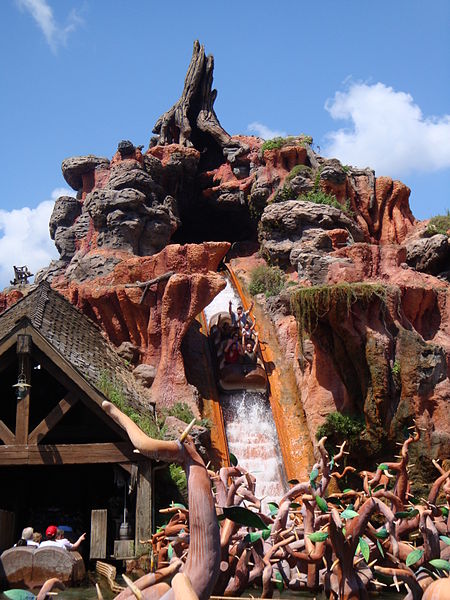
If you are a regular reader of this stupid blog (and why would you be?), you know that I am an avid Disney fan. I have written about various trips to Disney theme parks and other Disney related anecdotes. I went to Walt Disney World for the first time with my friends just after I graduated from high school. We had such a good time that we returned again the next summer. (Actually, we were so drunk during our first trip, we went back to see what we missed the first time.) My wife and I went on our honeymoon in 1984. We went back again in '85 and ventured back one more time at the end of 1986, when Mrs. Pincus was pregnant with our son. After he was born, we put our Disney trips "on hold" for a while. Once we could no longer convince my son that The Disney Store in a nearby mall was "Disney World," we had no choice but to plan a family vacation to the central Florida resort... which we did in the summer of 1995. My son was so familiar with all things Disney that he was more prepared to experience the magic of Disney than any other guest — child or adult. Of course, everything was new to him, but there were plenty of attractions that had popped up since my wife and I were there almost a decade before. One of those was the elaborate "E-Ticket" experience called "Splash Mountain."

Splash Mountain has an interesting genesis. It started life as part of a massive project that never made it past the planning stages. When Walt Disney World opened in 1971, Imagineers (the guys who conceive and design the rides) decided not to build an east-coast version of the Pirates of the Caribbean ride, so popular in California's Disneyland. They didn't think a pirate-themed ride would interest Floridians, since so much "pirate lore" exists in and around Florida. Instead, they planned a sprawling experience that featured a cowboy-and-Indian themed boat ride (to pacify the "Pirates" fans) and a wild Western-themed roller coaster through a prairie town. The ride, christened "Thunder Mesa," was troublesome from the start. While still on the drawing board, its size and proposed technology was a logistic nightmare. It also promised to send its budget far beyond original limits. When guests started asking: "Hey! Where are the pirates?," Disney rethought their decision and scrapped the "Thunder Mesa" project. They turned to Imagineer Tony Baxter, who was brainstorming an attraction to fill out Disneyland's fairly sparse Critter Country. He came up with a variation of the standard "flume ride," so popular in other amusement parks. Tony's vision was to incorporate some of the Audio-Animatronic figures from the recently-shuttered America Sings and theme the whole thing to the film Song of the South. Although the Oscar-winning song from the film, "Zip-A-Dee-Doo-Dah," was a Disney staple, Song of the South was a strange choice on which to base a ride in the 1980s. It was not particularly popular and had only been re-released four times to lukewarm reception since its initial run in 1946. By the time construction on Splash Mountain began, Song of the South had completed what would be its final theatrical release three years earlier, amid growing controversy over the depiction of racial stereotypes. Nevertheless, Splash Mountain opened in Disneyland in 1989 and its Florida counterpart followed in 1992. From the very beginning, the ride was one of the most popular in its respective park. The Florida version clocks in a nearly 12 minutes as it takes guests on a whirlwind — and often wet — journey through the world of the villainous Brer Fox in his pursuit of the happy-go-lucky, mischievous Brer Rabbit. Hulking hapless Brer Bear, along with a cheerful menagerie of anthropomorphic swamp critters, entertain riders with a selection of tunes woven around the main "Zip-A-Dee-Doo-Dah" theme. At the ride's conclusion, riders often discuss their unfamiliarity with the songs and the characters, as the overwhelming majority of Disney guests have never seen Song of the South. Yet, for nearly thirty years, Splash Mountain boasts long lines and wait times upwards of an hour on any given day.

The first time I rode Splash Mountain, I loved it. It was both exciting and charming. I remember wishing that the ride moved a bit slower, because I think I missed a lot of the subtleties scattered throughout individual tableaus as the story unfolded. I even felt the same excitement the first time I conquered the smaller. leaner, slightly altered Disneyland version of the attraction. However, after riding both versions, I was uncomfortable in spending the rest of my day in damp clothes. Oh yes... you may get wet. Getting wet should only be the biggest issue with the ride. The hard truth is, just like the film that is its basis, Splash Mountain is fraught with derogatory imagery and mocking dialects that really have no business being glorified in a family-friendly theme park.

Just this week, in the wake of a long overdue awakening to racial injustice, racial inequality and old-fashioned prejudice, Disney has announced plans to re-theme Splash Mountain — ditching the racially-insensitive characters from Song of the South. The curently-unnamed attraction will feature characters and a story line from Disney's 49th animated full-length feature The Princess and the Frog, a 2009 release that was (mostly) praised for spotlighting Disney's first (and so far, only) African-American princess. Disney made the announcement on various social media and news outlets. Being the greatest marketers on the planet, Disney made no mention of reasons for the change and made no mention of the characters from the current Splash Mountain ride. The press release was purely forward-thinking, excitedly written and enthusiastic in its descriptive vision.

Disney has made numerous changes to their theme parks over the years. Some rides were changed or removed so quickly, you probably forgot they ever existed (The Tomorrowland Phantom Boats, a Disneyland "Opening Day" attraction, wasn't around to see its one year anniversary.) But die-hard Disney fans get very protective and very defensive when it comes to their most beloved rides at their theme park. And a ride being changed based on hurtful racial issues — acknowledged or not — does not sit well with a contingency of spoiled-rotten, uninformed, oblivious, insensitive, elitist, privileged white people that, unfortunately, make up a good chunk of Disney's fan base. 

I first saw the announcement on the official Disney Parks Blog, where the new, reimagined ride was lovingly described. It was accompanied by an artist's rendering, approximating a still-unrealized scene from the ride. The timeline for construction was vague, as Disney parks are currently closed due to the global COVID-19 pandemic, with tentative opening dates still "iffy" as new cases spring up every day. Disney's goal in making this announcement was two-fold. First, it needed to address the "elephant in the room," righting a wrong that should have been addressed years ago, but also to inject a bit of optimism into its current stagnating situation. The company hoped to evoke visions of bright, shiny new enticements on the sketchy horizon. The news was met with reaction, both favorable and disappointed. The favorable ones offered praise and excitement. The disappointed reactions were vicious, filled with selfish complaints, racist sentiment and indifference to the fact that more that just you visit Disney theme parks. Some cite their own love of the ride as a valid reason not to change it. Others dismiss any notion of offensiveness because it doesn't offend them. What these narrow-minded, self-appointed defenders of Disney forget is what Walt Disney, the man himself, said: "Disneyland will never be completed. It will continue to grow as long as there is imagination left in the world." He also said: "Times and conditions change so rapidly that we must keep our aim constantly focused on the future."

They also forget the current philosophy of the Disney Company — and that's the "cha-CHING!" of a cash register.

www.joshpincusiscrying.com

Sunday, April 21, 2019

the right profile

I'm gonna try to write this without editorializing. I will try to just report the events that happened without commentary. My goal is to allow you — the reader — to draw your own conclusion. This may be difficult, but I will do my best.

My wife and her father recently went to pick up a few things at a store called PJP Marketplace, a branch of which is not too far from our home. According to their website, PJP Marketplace is a local chain of "open to the public" stores that "stocks everything you need to run your foodservice establishment." They sell a wide variety of kitchen-y things from fresh and frozen food to utensils and serving pieces all the way up to commercial scales and equipment. Mrs. P and her father were looking for a large quantity of plastic quart containers in which to store the unnecessarily voluminous amounts of soup that my mother-in-law prepares for the upcoming Passover holiday. (Oops! I think I just editorialized. I'll try to watch myself.) They were also looking to buy similarly packaged disposable foil pans for the same aforementioned (and again questionable) purpose (Ugh! There I go again!)


This particular PJP Marketplace is located in a predominately Hispanic neighborhood just over the suburban boundary of Philadelphia. Most — if not all — of the clientele and employees are Hispanic. That is not an observation. That is a fact. My wife and my father-in-law are both Caucasian. That is also a fact.

After finding a parking spot, they grabbed a shopping cart and entered the store. They made their selections and filled their cart, then headed towards the checkout area near the front of the store. They got into one of the many checkout queues, all of which were surprisingly lengthy. A cashier was setting up behind one of the currently-closed lanes, obviously preparing to open up and relieve some of the congestion. When she finished reconciling the money in her cash register's till, she looked up and scanned the long lines, seemingly perusing her choices for who would be her first customer. She pointed to a man in line behind my wife and father-in-law. He was Hispanic. She motioned the man forward, despite the fact that my wife and father-in-law were next in line. She appeared to look right past — or through — them. (Hmmmm.... that may be borderline editorializing. Strike that from the record, please.) The man walked around my wife and father-in-law and was the first customer in the new checkout line. Mrs. P and her father waited patiently in their own line and, within less than a minute, they were placing their items on the conveyor belt for purchase.

After making payment, they gathered up their bagged purchases and made their way to the exit. At the exit, however, a man was stopping each and every customer to carefully and thoroughly check each and every receipt. The man took each receipt and, with a yellow highlighter pen, checked off each item on the paper once he identified it to be paid and in the customer's possession. He also appeared to be giving each customer an accusatory "once over."  When Mrs. P and her father came up to the man with their bag and receipt ready to be reviewed, he smiled and waved them on. "You folks can go ahead." he said, without even taking the receipt from my wife's hand.

That's it. That's my story. Draw your own conclusion.

www.joshpincusiscrying.com

Sunday, November 4, 2018

keep 'em separated

The events of this past week made me sad and angry. I began to think of how I was raised. I was raised to treat everyone with equal respect, regardless of race or religion. That came from my mother, a wise, progressive and open-minded woman. What she was doing with my narrow-minded, bigoted father is beyond me. Regardless, I am a product of those polar opposites. Luckily for me, I took to my mother's way of thinking.

My mother passed away in 1991. The events of this past week would have made her sad and angry, too.

Here's a story about my mother that is just as relevant now as when it actually happened in 1959. It makes me happy.

My mother's parents ran an antique store not far from their home at Fourth and Spruce Streets in Philadelphia. In the summer months, they operated a bath house on the boardwalk in the seaside resort of Wildwood, New Jersey. In addition, eighteen years separated my mother from her oldest sibling. Needless to say, "family time" was a rare event. While the three older brothers were out doing "adult things," my mother and her older sister were left in the very capable hands of Minnie Ellis, or as my mother affectionately called her "My Minnie." Minnie was technically "the housekeeper", but she was much, much more. She was cook, baby-sitter, playmate, disciplinarian, teacher and friend. With my grandparents' overwhelming responsibilities of running one business (and five months out of the year, two businesses), Minnie was the perfect parental supplement. She earned the love and respect of my mother and her family, so much so, that she was viewed as part of the family herself.

One day, my mother at around eight or nine years old, arrived home after school. She found Minnie in the kitchen preparing that evening's meal. My mother spoke right up and caught Minnie by surprise.

"You're black," my mother said.

"Am I?," answered Minnie, not at all flustered by my young mother's assertion, "Who told you that?"

"A boy at school. He said that you're black and I'm white.," my mother continued.

Minnie produced a bleached white, cotton dishcloth and draped it across my mother's arm. "Hmmm," she began and stroked her chin, "this rag is white and you don't look white. You look pink to me." 
Then Minnie took off one of her shoes and aligned it with her own arm. She continued, "I sure don't look like the color of this black shoe. I look brown."

My mother observed the demonstration and understood Minnie's message of how ridiculous the statement was. She momentarily felt ashamed, but then hugged and kissed Minnie and went on her way.

Years later, when my parents were dating, my mother met her future in-laws. My paternal grandparents were two textbook bigots, pure and simple in their ignorance and disdain for all people who they saw as "different." After my parents' wedding and brief honeymoon, they visited my father's parents for the first time as husband and wife. Over dinner, they talked about the wedding and the guests. Then, my grandfather — my mother's new father-in-law — said to my mother, "How could you bring yourself to kiss that..." and he used a horrible word, one that was at one time excised from copies of Mark Twain's Adventures of Tom Sawyer  but features prominently in the lyrics of many current rap songs. A word that is euphemistically known as "The N Word." A word that made my mother cringe and nearly throw up. She looked at her father-in-law, staring at him with eyes like twin lasers, and through clenched teeth, slowly and deliberately seethed, "Don't you ever speak about 'My Minnie' that way. Ever!" She pronounced each syllable as though each one was its own word. My grandfather, that ignorant man, got the point loud and clear. My mother had little to say to him (but plenty to say about him) for the remaining fifteen years of his life.

In 1959, two years before I was born, my parents and my brother drove to Miami, Florida for a vacation. They loaded their packed suitcases and traveling provisions into my father's brand new orange and white, tail-finned sedan and made their way South on Route 1. (For years, my mother joked that my brother stood up in the back seat for the entire trip.) The journey predated the sleek concrete highways of Interstate I-95. Route 1 snaked though tiny, quaint burgs along the eastern seaboard. The pre-Josh  Pincus Family eagerly sampled the simple offerings of a culture that moved at a slower pace from the big-city bustle of Philadelphia. One afternoon, they pulled the car into Jessup, Georgia, as my mother was intrigued by the promise of authentic Southern cooking advertised on a sign several miles back. Since the area of commerce was fairly small, locating the eatery was easy and the Pincuses went in and prepared for a Dixie feast. According to my mother's recollections, the "authentic" Southern cuisine consisted of small, dried-out pieces of chicken, canned vegetables and Pillsbury biscuits (recognized by Mom since she had made them countless times herself). During the meal, a large spider descended from the ceiling on a single strand of web and wiggled its many legs just inches from my mother's nose.

Her appetite ruined, my mom sought salvation in the fresh air. My father unhappily paid the tab and followed my mother and brother to a gas station across the street. Figuring he'd fill the tank, he parked the car adjacent to one of the pumps and asked the attendant to "fill 'er up". My mother spotted a water fountain by the station's office and felt a cleansing drink would wash away the remnants of the awful lunch. She pressed the button on the spout and leaned down, bringing her lips closer to the stream of water. Suddenly, a scream pierced the air.

"What are you doing???" A windburned man in overalls was rushing out of the office and yelling at my mother in a dry Southern accent.

"What am I doing?," she asked, bewildered, "I'm getting a drink."

The man pointed to the base of the fountain, specifically to two lines of words stenciled on the front. "That's for colored only," he said.

My mother stepped back and — sure enough — in large white letters, the words "Colored Only" were painted on the tank, reinforcing the same angry, hateful directive that the gas station man initiated. My mother was horrified. Horrified that this situation existed in her world. She said nothing as the man watched her back away from the fountain. She joined her family in the car and sat silently in the passenger's seat for a good portion of the drive.

These incidents stayed with my mother her entire life and she related these stories quite often as lessons to my brother and me. The most important lesson my mother taught me was not to waste time giving an audience to stupidity.

This story originally appeared on my illustration blog in 2011.

Sunday, October 21, 2018

pretty hate machine

When does hate begin? Well, for me, it began when I was a kid. 

I grew up in a predominately gentile neighborhood. And by "predominantly," I mean you could count the Jewish families on one hand. Now, I don't mean that as a bad thing or an immediate source of hate, but I was surrounded by antisemitism at every corner. I heard it at the bus stop. I heard it while playing in my yard. I heard it while walking down my street. I even heard it from kids who I numbered among my "friends." It's not that the members of my family were particularly observant Jews (we were not), but everyone knew that we didn't have a Christmas tree and didn't put up Christmas lights and we didn't dress up on Easter. I don't think the fact that we were Jews even registered with our gentile neighbors, but more the fact that we believed in different things. Oh, and that we killed Christ.

There were two families on my block, each with numerous kids ranging in age from early teens to preschool. Their houses were a few lots apart and, coincidentally, the families were related. (I think the fathers of each household were brothers or cousins or something like that.) These two families were hotbeds for antisemitism. I would get taunts from the members of both households — young and old, boys and girls alike. In winter, snowballs would come hurtling from their backyards if I would walk past their houses, accompanied by muffled giggling and high-pitched shrieks of "Jew!" In nicer weather, the taunts would be more brazen with some of my dimmer-witted "friends" joining in because they didn't know any better.

Actually, that's the key to all of the hate I experienced as a child. They didn't know any better. This unfounded prejudice was passed down from parents who learned it from their parents. I remember a joke that I heard regularly in my neighborhood. At a time when ethic jokes were perfectly acceptable (Archie Bunker and Johnny Carson would frequently mock those of Polish and Italian extraction and Don Rickles made and entire career of it.), kids in my neighborhood would tell this one, most of them not even understanding its feeble attempt at humor:
Why are synagogues round?
So the Jews can't hide in the corners when the collection plate comes around.
Pretty stupid, huh? Let's analyze just how stupid it is. First of all, not all synagogues are round. Actually, I can't remember ever seeing a round synagogue. The only structures I can think of that are "round," are sports stadiums — and even those aren't truly round. Plus, it's not as though synagogues are built without some consultation with the folks who are going to use it as a house of worship. No one ever, during the design and construction, adamantly insisted, "Now make sure there are no corners so the Jews can't hide." Wouldn't Jews be making those structural design decisions? Makes no sense. Second — obviously, this terrible attempt at antisemitic levity, was made up by a non-Jew who had never, ever set foot in a synagogue, especially during a religious service. Their only frame of reference was their own religious service experience. If they had done the proper research, they would have known that Jews don't pass around a collection plate. Neither do Muslims or Hindus or any number of non-Christian religions. Collection plates or "offertory" are strictly a Christian ritual. 

Of course, this "joke" is an attempt to illustrate the baseless perception that Jews are cheap. In fact, as a group, they are not. Charity is a fundamental part of Jewish life, from pushkes (coin boxes) in traditional Jewish homes, to mourners vowing to make a donation in memory of a lost loved one to Jewish youth group's efforts for raise money for various worthy causes. In Business Week's list of "The 50 Most Generous Philanthropists," fifteen were Jewish. Considering that less than .2% of the world's population is Jewish, that's a pretty good showing.

Had the budding comedian who originally conceived this unfunny joke done a little thinking, they would have discovered that the basic concept and example given in the joke did not make sense, rendering it not the least bit funny. However, the kids in my neighborhood told this joke quite often and it always evoked laughter. They didn't know why they were laughing, but everyone else was laughing and no one wanted to be singled out as the one who "didn't get it."

And that's how hate begins. Hate begins by not knowing.

Sunday, March 12, 2017

let my people go-go

I was born and raised Jewish. Growing up, most of my friends were Jewish. Now, in my social circles, that meant that while everyone else was celebrating Christmas, we screwed a fresh light bulb into the electric menorah with each new night of Chanukah. We had a box of matzo in our house around the time we saw commercials for Easter egg dye on television. We weren't particularly religious, but when one of my friends turned thirteen, he got a big party and bunch of money for reciting a memorized speech in Hebrew in front of a bunch of his relatives at synagogue. Aside from that, we were just like everyone else. We dressed the same. We ate the same food and, for the most part, we looked the same.

However, this did not make me immune to my share of discrimination. I experienced a good deal of antisemitism in my mostly gentile neighborhood. My Jewish friends and schoolmates all lived in a different, mostly Jewish neighborhood. The kids in my neighborhood never let me forget that I was Jewish. I was taunted, accosted, pushed, prodded and verbally abused. Even though, for the most part, like I said, I looked just like they did. I didn't dress any different. I didn't wear a traditional head covering or sport curly payis on the sides on my head. I even ate the same foods they did, except for the foods I didn't like, not for any religious dietary reasons.

When I was 20 years old, I met the woman who would become my wife. When she told me that she observed kashrut (Jewish dietary laws), I told her the only people I knew who kept kosher were in their 80s. Needless to say, I didn't win her over immediately. (It worked out, though.) As I got to know her and the family into which I would marry, I was introduced to the heretofore unfamiliar world of traditional Jews. I found myself witnessing — and even participating in — Shabbat prayers. When Spring rolled around, Passover became more than just a single box of matzo. My in-laws would be host to a full-blown seder, complete with ornate wine cups and long explanations of the origins of the holiday, and, of course, homemade matzo balls, gefilte fish — everything! At Chanukah, my future wife's mother shredded actual potatoes and made latkes right before my eyes! We attended synagogue on Rosh Hashanah and Yom Kippur, but also on Simchat Torah, Purim and other holidays that I never heard of. All this prompted my mother — a woman whose maternal grandfather was a rabbi  — to ask if I was marrying into an Orthodox family. When I did marry, my wife maintained a kosher kitchen. (as a matter of fact, we still have a kosher kitchen!) Our son attended Jewish Day School through high school and loved knowing how knowledgeable he was about the history of his family's religious observances.

Recently, Mrs. P and I experienced a different sort of discrimination. This time, it was under the watchful and judgmental eye of our own people.

Last weekend, Mrs. Pincus and I took a drive to Lakewood, New Jersey, a community of 92,000 that sits about 60 miles east of Philadelphia. Lakewood, itself, is pretty unspectacular. It's got houses and apartment buildings and many varied businesses. But what makes Lakewood unique is its Jewish population. More than half of its population is comprised of Orthodox Jews. And they are quite visible. On a drive down Route 9, the township's main thoroughfare, you can see men in dark suits, white shirts and wide-brimmed black hats on nearly every corner. Women surrounded by hordes of clamoring children are close at hand. Because of neighborhood demands, Lakewood is home to a giant supermarket called Gourmet Glatt. An unbelievable operation, Gourmet Glatt is easily twice the size of  typical supermarket. In addition to aisles and aisles of grocery items, there is a huge fresh produce section along with an array of stations offering sushi, cold cuts, salads, entire prepared meals. And every single thing in the place is certified kosher. They stock many national brands that are already kosher (whether you knew it or not) along side lesser brands that are more familiar to the particular (and loyal) clientele, On the Sunday we were there, the place was jammed. It was, after all, the week before Purim, the holiday that commemorates the ancient Jews being persecuted by someone (probably). Purim tradition has children dressing up in costumes mimicking the main characters in the Purim story. Sweets are distributed and exchanged as part of the celebration. Gourmet Glatt sets aside an entire room filled with high factory shelving overflowing with candy treats and various colorful containers ready to fill and disburse. It is on par with what most secular stores put out for the Christmas season. Again, this area of the store was packed to near capacity, making the navigation of the aisles a bit tricky and accessibility of a shopping cart impossible.

As Mrs. P and I strolled the aisles of Gourmet Glatt — marveling at the sheer volume of product, the compelling displays and the swarming crowds of anxious shoppers — I got a strange, somewhat uncomfortable vibe. How could that be? I was among my people. Tribesmen. Mishpacha. Well, we were being watched by the other customers, eyed like we didn't belong, scrutinized like outsiders who had infiltrated their secret sanctuary. The stares were palpable. Mrs. Pincus was wearing jeans, a no-no among Orthodox women. I was sans a head covering and fringes from a prayer shawl were not visible at my waistline. Also, I was clean-shaven. Unfettered, we ignored the silent inspection as best we could.

My wife, who had been to this store several times before, searched the delicatessen section for a delicacy called kishke, a rich, savory appetizer made from matzo meal, schmaltz (chicken fat) and spices. (Hey, don't knock it. In my carnivore days, I couldn't get enough of this stuff.) She scanned the many refrigerated cases but came up empty. Not content, she approached a bearded fellow who was arranging some packaged meat in another cold case.

"Hi," she began, with a smile, "I was looking for packaged sliced kishke, but I didn't see any."

By the way, this is kishke.
The fellow placed his last package in the case and, with a friendly grin, replied, "I can check to see if we have some." He burst through a swinging door and soon returned with a Styrofoam tray upon which rested two ochre-colored disks of kishke. "Here's some," he said as he presented the tray to my wife.

"Is this pre-cooked?," she asked, remembering that the last batch she bought only required a quick warming in the microwave. Uncooked kishke, you see, needs a good hour or so in a hot oven before it can be eaten.

The bearded fellow pointed to the tray of kishke and looked at my wife. "Well, Jewish people usually heat this up and serve it with gravy."

An expression of horror flashed across Mrs. P's face. I saw it. I saw it immediately. The bearded fellow was explaining the customs of Jewish people to my wife — she of Jewish day school training, of traditional and observant upbringing, of Kosher kitchen keeping. But now she was gettin' schooled by a guy who already deemed her  — purely based on his own assessment  — as not Jewish.

She momentarily struggled to respond, but then slyly injected her response with the word "fleshig," a Yiddish word for "meat." The bearded fellow didn't bat an eye, figuring to himself, "Well, whaddaya know? The shiksa picked up some Yiddish." We took the package of kishke and continued our shopping, first annoyed, but then amused by the exchange.

We still were being watched and judged as we walked towards the checkout counters. Men in wide black hats, women in sheitels and scarves, droves of kids swarming around the candy displays, all dressed in frumpy drab clothing and all looking exactly the same. I whispered to Mrs. P, "If one of these kids wanders off and Mom calls 'Shlomo!,' two dozen boys will come running."

Then I realized that I was exhibiting the exact same type of discrimination that we just had thrust upon us.

Discrimination and prejudice is a curious thing. Just like opposable thumbs and the ability to reason, it's what makes us human.

I won't be going back to Lakewood anytime soon. But the next time Mrs. P has a craving for kishke, she is likely return.

www.joshpincusiscrying.com

Sunday, April 24, 2016

any colour you like

Earlier this week, the United States Treasury Department announced plans to remove the portrait of Andrew Jackson, the seventh President of the United States, from the twenty-dollar bill and replace it with the image of Harriet Tubman, the courageous and defiant freedom fighter and fierce proponent of the Underground Railroad. Andrew Jackson, who has only graced the monetary note since 1928, was the owner of over 500 slaves. He fought and won the bloody Battle of New Orleans in which 285 British troops were killed and nearly 500 hundred were captured. Unfortunately, The Treaty of Ghent — that ended the War of 1812 — had been signed several weeks earlier. He started wars with many tribes of Native Americans and, as President, he signed the Indian Removal Act of 1830, forcing tens of thousands of Native Americans off of their land.

When the news of the redesigned twenty-dollar bill was made public, Twitter and other media outlets lit up like a bunch of racists igniting Southern-purchased fireworks on the Fourth of July. I could not believe the amount of blatant, unbridled bigotry I was seeing in my Twitter feed. There were feeble references to "tradition" and "respect" regarding Andrew Jackson coupled with flat out insults and historical unfamiliarity and misinformation in reference to Harriet Tubman. It made me think that all of the talk of "equality" and "opportunity" and "inclusion" and "freedoms" are just bullshit as far as a lot of people in this country are concerned. I see textbook examples of those types of people during highlights of every "Donald Trump for President" campaign rally. Those people, waving their flags and throwing punches at anyone who doesn't look like they do, are the voice of the racism and prejudice that exists in our great nation.

The thought of bigotry makes me nauseous. Partly because it's just wrong to arbitrarily discriminate against people because of their skin color, national heritage or religious beliefs. Partly because my father and grandmother regularly discriminated against people because of their skin color, national heritage or religious beliefs. It was something I grew up with, something I knew was wrong and something from which I promised to distance myself.

Colorful.
So, after a full day of monitoring my little corner of the internet spew its racist opinions about something as insignificant as whose picture is on money, as though a change will disrupt the delicate balance of..... whatever,* my work day ended. I boarded my train and came home. My wife met me at the train station. As I got into her car, she told me that she had sold a large Little Tykes climbing structure that my nieces had outgrown. Mrs. P had listed the piece on a local Facebook "yard sale" page and it sold almost immediately. The toy was in my in-laws' backyard and a couple were coming to pick it up shortly.  She needed some help maneuvering the awkward and bulky piece to a more convenient spot near the driveway. Once we got to the yard, we decided to take a shot at disassembling the structure and we were successful. When the buyers showed up — right on schedule — they were happy to fit each piece in the back of their SUV.

The toy had, in reality, belonged to a friend of my mother-in-law. A very nice woman that I know well. At least I thought I knew her well. After the transaction was completed and the happy buyers were on their way, my mother-in-law called her friend as were gathered around the kitchen table for a quick dinner. Although the phone was cradled and pressed close to my mother-in-law's ear, we easily heard both sides of the conversation. My mother-in-law explained that Mrs. P has sold the piece and the method through which the sale was made. We could hear squeals of approval and a few questions about the condition of the piece and the about the buyers  — including one question that made me bristle.

"Were they white?," she asked. We heard it clear as crystal.

I was dumbfounded. The purchase was made and the buyers were happy. I couldn't understand what their race could possibly have to do with.... with..... anything. The only color that mattered was that their money was green.

That's really the only concern that anyone should have with whose picture is on it.

www.joshpincusiscrying.com


*Hey! Remember when quarters began sporting different state imagery for over a decade? Didn't destroy us, did it?

Thursday, September 26, 2013

fight the power

It was all over the internet, and by "internet," I mean Facebook. You saw it. Everybody saw it. Guido Barilla, the 55-year-old chairman of the Barilla Pasta Company, one of the largest pasta manufacturers in the world, gave an interview on the Italian radio show La Zanzara. During the interview, Mr. Barilla, placed his semolina-encrusted foot in his mouth, and stated, "We won’t include gays in our ads, because we like the traditional family. If gays don’t like it, they can always eat another brand of pasta."

Holy shit, Mr. Barilla! Did you celebrate this narrow-minded proclamation by treating yourself to lunch at Chick-fil-A?

My wife numbered herself among those offended nationwide. Even though the Barilla Company exercised a little (very little) damage control by tweeting this message late in the day:
it was too late. Mrs. Pincus was incensed. She ransacked our kitchen cupboard searching for boxes of the insular pasta. Shoving several cans of soup aside, she extracted a single box of rotini emblazoned with the Barilla name. She then called her mother and explained Mr. Barilla's newly-revealed agenda. Mrs. P said she was coming over to take all of their Barilla products back to the supermarket. My wife was livid and on a mission.

Minutes later, we were raiding my in-laws' pantry. We succeeded in finding four boxes of the bigoted noodles. We headed out to our local Acme Market to take a stand.

We parked our car and stomped across the lot with a vengeance, a plastic shopping bag of Barilla pasta in hand. We burst through the doors and beat a path straight to the Customer Service area. Mrs. P was ready to give an earful when asked "Reason for return?" She planned to launch into a tirade about equal rights, human decency, prejudice, poor business practices, alienating customers, antiquated beliefs and anything else she could think of.

However, this evening's customer service was being offered by a disinterested young lady who was absent-mindedly poking at the lottery machine. As my wife approached, the young lady looked up with heavy-lidded eyes and asked, "Can I help you?" Forming the words seemed like an effort. 

Mrs. P sunk. Her proposed lecture crumbled, stifled before it began. The young lady obviously didn't give a shit. About anything. My wife pushed the five boxes of pasta in the young lady's direction and said "I'd like to return these." And the conversation ground to an abrupt halt. The young lady scanned the items one-by-one and silently issued us a store credit for five dollars.

As we left the store, a dejected Mrs. P turned to me and said, "I guess they don't have a separate line for politically-charged returns."