Showing posts with label bad. Show all posts

Sunday, August 23, 2026

some things are classic, some things are just old

The opinions expressed here are solely those of the author. Your results may vary.

I love old movies. Of course, I have my favorites — those that I have watched over and over again. I think its funny when watching an old movie — one that I have seen dozens of times — and I catch myself staring as though its the first time I have ever seen it. That is a true sign of how much I like a particular movie. 

Cable network TCM shows old movies and they have some in their vast library that they broadcast way more than others. Among them, there are some that — surprisingly — I have never seen. Each August, TCM highlights a different actor and shows a collection of their movies for an entire day. The selections are a mixed bag of popular and well-known titles from the performer's resume, along with some lesser films in which the actor was featured in a tiny role. This past Friday spotlighted the versatile Jack Lemmon. Along with fan (and TCM) favorites like The Fortune Cookie, The Apartment, Days of Wine and Roses and the all-time TCM staple Some Like It Hot (a movie that I will sheepishly admit I do not like), the 8 o'clock time slot was filled with the 1970 Neil Simon comedy The Out-of-Towners — which I have never seen. So, with nothing else to my liking on any of the other seven zillion channels offered by my cable provider, I watched.

Host Ben Mankiewicz introduced the film with a proper build-up, citing Neil Simon's comedic prowess, Jack Lemmon's adeptness at playing the "frustrated everyman" and a host of supporting actors in small roles long before they became notable figures in their own right. I was sold. A quick scan of the movie's IMDB page told me to be on the lookout for the likes of Billy Dee Williams, Anne Meara, Richard Libertini, Ron Carey, Robert Walden, Graham Jarvis, Anne Prentiss, Dolph Sweet, Phil Bruns, Johnny Brown and Paul Dooley. (These folks went on to lucrative careers as in-demand character actors and their names are very meaningful to those of us that fancy themselves aficionados in Hollywood trivia.) Jack Lemmon's co-star for this 101 minute ride was Oscar-winner Sandy Dennis, an actress who I never quite got. Nevertheless, under the capable direction of Arthur Hiller, a one-time television director who went on to helm The In-Laws, Plaza Suite and several collaborations with Gene Wilder and Richard Pryor, I figured I'd be in for some great laughs.

I wasn't.

Considering The Out-of-Towners was lauded as a comedy, I didn't laugh once. I have seen plenty of "the nightmare that doesn't end" movies... and there have been a lot. Films like Martin Scorsese's After Hours, Adventures in Babysitting, Being John Malkovich (I'm sure there are others), where the main character is trapped in a seemingly never-ending circumstances where things just keep getting increasingly worse. Nothing goes right. Everything  goes wrong and there is no relief in sight. Except in those movies, the situations were just ridiculously implausible and outrageous. In After Hours, Griffin Dunne's beleaguered "Paul Hackett" encountered a succession of surreal characters who live exclusively in a nocturnal New York City. They were cartoonish and weird for the sake of being weird. In Adventures in Babysitting, Elisabeth Shue and her brood suffer a flat tire that - though a series of preposterous events — escalates into a run-in with organized crime and eventually Thor, the god of thunder.

In The Out-of-Towners, Lemmon and Dennis just fall hapless victims to a long-running series of bad luck... sometimes as a result of Lemmon's own arrogance. Nothing really outrageous or comically bizarre. Just plain bad luck. The story starts with Ohio suburbanites The Kellermans (Lemmon and Dennis) leaving their little provincial cocoon to fly to big bad New York City so Mr. Kellerman can apply for a prestigious corporate position. The interview is to take place at 9 AM sharp the next morning, so the Kellermans wisely plan to arrive the night before, have a lovely, leisurely dinner at an expensive restaurant, retire to a pre-arranged suite at the illustrious Waldorf Astoria, awaken to breakfast in bed, after which Mr. Kellerman — properly refreshed — will make his interview on the dot of 9 and "wow" his prospective new employers. This is hardly the script for a comedy, but, in the hands of comedy master Neil Simon, it had the potential of being uproarious. 

It was not.

The Kellermans (especially Jack Lemmon's over-zealous "George") can't seem to get out of their own way. He has an angry chip on his shoulder and spends the entire movie scribbling the names of everyone who has wronged him on an ever-growing list that he threatens to present to his attorney for promised lawsuits. However, the hardships that the Kellermans experience are totally plausible. There's bad weather that forced their flight to be diverted. There's confusion as to which train to board (Kellerman's fault). The dining car on the train runs out of food. It begins to rain as they walk to the hotel. New York is in the middle of a cab strike, a sanitation strike and a subway strike. The hotel doesn't hold their reservation. They get robbed. (again, Kellerman's fault). The bad luck just goes on and on and on. It's not funny. It's frustrating, irritating and infuriating, but not funny. Jack Lemmon is annoying. He is irrational, relentless and — at the same time — wishy-washy. He is curt with those trying to help him and especially snippy with his loyal wife. After a while, I just wanted someone to push him into the East River. The more understandably irate he became, the more unfunny the movie became.

As the story grew to a sentimental close, it took an abrupt turn and fell back into frustration for an unsatisfying and perfectly lazy ending.

In its initial release, The Out-of-Towners was outperformed at the box office by Beneath the Planet of the Apes. It received fair reviews and was remade almost twenty years later with Steve Martin and Goldie Hawn in a story slightly adjusted for the times.

The highlight of the movie was the parade of supporting actors, all showing the germination of bigger and better roles to come. However, those are 101 minutes I could have spent elsewhere.

Sunday, April 5, 2026

sure know something

In early 1975, I purchased Dressed to Kill by KISS on 8-track. I had a portable Panasonic 8-track player called a Dynamite 8, so named for its cool resemblance to the explosive detonators used by villains in countless Westerns, as well as the perennially-exasperated Wile E. Coyote in his quest for the Road Runner. I played that 8-track over and over and over again. Due to the sequencing constraints of the 8-track format, the songs "Rock Bottom" and "She" were each split across two tracks, meaning the song stopped and a loud, audible "click" was heard to announce the second part of the song. For some time, I didn't realize that the dreamy introduction to "Rock Bottom" and the heavy drum-driven lyrical part were actually the same song. Nevertheless, I listened to Dressed to Kill relentlessly, until I purchased KISS Alive, the double disc live album, released just a mere six months later. This allegedly live set was a chronicle of the KISS concert experience, complete with Paul Stanley awkwardly addressing the crowd in his nasally Brooklyn accent and said crowd expressing their wild approval. (Of course, it was later revealed that the majority of this "live album" was heavily enhanced in the studio with recorded crowd noise added to create the illusion of a live recording.) Regardless, I listened to KISS Alive three times as much as I listened to Dressed to Kill... until I didn't.

Actually, I stopped listening to KISS altogether.

A few weeks ago, I obtained the fiftieth anniversary box set of Dressed to Kill. This sprawling, bombastic, overblown set expands the original 10-track collection to a whopping 107 tracks, including studio outtakes, remixes, unreleased takes, demos and two — count 'em — two full concerts. The original album clocked in at just a few seconds over the thirty minute mark. In commemoration of its half-century anniversary, no less that five discs are required for the full experience.

I listened to the first disc, which is a remastered version of the original album. It was the first time I listened to this album since I gave up on KISS when I was 14. I was surprised by how many of the songs I remembered. I was surprised by how many of the songs I didn't remember. But, I was most surprised by how terrible it was. I instantly figured out why I loved KISS when I was a teenager. They were loud. They were obnoxious. They sang about girls and partying and girls. But, the song lyrics were juvenile. The rhymes were amateurish "June-moon" stuff. The music was repetitive and unimaginative. It was just dumb. Yep. Dumb. That's the best way I can explain it. Dumb. There was no way I was gonna make it through four more discs of this.

I started to listen to the second disc and soon found myself skipping track after track. Jeez! How many times can you listen to the exact same intro of "Rock and Roll All Nite" and hear Paul warble out the un-"studio"-ized lyrics until he stumbles mid-take and is interrupted by a studio technician.. It was tedious. And, again, it was terrible. The two concerts (recorded on the same tour just a few months apart) included a number of the same songs and were just as bad. I stopped listening and listened to something else.

Earlier this week, I was listening to the radio. Philadelphia public broadcaster WXPN features a nightly show called "Highs in the 70s." This show is an hour-long showcase of music exclusively from "music's wildest decade," as promised by host Dan Reed. On this particular night, Dan was playing KISS's album Destroyer in its entirety to commemorate its release fifty years ago to the day. From the opening strains of "Detroit Rock City" through the faux menace of "God of Thunder" to the goofy repetitious party anthem "Shout It Out Loud" to the voice cracking sentimentality of power ballad "Beth," Destroyer was awful. Just plain awful. I briefly stopped helping Mrs. P prepare dinner and stared incredulously at the radio. I could not believe how extraordinarily bad this album was. Had I just forgotten? Did I just remember it differently? Had my musical tastes improved and matured over the past fifty years? I suppose it was a combination of the three.

KISS is music specifically for angst-ridden teenage boys, looking for a party, sneaking a fifth from dad's liquor cabinet and trying to get into some cheerleader's pants. It's dim-witted, insipid and sophomoric. KISS isn't a band. KISS is four accountants in clown make-up. They are a brand on the same shelf as Monster energy drink, Jack Links and Trojans. They should check IDs at KISS concerts or if you'd like to purchase a KISS album. If you are over 14, move along.

But, as bad as it is... it sure made those four guys a shitload of money.

Sunday, March 13, 2022

bread and circus

Let me warn you. This story has no real resolution... except if you count a thorough — and well deserved — spanking from my mother.

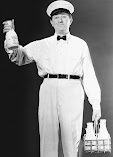
When I was a kid, my family — as well as the majority of the families in my Northeast Philadelphia neighborhood — had many household staples and services delivered right to our house. On an almost daily basis, long before I awakened for the day, the little metal box that rested just outside our kitchen door, was filled with glass bottles of milk by a mostly unseen (at least by me) milkman. Sometimes, the milk was accompanied by butter and perhaps a dozen eggs. In summer, my mom would order lemonade or fruit punch and they would arrive along with the milk, in the same type of glass bottles. Every so often, on a weekend morning, I would actually get to see the milkman when he would come to our house to collect payment for his deliveries. He looked just like the guys I saw on TV shows and commercials. He wore all white with a black bow tie and shiny-brimmed cap. He'd park his truck at the foot of our driveway, bound up to our house and gently rap on our kitchen door. My mom would let him in and, depending on the amount of the bill, she'd pay in cash, extracting a few dollar bills and coins from her purse. If the Pincus family tab had gone unpaid for a few weeks (which was normal for my family, in keeping with my father's notorious mishandling of funds), my mom would pull her checkout from her purse and dash off a voucher for the outstanding dairy balance.

In addition to milk and dairy products, we'd get potato chips, pretzels and other assorted snacks from the Charles Chips driver. Once a month or so, that familiar truck would pull up and the driver would carry two big metal tins up to our house. The light-tan colored one was filled with crispy potato chips and the dark one was filled with pretzels. My brother would practically wrestle the pretzel tin out of the driver's hands. My brother laid unspoken claim to any pretzels that entered our house, almost demanding permission if a small sample of his private stock was to be had by anyone who wasn't him. Charles Chips offered cookies once in a while. I liked those. I liked them so much, my mom would often hide them somewhere in the kitchen so I didn't consume them all as soon as the package was opened. She knew what little Josh was capable of.

When I went to the supermarket with my mom, I marveled at the fact they sold items that we got delivered right to our house. Who was buying these items here?, I would think. Doesn't everyone get these things delivered? 

Along with milk and snacks — and even dry cleaning — the Pincuses had home delivery of bread. Following approximately the same schedule employed by the milkman, the bread man would supply us with loaves of bread, as well as hot dog and hamburger rolls. In direct competition with Charles Chips, Freihofer's Bakery (from whom we got our delivery) would offer cookies. Their marketing strategy was different, however. The driver — a genial, avuncular gentleman that the kids in the neighborhood called "Uncle Ben" — would tear open a package of cookies and hand them out to the kids, in hopes they would beg their moms to purchase additional boxes. Of course, it worked... at least in my house it did. Uncle Ben would wave to the kids as he drove his open-door delivery truck through the streets of my neighborhood. He'd politely tip his hat to the kids as he visited their homes, toting loaves of bread that would soon be used for school lunches and weekend breakfasts.

Before I was aware of an unprovoked pall of anti-Semitism befalling my neighborhood, I was friendly with several kids on my block. Prior to bigoted parents filling their children's impressionable minds with ideas that my family and I were responsible for killing the savior they worshiped on infrequent Sunday visits to church, we were all content to play tag and dodgeball and kick-the-can together, regardless of our religious beliefs. One of my closest friends was Lou, who lived across the street from me. Lou was a year or two older than I. However he, nor any of his siblings, ever attended the same schools the rest of the kids in the neighborhood attended. They all went to what was referred to in the 60s and early 70s as "special school." This, of course, was a euphemism for a facility for either delinquents, incorrigible troublemakers or learning disabled students. Lou and all of the children in his family fell into some or all those categories. Lou's father reminded me of the title character of a popular newspaper comic strip called "Moose Miller." Moose was a slovenly, scheming, unkept, ne'er-do-well who spent most of the daily three panels and Sunday eight panels reclining on a threadbare and patchwork sofa surrounded by stray animals, beer cans and trash. That was Lou's house. It was dark and dank and it smelled of burnt food, pet waste and sweat. No one was quite sure what Lou's father did for a living, as he was always home when other dads were off at work. Lou's mom was equally as disheveled. She would sometimes join a little sidewalk klatch of neighborhood moms to discuss household matters and maybe even a little gossip. Lou's mom would casually reveal some sort of unusual quirk that she obviously thought was the norm. Her views on personal grooming and child care were always points of astonishment among her peers. Once, she told my mom that she and Lou's father were never "officially" married — which was positively shocking in the pseudo-suburban world of the late 1960s. Lou had two unseemly older sisters who were both — as I recall — slutty and scummy. He had an athletic older brother who was friendly with my athletic older brother. Lou's younger brother was creepy in a "Damien" from The Omen sort of way. He often yammered on nonsensically and I don't remember understanding too much of what he had to say.

One summer afternoon, Lou and I were cavorting on our front lawns, as kids on summer vacation were prone to do. Our playtime was interrupted when our pal good old Uncle Ben pulled up in front of my house in his Freihofer's Bakery truck. "Hiya, fellahs!" he said, as he bounded out of his truck carrying two loaves of bread and his ledger book. He was obviously going in my house to collect on the outstanding balance owed by the Pincuses. Would my mom be able to satisfy our debt with the few bucks she had stashed in her purse... or would she have to dip into the available funds in the checking account?

This is where memories get a bit fuzzy. To this day, I am still not sure how, why or by whom the idea was hatched... but hatched it was. Lou and I stopped our playing and approached the rear of the parked Freihofer's Bakery truck. With Uncle Ben otherwise occupied in my house, one of us opened the back door and together we entered the truck. Inside, the back portion of the vehicle was lined with aluminum wire shelving, fully stocked with dozens and dozens of packaged loaves of bread, assorted rolls, cookies and a smattering of other baked goods that the Pincus family never requested. As though possessed by a controlling but unseen force, Lou and I began tossing loaves of bread out the open back doors and into the street. Acting like we were a crucial link in a makeshift "bucket brigade" that ended with us, we seemed to be determined to empty that truck of every last example of bakery product we could grab. Again, after 50-some years, I seemed to have blocked out the motivation behind our actions. We were just two dumb kids throwing bread out of a truck for no good reason.

As Lou and I were engaging in our decidedly illicit behavior, my brother and Lou's brother were sitting across the street on Lou's front porch. Their discussion was abruptly cut short when, in his peripheral vision, my brother caught a glimpse of several oven-fresh projectiles being launched out the back doors of the nearby Freihofer's truck.

"Hey!," my brother exclaimed, "There's bread coming out of that truck!" He directed Lou's brother's attention to the scene. Just then, Uncle Ben, having finished his financial dealings with my mom, was greeted by the same scenario as he ambled down my driveway. He quickened his step and advanced towards the posterior of his truck. He stood, dumbfounded and speechless, at the open doors, finally mustering up the strength to say "Hey!" Almost instantaneously, he was joined at the back door by my mom... and she was none too happy. She shrieked! She didn't say any actual words, she just shrieked. She took a small step into the truck, grabbed my forearm and yanked me out. My mom dragged my up the driveway — still shrieking — and threw me into the house. A few seconds later, Lou's mom appeared and led Lou to his house in a similar fashion, although she clamped two vise-like fingers onto his earlobe instead of his forearm... but the sentiment was the same.

I honestly don't remember too much of the aftermath. No doubt, I received a severe spanking from my mother who was tasked with keeping order in the Pincus household and was a much more feared disciplinarian than my ineffectual father. I'm not sure if home deliveries from the fine folks at Friehofer's Bakery continued. I do remember eventually purchasing bread from the supermarket, so perhaps my mother severed all ties with Uncle Ben's employer out of sheer humiliation. However, this story received many a retelling over the years. First in high school and continuing on in my life. When he became old enough to understand what his father did was dead wrong, I related the "bread truck incident" (as it had come to be known) to my son — who delighted in its stupidity and reveled in my childhood shortcomings. At recent gatherings in our home, I have even caught my son beginning the story to an eager group of listeners and inserting himself as the main protagonist. "That didn't happen to you!," I'd say, "That's my story!" 

Somehow, that made the story funnier.