Showing posts with label concert. Show all posts

Sunday, February 15, 2026

tonight I'm gonna have myself a real good time

This post is purely self-indulgent. It is 100 percent for my enjoyment. You may like it. You may not, but I'm telling you right now. It's just for me. So, if you want to skip this week's entry on It's Been A Slice, that's okay. Next week, I'll write about some old television show or a movie or some bit of day-to-day tedium that pissed me off. But this week, it's just a little "me" time.

One evening in the late fall of 1974, thirteen year-old Josh Pincus was up in his bedroom in his home in northeast Philadelphia. I had my radio tuned to WFIL, the radio station in Philadelphia for all the top pop hits of the day. Everyone listened to the "boss jocks" on WFIL and I was no different. I was probably avoiding getting my homework done when I heard a very very unusual sound coming from the radio. Among the glut of Olivia Newton-John and Mac Davis and America and Tony Orlando and Dawn, the song I was hearing sounded like aliens. I was stunned. I was motionless. I was mesmerized for a full three minutes. When it was over, the DJ announced to me and the entire Delaware Valley that we had just heard a new song called "Killer Queen" by a British band called Queen. I was an instant fan.

The following year, I became a concert goer. Going to concerts at 14 years-old was no easy task. I wasn't old enough to drive and I wasn't familiar enough with the intricate and often unreliable public transportation system in Philadelphia. Fearing that the wrong bus or subway train would deposit me in a different country where I'd never see my family again, I was not above securing (read: begging) my mother to provide door-to-door car service to one of the two (maybe three) major concert venues in the city. My mom was only too happy to drive my friends and I. My father... well, I never asked my father. If we weren't going to see Al Jolson, my father was not driving. Besides, he had to get up early the next morning for work... even if it was his day off.

In the winter of 1977, Queen released A Day at the Races, the follow-up to their international hit album A Night at the Opera. Somehow, some way, I had missed Queen when they brought their A Night at the Opera tour to the Tower Theater for three nights in 1976. But I was not going to let that happen again. Queen had become my favorite band and I was determined to see them live. Based on their new-found popularity, the natural venue, after playing the 3000-seat Tower Theater, was the self-proclaimed "America's Showplace" — The Spectrum. The Spectrum, an 18,000-seat multi-purpose facility, was the home to the Philadelphia 76ers and Flyers. It also hosted a wide variety of musical acts — all presented with the worst acoustics one would expect from a place more suited for hockey games. But — no! — Queen was relegated to the Philadelphia Civic Center, another multi-use venue. (The Beatles played there in 1964.) Alas, The Spectrum was hosting Electric Light Orchestra on February 11, 1977, so Queen drew the short straw. Nevertheless, I purchased a ticket for $7.50.

The night of the show, my mom graciously drove a friend and me to West Philadelphia. We made firm arrangements where to meet my mom at the show's conclusion. My friend and I nervously maneuvered our way through the general admission crowd. We decided that a viewing point on the second level would be optimum. I really didn't want to fight the crowds stage side. So we spotted and laid claim to two empty seats in the balcony and waited for the lights to dim.

Irish rockers Thin Lizzy kicked things off. They buzzed through a quick thirty minute set highlighted by "The Boys are Back in Town," their current big radio hit. After a brief intermission, Queen burst on to the stage to the shrieking guitar strains of "Tie Your Mother Down," the lead track on their A Day at the Races album. From there, they tore through 22 more songs, each one more exciting than the last. Their four-song encore included "Hey Big Spender" from the Broadway musical Sweet Charity and a "queen-sized" take on Elvis Presley's "Jailhouse Rock." Freddie Mercury stalked and swirled and pirouetted his way right into my teenage heart. I thought my head was going to explode... and that would have left my friend without a ride home. 
Despite touring in support of A Day at the Races well into the summer of 1977, Queen released News of the World, their sixth studio album in October of the same year. Where did they find the time? The album boasted a rare double-A sided single in "We Will Rock You/We Are The Champions" which was already charting ahead of the album's official release. Two Queen shows were announced at the Spectrum for late November 1977. I bought tickets to the first night. At the time, it was unheard of in my social circles to go see a band on more than one night of a multi-night stop in your city. Except if you were a Deadhead... and I surmised that Deadheads only went to more than one show in a tour because they were so stoned that they had forgotten where they were the previous night. Besides, the night of Queen's second show was Thanksgiving, and there was no way my mom would have allowed me to go to a concert instead of spending the evening wrestling a turkey drumstick away from my Aunt Claire. 

I got a ride to the concert with my brother, who also had tickets. His seats were in the front row to the right of the stage, but the view was obstructed by a giant speaker. My seats were in the fourth row but dead center. Queen hit the stage with a fast, hard version of "We Will Rock You" and immediately segued into the epic "Brighton Rock" from Sheer Heart Attack. They packed a whopping 31 songs into their evening's set. The night ended when Freddie Mercury disappeared backstage and reemerged with an armful of  pink carnations. One by one, he nonchalantly tossed them out to the crowd... and I caught one. (I took it home and - almost fifty years later - I still have it.) My brother watched a speaker and the top of Brian May's head.

Almost a year to the day, Queen returned to the Philadelphia Spectrum in support of their album Jazz. This release, again, was supplemented by another double-A sided single "Bicycle Race/Fat Bottomed Girls." I honestly remember very little about this show. I was sitting seventeen rows from the stage, which, in the scheme of the Spectrum, might as well have been in the parking lot. In between the time I bought my ticket and the day of the show, I contracted a bad case of pneumonia. It was bad enough to keep me out of school for a few days... but not nearly bad enough to stop me from seeing Freddie and company live in concert. At one point during the show, I thought it would be a good idea to stand up on my chair like everyone else in my section. It turned out not to be a wise decision at all. As soon as I stood up, I lost my balance and fell backwards. Luckily, my friend who I was attending the concert with, grabbed me and kept me from hitting the floor. I suppose the show was really good. I read about it in the newspaper the next day.

After a two-year hiatus, Queen returned to Philadelphia for The Game tour. For some reason, I don't remember who I went to this concert with. I don't remember how I got there. By 1980, I had a driver's license. I may have borrowed my mom's car. I really don't remember. I have seen a set list and read about the show. I remember seeing Freddie Mercury come out on stage perched upon the shoulders of Darth Vader. I remember him referring to my beloved city as "Filthydelphia." I even remember being confused by their choice of opening song - "Jailhouse Rock." I remember being surprised by the inclusion of an opening act, something they had dispensed with for the previous two tours. I just don't remember being there. 

In 1982, I met the future Mrs. Pincus. She walked into the restaurant where I worked. After a few dates and "getting to know you" conversation, I revealed myself as a Queen fan. She was a Deadhead. She didn't have to tell me. It was apparent by the stickers on her car and the music in her apartment. In April of 1982, against my better judgement and despite my long history of concert-going, I was taken to my first (of many) Grateful Dead shows. Let's just say... I love my wife a whole lot more than I love the Grateful Dead. I only thought it would be fair to take my soon-to-be wife to a Queen concert. (Turnabout is fair play.... isn't that how the saying goes?) So I did. Queen was coming back to Philadelphia in the summer of 1982. I bought three tickets — one for me, one for the future Mrs. P and one for the original Mrs. P... my mom. My mom had developed into quite the avid Queen fan. She bought Queen albums before I did. She turned up the volume when she heard Queen songs on the radio. (Oh, she recognized Queen songs on the radio, unlike my dad who... well, my dad didn't.) So, that summer I took the two Mrs. Ps to their very first Queen concert. One was ecstatic. The other, not so much. 

The show — in my very biased opinion — was great. My mom cried the moment Queen took the stage. (She loudly voiced her dismay with opening act Billy Squier, commenting: "Well, he sucked!") My mom was just beside herself — dancing and singing along and squealing like a teenager. Mrs. P-in-waiting, however, was unimpressed by Freddie Mercury's descent to the stage on a flower-covered swing, citing that Jerry Garcia never did such a thing. My future spouse questioned the band's numerous costume changes, asking if that was a ploy to cover for their lack of talent. I noted that Jerry Garcia had been wearing the same black t-shirt since 1968. We remained quiet for the rest of the show.

While Queen mounted several more tours before Freddie Mercury's death, they never returned to the United States after 1982. 

I got to see Queen five times. This week was the forty-ninth anniversary of that very first show. Time sure does fly when you get old you're self-indulgent.

Sunday, December 7, 2025

shticks of one and half a dozen of the other

When I was little, I had a bunch of kids from my block over to my house for a birthday party. My mom arranged for a bunch of games for my guests to play, like pin the tail on the donkey and musical chairs. For our version of musical chairs, I selected the record that my mom would play and stop during the course of the game. I selected "The Let's All Call Up A.T.&T. and Protest to the President March" from Allan Sherman's second album My Son, The Celebrity. I knew every word to that song. (As a matter of fact, I knew every word to every song on the five Allan Sherman albums that my parents had in their modest record collection.) The kids who came to my party had never heard this song before. You see, in a few years, these kids — the same ones who were jockeying for that last chair in my living room and stuffing themselves with birthday cake — would be made aware of the fact that the Pincus family were Jews and Jews killed Jesus. And, in their naïve eyes, that crime would be pinned squarely on me. But for now, they just listened to the silly song that played on our record player and eyed up the chair that they hoped to snag when the music stopped. The song — as far as they were concerned — was just an upbeat march. They were oblivious to the other tracks on the album. Tracks like "Al n' Yetta," "Harvey and Sheila," "When I Was a Lad" and other titles with a decidedly Jewish slant. None of these kids' parents owned any Allan Sherman albums. Nor would they ever.

My mom introduced me to the songs and humor of Allan Sherman. I thought the songs were funny, even if I didn't get all the references and jokes. I was six years old, for goodness sake! I had no idea who Benjamin Disraeli or Billie Sol Estes were. I had no clue that the tunes to which Allan sang his silly lyrics were actual songs. But, for some reason, these songs 
these albums — struck a chord with me. I just loved them.

When  I got a little older, I discovered the Dr. Demento radio show. Along with such novelty classics as "Fish Heads" and "The Cockroach That Ate Cincinnati," Dr. D often played a number of Allan Sherman tunes that I recognized from my youth. I still knew all the words, only now, I was finally getting more of the jokes. I finally was able to appreciate the clever wordplay Allan Sherman put into his parody lyrics. It was like I had unlocked a secret door and I was permitted to enjoy these songs — that were beloved to me anyway — in a whole new light. I was always intrigued by the definite Jewish appeal of Allan Sherman's music. It's kind of like Seinfeld or Mel Brooks movies. You don't have to be Jewish to enjoy and appreciate it, but if you happen to have been born and raised in a Jewish family, there are definitely a bunch of additional jokes you are privy to.

Allan Sherman's debut album was the fastest selling album at the time... and that time was 1962. That means two things. One - I am 64. I am at the tail end of Allan Sherman's first wave of fans. The original buyers of Allan Sherman's albums are dying off and their children, who enjoyed the songs secondhand, are also approaching the twilight of their twilight years. Most people in their 20s, 30s and 40s are not especially familiar with Allan's musical output. And two - Allan's efforts were soon eclipsed by four mop-top youngsters from Liverpool, England, whose infectious songs had far more impact on modern music than that chubby little guy's daffy little ditties. 

A few weeks ago, my son — a DJ on a local radio station — told me of an upcoming Allan Sherman tribute show planned for right here in Philadelphia. Thanks to our combined love of Allan Sherman, my wife and I made sure that our son was well versed in the celebrated satirist's music. The show, entitled Glory Glory Allan Sherman, a play on a play of Allan's Semetic-tinged take on the "Battle Hymn of the Republic" is sort of a preview of a proposed traveling revue with planned performances in other cities. The show would also honor the late music impresario Hal Willner and would be presented in Hal's eclectic and inimitable style. Tickets were secured and we counted the days.

The night of the performance arrived and the audience was just as I had imagined — comprised of collection of folks around my age, some older, not many younger. To be honest, if the event had taken place closer to September, one would have mistaken the entire assembly for Rosh Hashanah services. The roster of scheduled performers were recognizable names from Philadelphia and New York musical circles. After a few brief announcements (hmm... maybe it was Rosh Hashanah services?) the evening kicked off with an uneven and somewhat clunky take on Allan's best known song "Hello Muddah, Hello Faddah." Led by NRBQ's Terry Adams on piano, the otherwise silly song about a sad camper's lament was punctuated by an otherworldly interlude by 101-year old avant-garde saxophonist Marshall Allen of the legendary Sun Ra Arkestra. (Allen has made his home in Philadelphia since 1968.) While Allen's contribution was indeed mesmerizing, Terry Adams' out-of-kilter cadence of the lyrics was a bit disorienting and a lot confounding. A few low discontented grumbles made their way through the audience until the song's conclusion.
 
The show was put back on track and went full-speed ahead when Eric Bazilian, founding member of hometown rock heroes The Hooters, took the stage to offer an inspired interpretation of "Seltzer Boy" from Allan's My Son, The Folk Singer, complete with jarring percussion and Bazilian's soaring, plaintive vocals. One by one, Allan Sherman's joy was brought to fresh life by a stable of talented singers and musicians. The audience clapped, and in some cases, sang along to unforgettable bits of comedy like "One Hippopotami," "Sara Jackman," "Harvey and Shelia" and a slew of others.

A dapper Wesley Stace (the former John Wesley Harding), clad in a slick tuxedo, stirred up his British roots with a hilarious reading of "Won't You Come Home, Disraeli." The always unpredictable Rodney Anonymous (of esteemed Philly anarchists The Dead Milkmen) prowled the stage as he offered up a raucous assault with "A Waste of Money." (Rodney told me later that he really wanted to do "Pop Hates The Beatles," as he shares the same "distaste" for a certain Beatle drummer with me.) Low Cut Connie's piano-pounding Adam Weiner rendered an eloquent recitation of "You Need An Analyst" following an hysterical commentary about how half the audience were seeing therapists and the other half are therapists. Eric Bazilian then returned to the stage and strummed out the pseudo-Western "The Streets of Miami" while delivering the tale in a spot-on Old World Yiddish accent. (Perhaps, some day, he'll give us an "All You Zombies" with the same inflection.) The highlight of the evening was the incomparable Robert Smigel stealthily operating the endearing but vicious Triumph the Insult Dog as he "barked out" Allan's familial sing-along "Shake Hands with Your Uncle Max," replete with an endless supply of reappearing cigars. 

The whole cast appeared for the finale, "The Ballad of Harry Lewis," a tale of a brave garment worker would "went down with the ship" and the source of the show's title, followed by a few rousing choruses of "Don't Buy The Liverwurst." Afterwards, the entire cast happily mingled with guests, exchanging stories and anecdotes and precious memories. Everyone was there — whether on the stage or in the seats — to celebrate their shared love of Allan Sherman.

Eric Bazilian, Rodney Anonymous, Adam Weiner, Wesley Stace  all love Allan Sherman

And celebrate they did.

* * * * * * 

BONUS! Here is Wesley Stace, Eric Bazilian and Rodney Anonymous onstage together — something you will never ever see again. Allan Sherman's music is capable of magical things.

Sunday, November 9, 2025

wide open spaces

Every summer, Mrs. Pincus and a couple thousand other folks converge on Camden, New Jersey for a three-day music festival put on by my favorite Philadelphia radio station. The XPoNetial Music Festival — now in its twenty-fifth year — brings bands from all different genres to two stages for a celebration of fun, food, camaraderie and positivity. At least that's what it attempts to do.

The show is outdoors — rain or shine. Most years, the weather has been spectacular. A few times, performances have been cut short because of rain. One year, recently, schedules were shuffled around (with some acts being canceled completely) because the festival was scheduled the same weekend as a hurricane. This year, thankfully, the weather was wonderful. Bright sunshine, cool breezes coming off the nearby Delaware River and moderate temperatures never inching past the low 80s. Of course, an outdoor show is much more laid back. Attendees are free to stretch out and make themselves comfortable. Sure there are crowds right up in front of the stage, but for the most part, people keep a comfortable space between each other. Blankets are used to mark off territory and keep things orderly. But, there's always that one guy...

On Saturday afternoon — Day Two of the festival — brought a variety of musicians to the two stages. Early in the afternoon, local singer Owen Stewart brought a full entourage to the River Stage to play songs from his debut album. From our regular vantage point — at the very top of the hill of Wiggins Park's natural amphitheater — we could barely make out the number of band members, let alone any recognizable faces. They played and we listened and, like most other people, we engaged in conversation with our fellow concert-goers.
Later in the day, Swiss-born Sophie Allison — who goes by the stage name "Soccer Mommy" — took the River Stage with her band. I have heard a few songs by Soccer Mommy on the radio, but I don't recall anything special about them. A few songs into her set, I found myself losing interest. I began absentmindedly scanning the crowd and finding my attention drawn elsewhere. Just then, I spotted a friend of mine sitting just a few feet away. He is a local guitarist and has played in a bunch of bands in the area. He is also a fellow graphic artist. Although we are connected on several social media platforms, I have not seen him in person since the last time one of his bands played the XPN Festival in 2022. I scooted over to where he was sitting to say "hello." He smiled when he saw me and introduced me to his blanket-mates, who happened to be his parents. We talked a little about his upcoming solo musical project and the current status of his current band. Then I asked him how his design career was progressing. Before he got a chance to answer that one guy (from the second paragraph) who was sitting in front of my friend, turned around and tapped my forearm. "Hey," he began in an angry growl, "If you two wanna talk, take it somewhere else!" The last part of his demand was bathed in a particularly venomous tone.

I stopped talking. My friend stopped talking. We exchanged puzzled looks. I whispered that it was good to see him and I sheepishly slunk back to my blanket. I thought to myself: "Wow! That guy must be Soccer Mommy's biggest fan!" and I kind of felt bad that I was impeding on his moment. I glanced over to where I once was, expecting to see that one guy grooving to the monotonous sounds of Soccer Mommy, now that the air was rid of the distracting cacophony of my rude voice. Surprisingly, that one guy was gone. It took me less than ten seconds to get back to my staked-out, blanketed territory and that one guy didn't even stick around to the end of the song I was interrupting.

As afternoon turned to evening, I spotted that one guy over by the smaller Marina Stage. He was standing by the side of the stage while venerable folk-rock mainstay Richard Thompson was addressing the crowd between songs. During Richard's stage banter, that one guy was screaming incoherently, trying to raise his voice above that of the electronically-amplified Richard Thompson. As the next song began, that one guy turned on his heel and headed in the opposite direction.

Throughout the rest of Saturday and many times over the course of Sunday, I spotted that one guy in various places on the festival grounds. Every time I saw him, he was alone... and yelling. 

I hope he had a good time.

Sunday, August 31, 2025

the show must go on

In February 1991, I purchased Innuendo, the fourteenth studio album by Queen and the final effort to be released in lead singer Freddie Mercury's lifetime. As of right now, I have listened to the album in its entirety twice. The first time I listened to it was the day I brought it home from the store (probably a now out-of-business Tower Records). The second time was this past Tuesday, in my car on the way home from work.

I was an instant Queen fan from the moment I heard "Killer Queen" blaring from my radio one late October evening in 1974. Amid the breezy pop of Olivia Newton-John and the bass-heavy funk of Billy Preston, the sound that Queen produced in a precise three minutes was positively alien. I had never heard anything like Queen, and I needed to hear more. I bought Sheer Heart Attack, the full album on which "Killer Queen" appeared, as well as Queen's previous two releases, aptly named Queen and Queen II.

As far as teenage Josh Pincus was concerned, there was no better band than Queen. I saw them live several times, totally captivated by Freddie Mercury's charismatic stage presence. From the very beginning of each concert until the final note of the encore, Freddie held the audience in the palm of his hand. The band's recorded musical output continued to break rules, defy genres and offer new and innovating songs. 

Until it didn't.

In the 80s, my love for Queen sort of waned. My interest in other bands led me away from the teenage comfort Queen brought me. Bands like The Clash and Adam and The Ants brought an edgier grittier sound that Queen didn't attempt. In the middle 80s, the Queen sound became formulaic. They were putting out faux disco, faux punk and faux new wave. They were trend followers instead of trend setters. Even though I continued to buy Queen albums, I did so out of obligation rather than interest. I gave each new release the obligatory listen, then returned the disc to its jacket, never to grace my turntable again. Where I once knew the track listing of every single early Queen album, I couldn't even name a song on The Miracle or A Kind of Magic. A recent episode of the HBO Max sitcom Hacks opened with a Queen song called "Breakthru," which — I swear! — I had never heard before.

In February 1991, I bought Innuendo. I listened to it and, honestly, I hated it. Aside from the epic title track which kicked off the album, it sounded like an unfinished work-in-progress. Songs meandered and just never went anywhere. Their once-innovative songs now sounded forced and just all over the place. When the CD finished, I put it back into its protective case and returned it to the end of the "Q"s in the alphabetical arrangement on my music shelves. And there it stayed for 34 years.

Although he began exhibiting symptoms as early as 1982, Freddie Mercury was officially diagnosed with AIDS in 1987. Rumors about his health ran rampant in the press for years, with Freddie and his bandmates vehemently denying every one. Throughout 1989 and 1990, Queen recorded Innuendo, with a weakened and frail Freddie Mercury determined to finish the album. Bandmate and friend Brian May regularly expressed concern for Freddie, only to be brushed off. Freddie forced himself to hit unhittable notes and play complicated piano pieces. After Innuendo's release, Queen was honored with an award for Outstanding Contribution to British Music. The band attended the awards ceremony with a gaunt and pale Freddie Mercury in tow. It was his last public appearance. On November 22, 1991, via his manager, Freddie Mercury publicly confirmed his AIDS diagnosis. He passed away on November 24.

I don't know why, but just this week I pulled out my copy of Innuendo and loaded it into my phone to listen via Bluetooth on my commute home. The album seemed new to me, as none of the songs sounded the least bit familiar. But I listened. Freddie's voice sounded surprisingly strong, belying any hint of poor health. Some songs were intricately arranged. Others were playful and filled with snide humor. Most harkened back to the bombastic quality that made Queen Queen. It was like a trip in a time machine. 

And it was sad.

Innuendo seemed to play out as the coda of a career. It was Freddie Mercury's swan song and he was determined to go out like he came in — with a loud, obnoxious, sardonic bang. He knew his fate. He knew this was his final act. And the final result shows it.

I will probably never listen to Innuendo again. I don't see a reason to.

www.joshpincusiscrying.com

Sunday, July 20, 2025

sit down, get up, get out

This year — 2025 — marks fifty years that Josh Pincus has been going to concerts. In those fifty years, I have seen a lot of bands. An awful lot of bands. More bands than I can remember. I have seen bands you heard of. I have seen bands you never heard of. I have seen bands I never heard of. I have seen performers from all sorts of varied genres in all sorts of venues. I've seen swing bands and punk bands and classic rock bands — both on their way up and on their way down. I've seen old time crooners and experimental performers. I once saw actress Grey DeLisle (the voice of "Daphne" on Scooby Doo) sing a solo version of "Bohemian Rhapsody" while accompanying herself on the autoharp. Yep, I've seen it all.

Well, almost all.

There's a place in the world
for the angry young man
I am actually surprised by the number of really big names I have never seen. There are bands of which I numbered myself as a fan, that I just plain never saw in concert. Billy Joel, for instance. Growing up in the era of what is now respectfully (or dismissively) called "classic rock," it's strange that I never saw Billy Joel. He played in Philadelphia countless times when I was of prime "concert going" age. But, for whatever reason, I just never saw him. Same goes for Pink Floyd, although missing the Animals tour in 1977, due to a "misunderstanding" with my brother, is still a sticking point. On a smaller scale, I never got to see Shonen Knife, a trio of Japanese guitar-driven punk ladies that give The Ramones a run for their money. Although they have graced many small stages in my hometown over the years, I just was never able to coordinate a time to get to see them. When Billy Joel resumed touring after a brief hiatus from the stage and a permanent end to his recording career, I was encouraged to see him by a few friends. I declined, saying that I want to see cool 1977 Billy Joel, not old Billy Joel in the 21st century.

Old man, take a look at my life
Almost thirty years ago, a concert was announced in nearby Camden, New Jersey at the current Freedom Mortgage Pavilion, the shittiest venue on the East coast. 
Freedom Mortgage Pavilion has gone through a long list of monikers since its opening as the awkwardly-named "Blockbuster-Sony Music Entertainment Centre" in 1995. The headliner for this show was Neil Young. His supporting act was up-and-comers Ben Folds Five. I was never ever a fan of Neil Young, Crazy Horse, Crosby Stills Nash & Young, Buffalo Springfield or any other band that featured the globally-revered Canadian singer-songwriter. I was, however, a huge fan of Ben Folds Five and their self-titled debut album. I joked, at the time, that Mrs. P and I could buy one ticket for that show. I'd go in to see Ben Folds and company perform their brand of infectious piano-driven rock and roll. When their set was finished, I'd come out and pass my ticket to my wife, where she could enjoy the six-string guitar stylings and high-pitched whine of Mr. Young. (I know. I know. Cheap shot.)

Last night, I checked two performers off of my "never saw live" list. I don't really have a list. I hate making lists. That's just for dramatic effect. I like "dramatic effect" more that I like making lists.

The Dream Police - da da da da da da da
Earlier this year, classic rock icon Rod Stewart — Rod the Mod, if you will — announced the end of the large-scale touring portion of his career with an eighteen-city tour called "One Last Time." Rod clarifies that, at 80 years old, he has no plans to retire. He states he loves singing, he has a full head of hair (famously cut in his trademark choppy shag) and is still physically fit. He will still continue his residency at Caesar's in Las Vegas in the fall when this tour concludes. Mrs. Pincus, besides being a long-time, devoted Dead Head, has been a fan of Rod Stewart for about as long as she has followed Jerry Garcia and his trippy pals. But, as a veteran of numerous concerts, has never seen the soccer-loving singer perform live. Without going into detail, we were gifted two tickets to the Philadelphia stop on Rod's final tour. I was not then, nor have I ever been, a fan of Rod Stewart, but I was happy to attend with Mrs. Pincus... plus Midwest rockers Cheap Trick were opening each date as Rod's special guest. I always liked Cheap Trick. I owned copies of Heaven Tonight, Live at Budokon and Dream Police when I was in high school, yet Cheap Trick was one of those bands I never got to see live.

The night of the show finally rolled around and my wife and I found ourselves in the midst of a sea of old people. We parked and trudged up to the front gates of the venue along with hundreds and hundreds of bent-over folks wielding canes to assist their balance and their walking ability. I marveled at the crowd that was drawn to a Rod Stewart concert in 2025. I scanned the faces of the attendees — shuffling along with their heads down and bumping into other shufflers, lining up to purchase 26 dollar plastic cups of wine and 10 dollar slices of pizza, stopping to look around (right in the middle of moving foot traffic) as though they had forgotten where they were. (According to my wife of 41 years, I obviously haven't looked in a mirror lately.) We found our seats with the help of two unhelpful ushers and one very helpful one. Having arrived particularly early, we occupied our time by playing Wordle on our cellphones, something I don't recall doing in the the minutes leading up to Fleetwood Mac taking the stage at the Spectrum in 1977. The venue seats filled in with people dressed as though they were attending a pitch to purchase a time share, all sporting either sour scowls or slack-jawed stares. Much to my dismay, these people are officially my peers... whether I like it or not.

We're all all right! We're all all right! 
The lights dimmed at 7:30 on the dot. None of this "we'll start when we feel like it" bullshit for the older crowd. We have self-imposed curfews, you insolent whippersnappers! The PA blared "Ladies and gentlemen, the best fucking rock and roll band - Cheap Trick!" and the four members of the band sauntered out to the stage. (Side note: I have a long-time gripe with bands comprised of one [or none!] original members under the guise of the band you know and love. Cheap Trick currently includes three of the four founders, although bassist Tom Petersson left for seven years in the 80s, but returned. Enigmatic drummer Bun E. Carlos retired in 2010 and was replaced by guitarist Rick Nielsen's son Daxx. Daxx has been keeping the rhythm for fifteen years. In my convoluted rules, they are still Cheap Trick, despite a small adjustment in personnel. Queen....? That's another story.) The volume shot up and Cheap Trick ripped into their raucous cover of The Move's "California Man," a song which they have made their own. This was followed by hit after hit after hit. Rick Nielsen switched guitars about thirty times, each one more elaborately decorated than the previous, and frequently doused the first few rows with handfuls of guitar picks. Lead singer Robin Zander — at 72 — still shows off his pin-up boy good looks and his virtuoso vocals still sound as good as they did in the 70s. Cheap Trick still has regular album releases (A new one is coming in October! Brace yourselves, kiddies!) and tours constantly. As evidenced by certain members of the audience, Cheap Trick is still someone's favorite band. Their set most definitely woke up the Rod Stewart crowd who were counting on a brief nap before the headliner began.

Young hearts be free tonight
When Cheap Trick took their final farewell bows, I noted that signing Cheap Trick as the support band on this — or any — tour was a gutsy move on the part of the tour promoters. They are a tough act to follow. The fact that the overwhelming majority of the audience was there to see Rod Stewart could only be the show's saving grace. Dozens of crew members quickly and efficiently cleared out any remnants of a Cheap Trick performance as they readied things for the elaborate production that would be Rod Stewart's final large scale hurrah. Admittedly, I was never a Rod Stewart fan. I didn't dislike Rod Stewart in the way of a ....say... Dave Matthews. I just never purchased a Rod Stewart album, but I didn't switch the station if I heard a Rod Stewart song on the radio. Rod and his band — a guitarist, a bassist, a drummer, a stand-out saxophonist and a group of six young ladies - fresh from a Robert Palmer video - would provide some lively and complementary backing vocals, as well as a plethora of assorted instruments — kicked things off with a high-energy rendition of Rod's creepy 1984 hit "Infatuation." From then, it was a showcase of Rod Stewart's greatest hits, including highlights from his time as lead singer of Faces and his celebrated solo career. "Ooh La La," "Tonight's The Night," "Maggie May," "Young Turks" — they were all there and punctuated by some very compelling and high-tech staging and imagery. Rod even covered "It's a Heartache," the 1977 Bonnie Tyler hit. This probably furthered the confusion of those who assumed that Rod and his signature raspy vocals was behind the song originally. All in all, Rod Stewart is a true showman. With the exception of the few instances he disappeared for a costume change, at no time was he not the focus of the various antics taking place on the stage. The band, with the six ladies at the forefront, was given a place in the spotlight while Rod retreated backstage for a brief respite and wardrobe refresh. But when he returned, it was all Rod, all the time. Rod Stewart is 80 — 80! — and he's got better moves than performers a quarter of his age. Rod barreled though a comprehensive overview of his seven decade career. He wiggled and shimmied and shook and kicked. At one point, the one-time hopeful professional soccer player, butted soccer balls off of his blond-tressed head into the frenzied audience. (Um... he's 80!) He even plucked a bewildered toddler from the audience — sporting an "I ♥ ROD" t-shirt — and deposited her on the stage  to the delight of her parents and the crowd. The night drew to a close with a heartfelt take on "Some Guys Have All The Luck." A very fitting sentiment.

While this show didn't make me a fan, it was a pretty entertaining night. The company was great. The tickets were free and I got to enter two "checks" on my list.

There is no list.

Sunday, May 4, 2025

conversion

On April 25, 1975, I saw my very first concert. It was just a few months before my 14th birthday. At the time, I was trying to ween myself off of a steady musical diet of AM radio bubble gum pop. The airwaves were jam-packed with the likes of Leo Sayer and Olivia Newton-John and The Bay City Rollers. Sure, Elton John was riding high, but I sought something... louder....something... harder. I found satisfaction in Alice Cooper's Welcome to My Nightmare. This was the pseudo-subversive demon rocker's first solo effort after leaving the namesake band from which he pinches his stage moniker. So with my mom's permission, I scraped together the impossible sum of $6.50 and purchased a ticket to the show. I convinced a couple of classmates to join me, and after securing a ride from my mom to the Spectrum (the South Philadelphia multi-purpose venue that succumbed to the wrecking ball in 2010), we were all set.

My friends and I found seats in Section C at the massive Spectrum and waited — impatiently — for the festivities to begin. A forty minute set from bassist Suzi Quatro got everyone in the mood for an evening with Alice Cooper. So, when the lights went out and Alice materialized from the darkness, bathed in ethereal purple light, we knew we were in for a night of wicked fun. Sure it was innocent, but there was still something bad about it — and "bad" was "good."

Almost 50 years later — to the day — I attended my most recent concert. My son, a DJ on a local Philadelphia radio station, arranged for two tickets to see Nick Cave and the Bad Seeds at The Met, a newly-rehabbed former opera house on North Broad Street that has emerged as the go-to venue for bands not quite popular enough to fill the Wells Fargo Center (the shitty multi-purpose South Philadelphia venue that replaced the equally-as-shitty Spectrum). The Met is looming and cavernous, appointed with ornate wood carving and an abundance of gold leaf. It made for a great setting in which to see Nick Cave. (This was the fourth time I saw the Australian rocker and each performance was mesmerizing.)

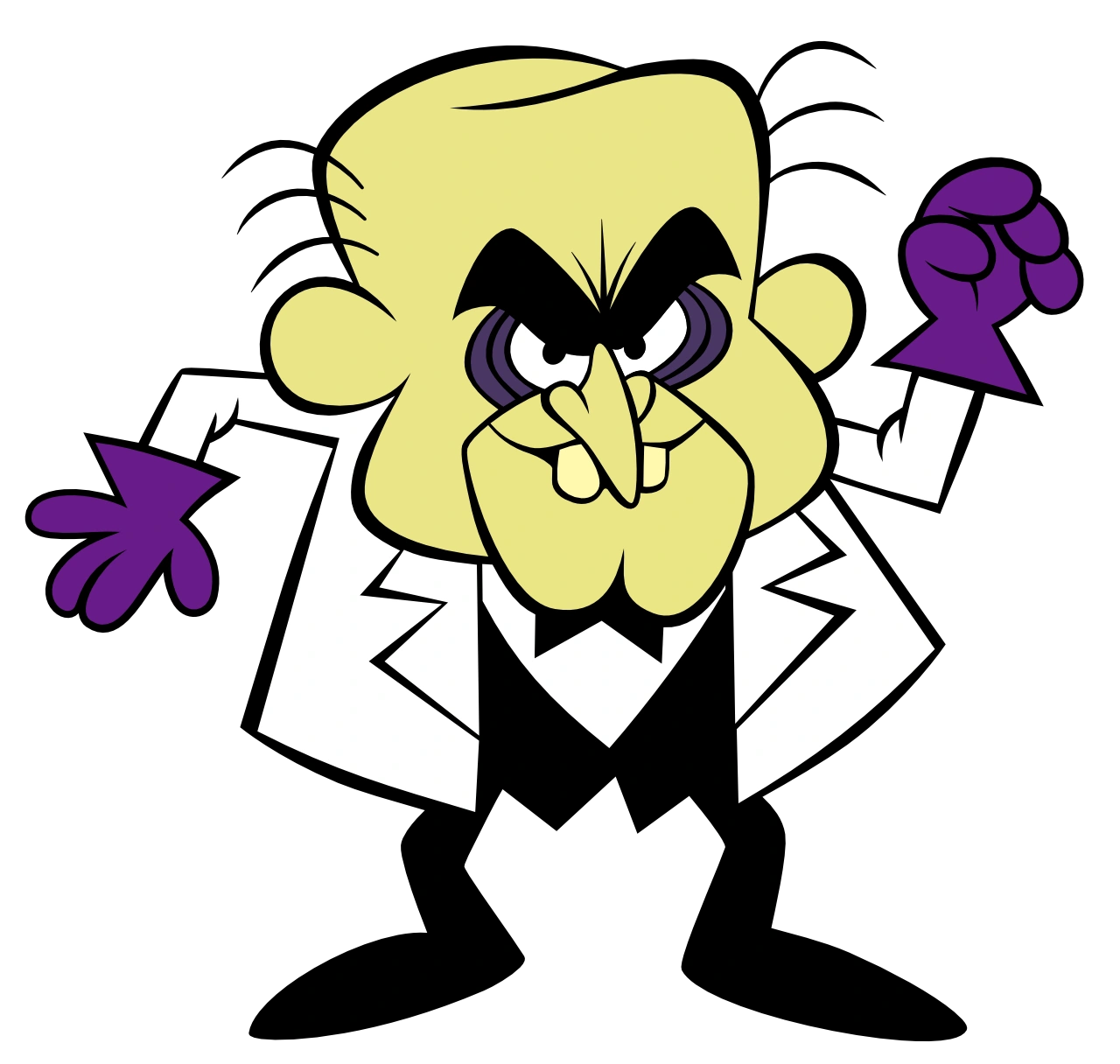
Alice Cooper and Nick Cave are similar... sort of. They both exude a sense of malevolence, of danger. Both singers' songs feature dark imagery and grim messaging. Alice Cooper's stage show relies more on visual props, costume changes and little vignettes. Way back in '75, I saw Alice fight — and decapitate — a cyclops. I saw Alice get his head chopped off in a guillotine. I saw Alice perform a Busby Berkeley-style kick-line with a troupe of tuxedo-clad skeletons. I saw Alice wield a snake and swing his microphone stand at those in the front row. It was scary and exhilarating and — most of all — entertaining. However, it was all presented with an underlying feeling of goofiness. It was fun. It was cartoony. It was the Coyote dropping an anvil of the Roadrunner. It was Simon Bar Sinister threatening the citizens of Capitol City with a snow gun. It was Moe poking Larry in the eyes and hearing that familiar "DOINK!" sound. Alice sang about school and movies and scary ghoulies hiding under your bed. It was scary... but not too scary.

On the other hand, Nick Cave seems to be genuinely dangerous. Nick Cave brings menace — an unsettling, unpredictable menace — to any stage he sets foot upon. Looking dapper — like an undertaker — in a dark suit and tie, Nick Cave leans into the audience with a scowl and a growl from the very first song to the very last. He flips his cordless mic to the wayside with the same carefree indifference as a kidnapper kicking his bound-and-gagged victim out of a moving car. His laugh is reminiscent of Satan. His deep vocals resonate a threatening tone, offering a no-nonsense missive as each song-story unfolds. He spins dark epic tales of unsavory lowlifes, biblical outcasts and desperate life challenges. His between-song patter, while sometimes playful, still carries a palpable capriciousness, that keeps the audience on its collective toes. You get the feeling you should be checking for the closest exit... you know... just in case things get icky... and there's always the chance they could. Whereas Alice Cooper's portent is presented with all the seriousness of a water pistol, Nick Cave's malice appears real. Alice Cooper waves a rolling pin at you like a comic-strip housewife waiting for her drunken husband to return home from a late-night bender. Nick Cave is David Berkowitz stealthily sneaking up to your parked car and shooting you in the back of the head while you're making out with your boyfriend. 

The audience at a Nick Cave show is entertained, but still, made to feel vulnerable. It's thrilling and, at the same time, uncomfortable. It's like pulling back the curtain and instead of seeing Willy Wonka's chocolate waterfall, you witness a Black Mass just as they're getting to the human sacrifice part of the service.

I think if I had seen Nick Cave instead of Alice Cooper when I was 14, I would have sworn off concerts for the rest of my life. Now, as my 64th year on Earth approaches, I'm ready to see what the next concert offers.

Sunday, February 2, 2025

welcome back my friends to the show that never ends

Greg Lake's
Bar Mitzvah 'do
I loved Emerson, Lake and Palmer... when I was 13. A friend from school introduced me to the 1973 progressive rock classic Brain Salad Surgery almost a year after its release. I remember sitting in my pal Bobby's bedroom, in front of his stereo, positively mesmerized by the otherworldly sounds emanating from the speakers. I was accustomed to the pop of The Jackson's Dancing Machine, Terry Jacks' clawingly sad elegy Seasons in the Sun, George McCrae's pre-disco Rock Your Baby and the inane "ooga-chucka"s of Blue Swede's take on Hooked on a Feeling. In comparison to the three-minute ditties I heard on the radio, Emerson Lake and Palmer were positively empyrean. Bobby also commented that he wanted to get his hair cut for his Bar Mitzvah in the style that Greg Lake sported in a photo included in the album package. But it was the music that got me hooked. I went right out and bought a copy of the album for my very own. 

I played my copy of Brain Salad Surgery over and over and over. I loved it! The songs spanned a variety of styles, although they all seemed to complement each other. There were ballads and traditional madrigals and even a bawdy skiffle tune. It was all capped off with an epic, three-part pseudo symphony, chockful of Keith Emerson's signature synthesizers, Greg Lake's soaring vocals and Carl Palmer's inventive percussion. 

But, alas, my interest in Emerson, Lake and Palmer was short-lived. In the Summer of 1974, I discovered Queen and there was no looking back. Freddie Mercury and company — in my limited teenage opinion — were the epitome of innovation and experimentation. By the time the 70s ended, Emerson Lake and Palmer had gone their separate ways and I was entering my new wave and punk phase of musical interest.

As a white male in his 60s, I grew up in what is now looked back upon as the "classic rock" era. Okay, maybe I'm on the young side of that era, but, still, I was in the thick of it. To be honest, I loathe the classic rock era, with only a few exceptions. I still like the stupid bubble-gum pop of one-hit wonders like Reunion and  Paper Lace (ahhhhh.... Paper Lace....!). But, I cringe at the reverence that "classic rock" unjustly thinks it deserves. Well, maybe not the music itself. I suppose it's the fans of classic rock. The unwavering, narrow-minded, opinionated cranks that just know that "classic rock" is the greatest music ever produced. The ones that angrily try to convince the members of subsequent generations that they should be listening to classic rock and the music from their actual youth is frivolous and unimportant. Of course, their campaign is bolstered by the regular parade of classic rock-era bands that trot themselves out for a national tour with one original member and a subsidy of recruited musicians who weren't yet born when the band in question was enjoying the adoration of their youthful fans. (I experienced this at a recent show I attended purely as a social experiment and to get a blog post out of it.)

"Is this bloody thing on?
C'mere and help granddad
with this, luv?"
A few days ago, I was mindlessly scrolling through the "Reels" on Facebook. Between the brief clips of stand-up comics, mouse-eared folks traipsing through Disneyland and cats climbing up curtains, the algorithm powers-that-be saw fit to stick in a promo video for an upcoming performance by.... um.... Emerson, Lake and Palmer. The video, shot from the unnatural angle of a nasal cavity examination featured an older man that I swear I just saw picking though low-fat yogurt in the refrigerated section at Aldi. In a weak and scratchy British accent, this bloke implored the viewer (in this case, me) to come see him at the historic Levoy Theatre in glorious Millville, New Jersey. He revealed that for an extra fifty bucks, you could participate in a  Q & A session, as well as pose for an exclusive photo with him and his band. It turns out this older gentleman with the thick-lensed glasses and gray crewcut was none other than Carl Palmer. The video looped again and he repeated the details of the performance by Emerson, Lake and Palmer. I was puzzled for a moment. After all, keyboard maestro Keith Emerson had taken his own life nearly ten years ago. Later the same year, vocalist/bassist Greg Lake (he of Bar Mitzvah-style hairdos) succumbed to pancreatic cancer at the age of 69. I got bad news for you, Carl. Your former bandmates ain't joining you in South Jersey... or anywhere else, for that matter.

Additional research showed that the performance — "An Evening with Emerson, Lake and Palmer" — would consist of  the 74-year old drummer flanked by two giant screens (in the promo video, Carl emphasized the enormity of the screens) showing decades old footage of Keith and Greg. Carl will be accompanying the film live on drums. For an extra fifty bucks — over and above your ticket price —  you can meet Carl face-to-face and possibly ask him: "Jesus, Carl.... what the fuck?" before they kick you out the door. That sounds like it's worth fifty bucks. Maybe you can also tell him to center himself better in the camera frame when he makes iPad videos. Y'know, before the venue door smacks you in the ass.

Look, I don't begrudge Carl Palmer (or Brian May or the guy from The Yardbirds who's not Eric Clapton or Jimmy Page or Jeff Beck) for wanting to earn a living. But do you really have to grab a buck at the expense of a dead and more popular bandmate? Is that the career path you had hoped for? If you ask Brian May, he'd confidently reply that "Freddie Mercury would have approved."

I guess Keith Emerson and Greg Lake are on board, too. Right, Carl?

www.joshpincusiscrying,com

Sunday, December 8, 2024

while a dark-eyed girl sang and played the guitar

I have been going to concerts for over fifty years. The concert experience has changed considerably in that time. My early concerts were at one of two venues in the Philadelphia area — The Spectrum and The Tower Theater. The Spectrum was originally built as the home of the Philadelphia Flyers. Someone had the bright idea to use the facility for concerts during the four months when no hockey games were played, along with the time that the Flyers were playing as the visitors in another venue. This left the Spectrum empty for a good portion of the year. In order to keep the revenue flowing, the Spectrum was used for other, non-hockey events, like the circus, the Ice Capades and concerts. Events like the circus and Ice Capades were fine because they were suited to the vastness of the open venue. However, each concert presented at the Spectrum further proved that the Spectrum was not made for concerts. The acoustics were terrible. Most of the permanent seats did not present ideal views of a stage that was set up at one end of the oval-shaped floor. The rest of the floor was filled in with uncomfortable folding chairs that were laid out on one level. Any seat beyond the first few rows from the stage offered a view of the evening's performance equal to that of watching a concert on a crowded bus.

As time went on and my musical tastes changed, I began to see shows at smaller, more intimate venues. I suppose I began to be more interested in bands who couldn't possibly dream of filling a venue the size of the Spectrum. A room that held just a hundred or so fans was more suited to the singers I gravitated towards as I got older. Luckily, Philadelphia was filled with smaller venues that offered a performance space for those acts that were just beginning to gain a following or to those who once experienced huge fame but were now on their way down the "popularity" ladder. 

I liked the smaller venues. They gave fans a close-up show as opposed to watching a tiny speck of a band on a huge stage that you were sitting a zillion feet from. The problem with a smaller venue is people. That seems to be the root problem of a lot of things. People don't know how to behave. They are selfish. They don't consider the feelings of those around them — those who also paid for a ticket. People talk with a loud voice. People sing along — loudly — with the performer. For non-seated shows, people push and shove and lean over other folks who got to the venue early to stake out a good spot for the show. "People" who arrive a minute before showtime want the same accommodations without the logistics or situational planning. The worst offense committed by "people" is shouting out requests and trying to engage the performer in one-on-one conversation, as though they are a traveling minstrel and you are royalty.

Years ago, my son and I saw Inara George at a small (now defunct) venue called The Tin Angel. The Tin Angel was on the second floor of a popular restaurant. The place was accessed from a narrow staircase that led to a seating area that was roughly laid out like a bowling alley. It was long and narrow with a full bar along the rear wall. On the opposite end of the room was the tiny stage, barely large enough to comfortably accommodate a solo performer or, possibly, a duo, A three or four piece band found themselves jockeying for position, especially if one of the band members was accustomed to playing a full drum kit. Between the bar and the stage was a bunch of tables and chairs, all closely-placed so as to ignite instant friendships among the evening's audience. In an effort to fit as many people into a performance, there was a single line of chairs pushed up against the wall next to the stage, leaving a very narrow walkway to the restrooms and backstage area. Anyone wishing to answer the "call of nature" would have to deftly avoid elbowing a performer or stepping on the feet of a seated audience member. When my son and I saw Inara George, we occupied two of those stage-side seats. Before the show started, the seat next to me was taken by a sort-of disheveled man about my age who didn't take off his ratty coat or threadbare hat for the entire night.

Inara George is a very talented singer-songwriter. Her music can only only be described as "indescribable." She crosses genres from folk to electronic and a variety of others in between. She has released a number of solo albums and has been a member of several bands, including The Bird and The Bee with Grammy-winning producer Greg Kurstin. Inara is an engaging performer whose stage shows are filled with conceptual presentation. I've seen Inara George a few times and her shows are always delightful and always surprising. Plus, she's very friendly and very personable. She makes it a point to maintain her own merchandise table and greet each fan after the show. Inara is the daughter of the late Lowell George. Lowell was the founder of the pioneering rock band Little Feat, who were an early entry into the "alt-country" genre before it had a name. Lowell dabbled in country, folk, jazz, fusion and was a early purveyor of the "jam band" genre, often lumped into the psychedelia of The Graceful Dead and New Riders of the Purple Sage. As influential as Lowell George was, Inara George's musical output sounds nothing — nothing! —like that of her father.

Before the show began, I chatted with my son. I could sense that the disheveled guy next to me was not-too-stealthily listening in on our conversation. During a pause in my conversation with my son, the disheveled guy tapped me on the shoulder to inform me that Inara George was the daughter of Little Feat founder Lowell George. I looked at him and nodded, replying, "I know." I would say that, judging from the average age of the audience, most of the people at tonight's performance were aware of the disheveled guy's "insider information."

The show began. Inara danced around the stage with a couple of back-up dancers, all were wearing matching  diaphanous tops and were carefully aware of their footing to avoid tumbling off the stage. In between songs, Inara spoke to the audience, relating a story about how a particular song came to fruition or a humorous anecdote about touring the country.

Or, so I assumed.

Despite my close proximity to the stage, I had a hard time hearing everything Inara was saying. The reason was that the disheveled guy was screaming — screaming! — titles of Little Feat songs at the very top of his voice during every break in the music. Inara and her accompanists would sing a few songs in a row, then stop to introduce the next number. The disheveled guy would lean forward and shriek "FAT MAN IN THE BATHTUB" or "SAILING SHOES" or any number of other Little Feat compositions written and sung by Inara's father. During every single break in the music, my immediate air space was peppered with a running repertoire of Little Feat songs, as though the disheveled guy was reading the track listing from the back of the Waiting for Columbus album.

At the show's conclusion, Inara and company thanked the crowd and exited the stage. The approving applause didn't let up, in hopes that it would convince the band to return for an encore. The disheveled guy joined in, punctuating his applause with more, previously unmentioned Lowell George songs. (He did release a solo album just prior to his untimely death in 1979.) Inara et al  returned to the stage and — Surprise! Surprise! — her encore did not include a single Lowell George song.

I've been to other shows where audience members screamed at the performer, either a song request or some undiscernible string of words. The performer usually ignores such outbursts, either out of politeness of seeing there is just no point to acknowledgement. Every so often, a performer will berate such an audience member on behalf of the entire audience. 

I suppose Inara George was just being polite. After all, she does sing this...