Sunday, May 29, 2022

the search is over

When I'm not drawing or watching 40-year old shows on television or sassing someone on the internet, you can find me traipsing trough a cemetery, snapping pictures of grave markers. For over a decade, I have been visiting cemeteries all over the country — sometimes dragging my less-than-enthused family along with me. I sought out graves of famous people — mostly actors and those in the entertainment field. But I have also looked for other, lesser known folks who have made an unsung impact on humankind — if only celebrated for the proverbial "fifteen minutes of fame," only to be relegated to a small, sometimes forgotten, footnote in history as time passed. After my visits, I chronicle the experience with a (usually lengthy) blogpost, complete with photos, annotation and often snarky commentary à la the Josh Pincus you've come to know and love.... or at least know.

I rarely visit a particular cemetery more than once... for several reasons. First off, I'm lazy. Second, I feel once I've been there, wandered around, seen who I wanted to see, I'm done. I can check that one off my list (if I had an actual list). Plus, cemetery visits — especially the way I visit a cemetery — take a lot of planning. Famous people are not buried in their own special section. They are scattered all over the place because death is the great equalizer. No special treatment is given to those who commanded attention in life. Nope, they are just stuck in the ground, cemented into a crypt or incinerated to crispy remains just like everyone else. Sure, their final resting place may be decorated with elaborate sculptures, headstones and other accessories to make them stand out. But they are placed alongside simple folk with simple markers and they are just as simply dead.

Also, cemeteries are usually poorly marked for navigation. Few have posted section designations, Finding Grandma or Uncle Louie could prove difficult if you don't remember exactly where their plot is because you haven't been there since the funeral and the surrounding area is now overflowing with deceased neighbors. So prior to a planned visit, I track down an online map and meticulously plot a route with the invaluable help of findagrave.com or the tracking technology employed by various cemetery websites. More recently, my phone's GPS has been very helpful in pinpointing a particular grave lying silently in an obscured sightline.

Lucky for me, Philadelphia boasts a number of cemeteries that serve as the eternal home of some pretty famous people. One of the biggest and most beautiful is Laurel Hill Cemetery. Founded in 1836, Laurel Hill occupies 74 acres along a slender slice of land overlooking the Schuylkill River. It was conceived as a "rural cemetery," and welcomed the community as a gathering place for picnics and other social gatherings on its pastoral landscape, as well as a dignified place for burials. This was not an unusual concept. Laurel Hill, along with its predecessor Mount Auburn in Massachusetts, started a trend to take the "creepiness" out of cemeteries and make them accessible and friendly. This was very well-received, especially in municipalities that lacked the space for a public park. Those places combined the necessity of a cemetery with the necessity of a park to much success. I visited Laurel Hill for the first time in 2010 on a very cold December morning. Because the social aspect of Laurel Hill still exists (and is locally promoted), I have been back several times — once for a concert (that's right, a concert!) and two more times for "The Market of the Macabre," a craft fair geared towards the gruesome with its tongue planted firmly in its skeletal cheek. 
Mary, Sarah and Martha
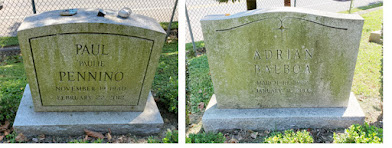
Laurel Hill is home to a large number of those who served in the military during various conflicts, including the American Revolution, the War of 1812 and the two World Wars. There are the graves of many of Philadelphia's past mayors and other government officials. There are prominent (and not-so-prominent) figures from Philadelphia's history who were instrumental in shaping the nation in its infancy. Small markers have been installed to assist visitors (using a GPS-powered phone app) on a self-guided tour. One can be enlightened to the contributions of Martha Hunt Coston (who invented the signal flare), Sarah Hale (who campaigned diligently to make Thanksgiving an official holiday. Sarah also wrote "Mary Had a Little Lamb") and Mary Pennington (who invented the egg carton). To show that they don't take themselves too seriously, there are two headstones on display that were used as props when scenes from movies in the Rocky saga were filmed at Laurel Hill. 
On my first trip, I took pictures of a small sampling of the famous people interred at Laurel Hill. I went equipped with a map and a list and my camera... and a heavy winter coat. It was freezing that day and I did my best to be efficient, minimizing the actual time I spent outside of my car exposed to the elements. After a few hours of taking pictures of the graves on my list, I noticed that there was one name that eluded me — Owen Wister. (He's the fellow pictured at the very top of this post.)

Owen Wister was born into an affluent Philadelphia family in 1860. He attended schools in Europe and eventually graduated from Harvard. At 22, he published a satire of the popular novel The Swiss Family Robinson. His humorous take was so well-received, it prompted noted author and humorist Mark Twain to write a letter of praise and congratulations to young Owen. The young writer spent many summers in Wyoming, mingling with real-life cowboys and ranch hands. He became intrigued and enamored with the lifestyle and was inspired to write several short stories based on extensive journals he had kept, chronicling his trips. Owen met famed Western artist Frederic Remington, who romanticized cowboys in his paintings, and the two remained life-long friends. Owen also was chums with rugged future president Theodore Roosevelt. With the success of his stories, Owen penned his opus "The Virginian," a sprawling, multi-leveled account of the American cowboy. This 1902 novel is recognized as the first in the Western genre we know today, spawning hundreds upon hundreds of novels, movies and television shows. Owen's novel itself was the basis for the popular 60s TV series of the same name.

Owen and his family are interred at Laurel Hill Cemetery under matching headstones, each one simply engraved with names, dates and a single cross.... and I'll be goddamned if I couldn't find any of 'em.

I returned to Laurel Hill four years later to see Philly punk rockers The Dead Milkmen in their highly-publicized concert among the crypts. By the time we arrived for the show, it was getting too dark to search for the Wister family plot. My quest would have to be put on hold for another time. I enjoyed the concert and tried not to think about Owen Wister and how the location of his grave mocked me in the darkness.

Just after Labor Day in 2021, Mrs. Pincus and I went to the annual "The Market of the Macabre," where we perused the wares of various vendors, all looking like they were in a dress rehearsal for Halloween. After a once-through of the small market area, I ventured out into the cemetery proper, once again in hot pursuit of my "white whale." I had even talked with one vendor who identified himself as a part-time tour guide at the facility. I asked the guy if he knew the location of Owen Wister's grave off the top of his head. The man rolled his eyes in thought for a second before sputtering out some nonsensical directions while pointing and gesturing to a distant, non-existent, location. In an effort to clarify, I asked where it was in refence to the grave of William Warner. (Though not famous himself, Warner's grave is. His remains are housed in a striking sarcophagus, designed and created by sculptor Alexander Milne Calder, famous for his statues that adorn Philadelphia's City Hall.) The alleged tour guide pointed some more and made even less sense despite being supplied with additional information. I wandered aimlessly around Section J (as denoted on a map of the grounds) to no avail. I passed the same headstones and plots over and over. None of them read "WISTER" and none looked like the photo I had seen of Owen Wister's grave marker online. Dejected (again), we left.

Yesterday was another gathering of the goth-leaning community at Laurel Hill. Yes sir! Another "The Market of the Macabre" was upon us. In addition to seeing what curiosities were available for purchase, I was determined — determined! — to make this my final attempt at finding Owen Wister's burial plot. We arrived 90 minutes before the official opening of the craft fair, but since Laruen Hill is a public cemetery, we were welcomed to stroll the grounds. I made a beeline to Section J. At the near corner of the section, I found two young volunteers (so identified by their neon yellow vests emblazoned with VOLUNTEER on the back) fiddling with their cell phones. "Hi," I said as I approached them, "Is this Section J?" and I pointed just past where they were posted. One of them — the young lady — confirmed my inquiry and returned her attention to her phone. To her chagrin, I continued my questioning. "Do you know where Owen Wister's grave is?," I asked. On her phone, she guided me to a small section of the cemetery's website, unknown to me prior to our conversation. Here, she explained, is a GPS-driven database. Just enter the name of the person you are seeking and a directional map pops up to show you the way. (I used a similar feature at Mountain Grove Cemetery in Bridgeport, Connecticut, while trying to find the grave of Marion Slaughter, the real name of country singer Vernon Dahlert.) I typed "Owen Wister" in the correct fields and, sure enough, a map with a route traced in blue and a dotted path leading to a pinpoint showed up on my phone's screen. I followed the computer-voiced directions happily... until I was informed that I had "reached my destination." The trouble was, I was still in the middle of the path that skirted the south edge of Section J... just a few feet from where I received the coordinates. I was right back where I started. But I was determined. I retraced the random path I walked through Section J back in September. I saw the Warner grave. I saw the other graves I had seen before. I did not, however, see any graves of the Wister variety. I exited Section J and stood on the paved path, turning around and around, trying to spot a place that I had not searched before.

Victory!
I spotted a small path, obscured by bushes, about 50 feet ahead and not looking at all like it was part of Section J.  I slipped past the bushes and was treated to a spectacular view of the Schuylkill River far below where I was standing. I was also treated to a spectacular view of Owen Wister's grave! I thought I heard a chorus of angelic voices offer a heraldic cry of victory. I swore the clouds above me parted and a single beam of golden light engulfed both me and the ancient marble headstone that stands to designate where Owen Wister's remains lie in eternal repose. I stood silently for a few minutes and took in the moment. I was Captain Ahab with a cellphone camera in my hand in place of a sharpened harpoon. Owen Wister's grave lay before me like the great Moby Dick, about to be photographed instead of pierced. I snapped a few pictures from a few different angles. I was soon joined by my son, who directed me to a spot behind the headstone, so he could compose and capture the moment as though I was a big-game hunter posing triumphantly with his long-sought prey.

I raised my arms and let out a loud "WOO-HOO!"

We bought tickets for the day's "Market of the Macabre," but I could have just as easily left right then and there..... satisfied.

Sunday, May 22, 2022

okhel tatzipornaim (אוכל ת'ציפורניים)

My dad had some traits that I have made a conscious effort not to carry on. He was a bigot. He was a liar. He was minimally educated. I like to think that I have risen above these shortcomings, as I don't label or compartmentalize people based on outdated and unfounded stereotypes. I don't lie. I am a voracious consumer of knowledge. Not necessarily useful knowledge, but knowledge just the same.

My dad had other traits that, because of genes and DNA and other physiological make-up of which I am no expert, I inherited. First of all, I look like my dad. It was not so apparent when I was younger, but now that I am approaching the age at which my father passed away, I am startled every time I look in the mirror. When I am innocently combing my thinning hair (just like my dad's), I see his all-too familiar face starting back at me and it is very unnerving.

My father had a very distinct way of walking. My mom regularly pointed out the comical display of watching my dad and me walk together. She said it was like watching two intoxicated ducks, alluding to the peculiar way we both shuffled along, knees bent, throwing our feet askew — toes pointed out and to the side.

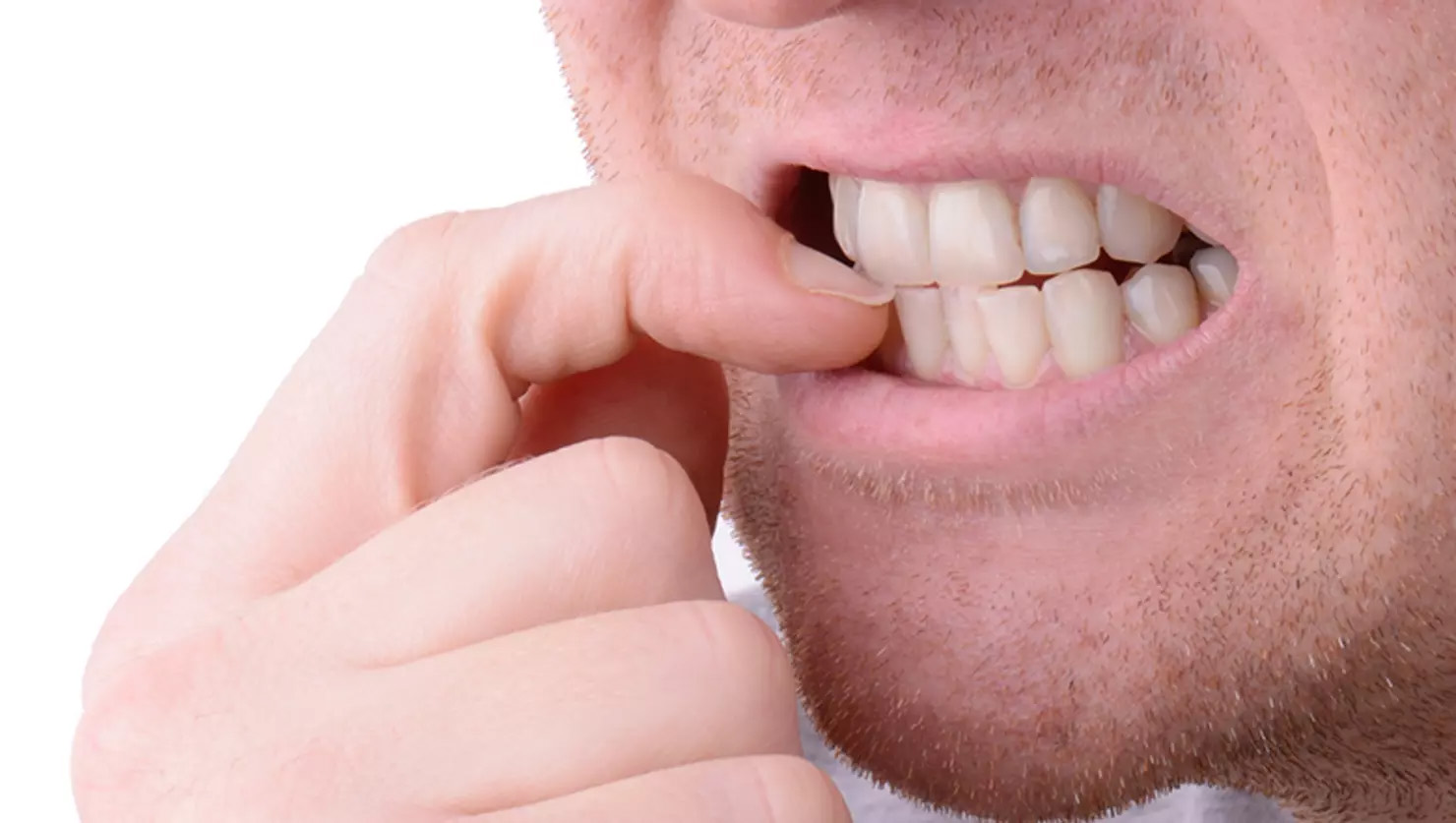
My father was a nail biter. A chronic nail biter. Either consciously or unconsciously, he would gnaw on his fingertips for hours. This was quite an accomplishment for him, because my father was a four-pack-a-day smoker, as well. But, somehow, between cigarettes, he managed to self-trim his fingernails down to grubby, jagged nubs. Unfortunately, I inherited this disgusting habit from my father. It was something I had no control over. Sometimes, I didn't even realize I was doing it. My mother would slap my hands away from my mouth and scold me. "Stop it!," she'd warn, "Take your fingers out of your mouth." I'd stop... only to find myself chewing on my fingernails within minutes of a recent reprimand.

Mine were worse.
To be honest, I was aware of how truly disgusting this habit was. Sometimes, I would chew my nails so badly, so deeply, that my fingertips would bleed around my cuticles. Sometimes, they would get infected. My mom would squeeze some kind of ointment on the affected area and cover it with a Band-Aid, thus preventing further chewing... at least until it healed. But, as soon as the bandage was off, that neglected nail was back in my mouth for an orally-administered manicure. In school, with no one to bother me, I would chew and chew on my nails all day... from the bus ride in to school, at my desk, at recess and on the ride back home. No one said anything to me about my nasty habit and my fingernails reflected it. When I got home, my mom would, once again, try in vain to stop — or at least curb — my ungual appetite.

As I got older, my mom just gave up. She tried for years to get me to stop biting my fingernails, until she finally gave in. She stopped cautioning me, hoping that soon a girlfriend or wife would take up the mantle.

Well, her wish came true. My girlfriend — who later became my wife, the celebrated Mrs. Pincus — was just as disgusted by my propensity to chomp on my digits. She was also just as determined as my mom (maybe even more so) to get me to stop. She thought nothing of physically pulling my hands away from my mouth. She routinely admonished my finger-in-mouth obsession, to little avail. My fingernails still exhibited the result of long periods of oblivious nibbling. Luckily, my son did not pick up my and my father's legacy. He did, however, join in the crusade to put a halt to my manual appendage munching.

Nice try, Madge.
One late evening, my wife and I were watching David Letterman's talk show. His guest that night was the one and only Madonna at the very pinnacle of her popularity. It was Madonna's first appearance on Letterman's show after a much-publicized pursuit. She took to a seat on the sofa alongside Dave, amid thunderous applause. I remember that she was very stand-offish and leery of Dave's infamous sarcasm. I also remember that she bit her nails profusely, often answering Dave's queries from behind a mouthful of hand. It was disgusting. I thought "Is that how I look?" After that show, I became very aware of when I was biting my nails... and I stopped.

Until I started again.

I found it very difficult to stop my nail-biting. I likened it to someone trying to quit smoking. Although I didn't smoke, I knew plenty of people who did. Some of whom successfully quit (like my mom) and some who half-heartedly quit, only to start up again (like my dad). I had been biting my nails for as long as I could remember, so stopping just like that was not going to be easy. Even Madonna was powerless to help.

I began to experience some dental issues, stemming from the hundreds of Snickers bars I consumed as a child. I was visiting the dentist on a regular basis to correct the damaged I caused. Some of my teeth were drilled and filled, others were filed and capped. All in all, my teeth were not as strong as they once were. While my dentist was doing her best to help my teeth maintain what little strength they had, it was obvious that a constant workout of chewing the alpha-keratin plates at the tips of my fingers had to stop. And — just like that, after decades — I stopped biting my nails.

But it doesn't end there.

Evidently, I don't trim my fingernails as often as my wife and my son would like. Yes, it's true, I no longer bite my nails, but the length at which I keep my nails is still an issue. While the nails remain — currently unscathed — at the tips of my fingers, my idea of a reasonable length and my family's idea of a reasonable length at which they should be kept differ greatly.

But, at least I don't bite 'em anymore. One battle at a time.

For illustration purposes only.

Sunday, May 15, 2022

buona fortuna, addio bambina

This story appeared on my illustration blog in 2020.

Sergio Franchi. What a melodic, romantic sounding name! It was very fitting for the Italian tenor with the robust voice and charming demeanor. Sergio Franchi! Throughout the 70s, he sang on The Ed Sullivan Show, filled the big showrooms in Las Vegas and toured the country, enchanting audiences that were mostly comprised of suburban American housewives looking to inject a little Continental excitement into their routine lives.

My mom was one of them.

My mom loved Sergio Franchi. As a teenager in the early 1940s, she was fan of big-band swing and was quite the accomplished jitterbug dancer. She swooned along with her contemporaries to the likes of Frank Sinatra and Eddie Fisher. She could be spotted at the famed Steel Pier in Atlantic City doing the Lindy or on the dance floor at Grossinger's in the Catskill Mountains "cuttin' a rug" with some guy whose name she barely knew. As long as there was music, my mom was there.

She always kept up with musical trends. She fell for Tom Jones in the 60s with his tight, high-waisted pants doing their best to contain his gyrating hips. She listened with heavy-lidded eyes to Bobby Darin and Mel Torme and Vic Damone. And then she discovered Sergio Franchi.

Sergio Franchi! Rugged, chiseled, Romanesque features. Barrel-chested and impeccably groomed — always sporting a simple yet elegant tuxedo, its bow tie usually undone by song number three of his repertoire. In later years, Sergio would display a trendy perm on his previously close-cropped 'do. His easy, but charismatic, personality and his wide smile entranced his audiences. And that voice! Magnificent, velvety tones that could handle popular tunes as easily as soaring operatic arias.

My mom never missed seeing Sergio Franchi at the Latin Casino when he came to our area. "The Latin," as it was colloquially known, was a very popular night club that moved from its original Philadelphia location to a larger venue just over the New Jersey state line. Despite its name, The Latin Casino was not actually a casino, although it attracted the same caliber acts that played the real casinos in Las Vegas. Frank, Dean, Sammy — they all performed there on nationwide tours that stopped in and around the City of Brotherly Love. Ironically, its downfall was the introduction of casino gambling in Atlantic City, putting a clause in performer's contracts not allowing them to appear with a certain radius of the seashore resort — a radius that included the Latin Casino. However, in its heyday, my mom would go with a girlfriend or her sister to see Sergio Franchi — but never with my father. He wasn't interested in going anywhere — especially to see some singer who wasn't Al Jolson. Good thing, too, because my mom was very uninhibited and I'm sure she offered her share of screams and cat-calls along with the other female members of the audience. One morning, after my mom had seen Sergio Franchi the night before, I came into our kitchen to find a red cloth napkin folded neatly on the kitchen table. My mom, with stars in her eyes, explained that Sergio had wiped his face with the napkin and handed it down to her at her stage-side table. It was as though the Lady of the Lake had touched Arthur's shoulders with Excalibur. In later years, Sergio Franchi moved his Philadelphia area stop to the Valley Forge Music Fair, a smaller, in-the-round venue just minutes from where George Washington led troops fighting for our country's independence. As far as my mom was concerned, they fought for her right to sit in the front row to see Sergio Franchi sing. In between songs, Sergio Franchi would address the audience, often remarking about the name of the town where the venue was located. "King of Prussia!," he would say, his diminished, though still present Italian accent rolling the "R". He'd gesture with his outstretched arm in a mock-majestic flourish as he repeated it "King of Prussia! I love to perform in King of Prussia, Pennsylvania!" He'd smile and the audience would giggle and sigh in unison, as though they had rehearsed

Surprisingly, my mom owned just one Sergio Franchi album... but she played it over and over and over again. It was a 1973 RCA Records compilation imaginatively titled This is Sergio Franchi. The cover showed two sketchy drawings of the singer — a close-up and a waist-up action pose — against a very generic 70s-style design and typeface. When she could gain control of the family stereo, she would blast This is Sergio Franchi the way my brother would crank the volume on Physical Graffiti. This is Sergio Franchi earned a place in our family's all-inclusive record collection, even if it looked out of place among the many releases by Queen, Springsteen and Elton John. (Oh, my mom listened to those, too.)

Sergio Franchi appeared on the popular morning talk show Regis and Kathie Lee in 1989. It would prove to be his final TV appearance. Afterwards, during rehearsals for a show at South Shore Music Circus in Massachusetts, Sergio Franchi collapsed on stage. He was hospitalized and the remaining dates of his summer tour were canceled. Testing revealed a brain tumor and, despite treatments including radiation, Sergio passed away in May 1990 at the age of 64.

My mom, who was fighting her own battle with cancer, was crushed when she heard the news. When she returned home from her chemotherapy sessions, she played her copy of This is Sergio Franchi until the grooves in the vinyl wore flat.

My mom passed away in October 1991.

www.joshpincusiscrying.com

Sunday, May 8, 2022

safety dance

In 1920, the Chicago Motor Club and the St. Paul, Minnesota Police Department each created a program involving elementary school children acting as crossing guards and safety monitors at the city's public schools. With more and more automobiles on the roads, children's safety was becoming a major concern. With strong support from the Catholic archdiocese in St. Paul, a small squad of young volunteers were outfitted with badges and Sam Browne belts and were stationed at various locations along common walking routes to schools. With instruction from working traffic police officers, the young charges were tasked with maintaining a safe passage to and from school for the younger students. They took their positions very seriously and the other students offered their respect and obedience to these new "authority figures." Within a few years, other cities launched junior safety programs of their own, with support and backing from local automobile clubs and police departments. By the mid-1930s, Junior Safety Patrols formed in municipalities across the country with membership numbering over 11,000. Currently, the program boasts participation from over 50,000 schools nationwide... and girls are permitted entry to the once all-male ranks.

Thinkin' 'bout the times
you drove in my car
In 1949, 11-year old Marvin Klegman was assigned to noontime duty at Lowell Elementary in Tacoma, Washington. As he walked to his assigned post, just before noon, he felt the ground begin to rumble. He spotted second-grader Myrna Phelps in the school yard and instructed her to remain still and stay clear of the school building. Marvin ran inside the building as an earthquake began shaking the structure. He found kindergarten student Kelcy Allen alone in a hallway. Marvin led Kelcy outside to safety, but was unable to make it clear of the crumbling building. Marvin lay on top of Kelcy, shielding him from the shower of rubble. Marvin was killed but Kelcy and Myrna were saved due to the young safety officer's direction and quick action. While undoubtedly stirring, this, of course, was not typical of the Junior Safety Patrol.

When I was in elementary school in the 60s and early 70s, of course, there was a Junior Safety Patrol. Perhaps you have visions of obedient, fresh-faced young men sporting that white Sam Browne belt accented with a shiny silver badge. Maybe you are envisioning a confident young man standing attentively at a busy street corner, taking extra care to ensure the safety and well-being of the tiny younger students on their way to another informative day of public school education. If that's the mental picture you have when you think back about the Junior Safety Patrol of your youth, then you probably didn't go to elementary school with me.

Cream of the crop
There were no "Marvin Klegman"s in my neighborhood. If there was, I'm sure he would have been verbally pummeled with the same anti-Jewish rhetoric I was subjected to. My neighborhood was chockful of street tough boys, just a few years away from a full-blown life of crime. They were sneaky, lying, deceitful little bastards who thought nothing of shoplifting, stealing a bike, or rummaging through Mom's purse for a few unaccounted for dollar bills. They would regularly pick fights with friends, throw snowballs at passing cars and spew a nasty stream of racial epithets when the mood struck. It was from this cesspool of humanity that my elementary school had to select members for their Junior Safety Patrol. Left with no choice, school officials weeded through the dregs of the dregs and came up with the least offensive they could find... like naming the nicest Klansman. Their final choices were unsavory little shits who, once adorned with a badge and a modicum of jurisdiction, became power-drunk enforcers wielding their minuscule authority as though they were sanctioned by J. Edgar Hoover himself. Some roamed the school hallways with their chests puffed out, their arms swinging at their sides and a snarl on their lips, silently daring anyone to challenge them. Others were assigned to "keep order" on the school buses on the morning commute as well as on the ride home in the afternoon. They would pace the center aisle of the bus, gripping the edge of every seat as they passed. They'd glare at the small, intimidated occupants of each seat with a beady-eyed threatening stare. Sometimes they'd stop at a seat where two trembling lower-class students were sitting. The "safety" (as they were colloquially named) would announce some trumped-up accusation ("You were talking too loud during announcements" or "You stood up while the bus was in motion"). As the scared student fought back tears, the "safety" would point an accusing finger in their direction and seethe though clenched teeth: "You're going up!" This was a threat that no one wanted to hear. "You're going up!" meant that once the bus arrived at school you would be taken straight to the principal's office — do not pass GO!, do not collect two-hundred dollars. It was a promise that was rarely — if ever — carried out. "Safeties" were just as scared of the school's principal as other students were. But, they didn't want you to know that. Instead, they behaved as though they were special agents, working on behalf of the principal's master plan of a tight grip on every student at his school. But, if the principal passed them in the hallway, they would choke up with paranoia just like everyone else. (Kind of like being followed by a police car and knowing you've done nothing wrong.) I don't know anyone who was taken by a "safety" to see the principal, but I witnessed numerous threats. (In reality, the principal was an easy-going, not remotely intimidating guy who enjoyed playing street baseball with the neighborhood kids, some of whom were my brother's friends.)

Unread
On the last day of school, I was riding the bus home for my final time as a fourth grader. I remained quiet for most of the ride. Suddenly a "safety" named Danny, an older boy from my neighborhood who — on several occasions — had levied some anti-Semitic comments in my direction, stopped at my seat and told me: "On Monday, you're going up!" My lower lip began to tremble and I could feel tears welling up in my eyes. Just then, one of my older brother's friends reminded me that this was the last day of school and there were no more "Mondays" left in the year. He added, reassuringly, that there was no way Danny would remember his unfounded threat three months from now when school resumed. I sighed with relief. Sure enough, my first September as a fifth grade student was unspoiled by a trip to the principal's office.

However, years later, Danny stole my bike.


Sunday, May 1, 2022

trouble-free transmission helps your oil flow

I will happily and openly admit that I don't know the first thing about cars. Sure, I know how to drive a car and I know how to put gas in a car, but that's about where my knowledge ends. This, despite working in the marketing department of Pep Boys — one of the country's leading auto parts dealers — is the cold hard (and, yes, embarrassing) truth. Anything further than turning the key in the... the.... uh... key turner thing and fueling up, I have to consult an expert. 

A few weeks ago (it may have even been a few months ago), the MAINT REQD on my car's dashboard began a constant illumination after just merely blinking when I started by car for my morning commute or when I was about to drive home after work. So, like any other car owner who has been in possession of his car for nearly two decades, I ignored it. Every day, I would see that light — those nine glowing capital letters — in my peripheral vision. Taunting me. Mocking me. Forcing my mind to begin to conjure up horror stories about burning out my engine (that's a thing, right?). I thought I should probably get ready to begin thinking about calling my regular mechanic to schedule an oil change. This is some sort of regular maintenance that needs to be done to cars, although (as we have already established) I don't have the slightest inkling as to what is does. I do know that while my car is in my mechanic's shop, he always seems to find something else that requires payment above the forty bucks that an oil change sets me back. I shiver at the notion of dropping my car off the night before the appointment and make arraignments to drive my wife's car to work, leaving her without a car all day, until my car is finished being serviced, after which my mechanic will sometimes drop my car off at my house. Sometimes, he asks me to leave the keys in the car — unlocked — and he'll come by my house in the morning and pick my car up. I am not comfortable with leaving an open invitation to have my car taken for the convenience of my mechanic. Needless to say, getting service for my car is not a smooth task. It's a rather complicated and inconvenient one, as a matter of fact. To make things even more difficult, my mechanic's shop is not open on weekends. I don't like to be inconvenienced and I really don't like to cause inconvenience for my wife. (Plus, I really don't like driving her car.) I decided to make other arrangements for paying someone forty or so dollars to turn off the MAINT REQD light on my dashboard. Oh yeah.... and get an oil change while they're at it.

A quick Google search revealed a Jiffy Lube a short drive from my house. I had been to Jiffy Lubes (or similar establishments) before. The experience as I recall, was less than enjoyable. I remember being unjustly pressured and "upsold" on unfamiliar car components and services that exponentially increased the cost of the standard advertised low base price for an oil change. I remember sitting in their dirty little waiting room and being approached by a grease-smeared guy in coveralls wielding a soot-caked piece of equipment he had removed from my car. With stern yet plaintive eyes, he explained that this "cabin diffuser" or "air condenser filter" or whatever the fuck it was, needed replacement or my car would burst into flames upon the next start-up, much the way Michael Corleone's Sicilian wife met her demise in The Godfather. With no choice but to agree to a new do-hickey, another sixty-seven-fifty was added to my bill. Minutes later, the same guy would return with possibly the same dirt-encrusted part, only this time, he was calling it by a different name. After delivering the same spiel — word for word from the corporate playbook, Chapter 6 Paragraph 3 on "How to Convince a Customer to Buy Something They Don't Need" — another double digits were tacked on to my running total. By the time I got out of there, the introductory price was now in triple figures and I was late for work. Many years and many cars later, I was ready to give Jiffy Lube another chance.

This location's posted hours showed they opened at seven o'clock on Saturday morning. After a quick cup of coffee, I was pulling in to the driveway of Jiffy Lube a little after seven. Behind the large, windowed garage doors, I saw one fellow wandering around the service area. I waited. I didn't honk my horn. I just waited. I knew he saw me. I was the only car there. He apparently reached for a switch and came towards my car, ducking his head as he exited under the rising door. I lowered my window. The young man in Jiffy Lube-logoed coveralls explained that his boss had left to pick up other workers and that he was not authorized to bring customers into the building. His speech was polite and very rehearsed. He was a mechanic, much more accustomed to applying a wrench to a bolt or tightening a valve or checking a dipstick. He seemed uncomfortable using words like "authorized" and pronounced it as though it was the first time he ever used it in a sentence. I smiled and said I would be happy to wait, asking approximately how long he expected my wait to last. He shrugged, adding that his boss only left a minute earlier. 

My wait was less than ten minutes, during which I fiddled with my phone. Soon, several more coverall-clad men joined my first contact and I was finally directed into the facility with a silent series of hand gestures denoting steering adjustments to be made so as not to dip one of my wheels into the oblong hole cut into the cement floor that would allow some unseen technician access to the underside of my car. Once given the "open palms forward" universal sign for "STOP," another guy leaned into my open driver's side window and greeted me with a memorized and approved Jiffy Lube greeting. This fellow sounded equally as awkward delivering speeches as required by his employer, but he made the most of it. I was handed a rubber-insulated iPad into which I entered my name and addresses of both the home and e-mail variety. I was asked to release the hood lock and I watched as my car's hood was raised, thus blocking my view through the windshield. I was able to observe the ensuing service though the small space between the raised hood's hinges. I could see hands inserting hoses and funnels into unseen tanks and reservoirs within the bowels of my car's engine. I could feel my car shake and shimmy as someone below me was giving the underside of my car what could only be described as an automotive rectal exam.

I sat silently behind the steering wheel, only answering the one or two questions directed to me. The first was what sort of oil I preferred. Knowing full well that the answer better not be "canola," I stupidly asked what my choices were, as though an offered selection would mean anything to my limited automotive knowledge. One of the technicians showed me a screen on the iPad with pictures of different Pennzoil products — all in bright yellow containers. (Obviously Pennzoil is the parent company of Jiffy Lube.) I pointed to the yellow container with the lowest dollar amount printed underneath it. The mechanic acknowledged my decision and disappeared. The next time someone spoke to me was when I was asked to "Start my vehicle." This request came from my first contact who spoke the word "vehicle" in the same unsure tone he used when he said "authorized" earlier in the morning. [Can't I just say "car?" No! No! Our research has determined that customers feel more at ease and will spend more money if we call their cars "vehicles." So, you will say "vehicles." Never, ever use "the C word."

When the hood of my car slammed shut, I knew my service had come to an end. The second mechanic (who took my identifying information), told me my total. I replied that I had a coupon and fumbled with my phone to show him the screenshot that I had taken. I held it out so he could scan the barcode on the coupon, He wasn't interested. He just noted the $13 discount and reduced the bill accordingly. Well, things certainly had changed since my last Jiffy Lube experience. No more dirty waiting room. I never left my car.... er, vehicle. No more pressured upselling. No more displaying of suspect parts needing replacement. Just a flat $44 bill and I was asked to pull out of the building and my credit card receipt would be brought out to me. 

With a little direction for my first contact, I pulled out of the building and waited. The guy thanked me for my business. I quickly asked him if he was able to turn off the MAINT REQD light on my dashboard. After all, that was the real reason I just spent $44, a reasonable cost for eliminating that little annoyance. He looked at me and said: "YouTube." "What?," I countered, trying to confirm if what I just heard was, indeed, instruction to go to YouTube on my own. He continued. "There are so many cars and years and models. Just go to YouTube and find out how to do it for your car."

I sort of chuckled politely and said "Oh, thank goodness for YouTube, huh?," but I couldn't believe what I was hearing. However, I wasn't about to argue. That would be pointless. Obviously, he was not interested in getting that light turned off. Surprisingly, he pulled out his own phone and began searching YouTube for the proper instructional video himself. Just then, another mechanic brought out my receipt and asked his colleague what he was searching for. When he was informed of my simple request to turn off that dashboard warning light, he turned to me and, as politely as a first grader asking for permission to leave the classroom, he asked if he could sit in the driver's seat of my car for a brief moment. I relinquished my car to his mechanical expertise. I could see him making pressing and turning motions and not fifteen seconds had passed when he stood up and said: "All done. Thanks for coming in." I returned to my car and saw the light was no longer glowing. Mission accomplished. 

My newly oil-changed, MAINT REQD light-dimmed car took me home. In a jiffy.


Sunday, April 24, 2022

beach baby

In 1963, producer Sam Arkoff created the "beach party" movie genre. With inspiration from the popular Gidget films and the obscure Love in a Goldfish Bowl, Arkoff signed teen idol Frankie Avalon and Disney dream girl Annette Funicello to appear in the imaginatively-named Beach Party, released by Arkoff's AIP studios in late summer 1963. With the pre-established formula of teens, bathing suits, music and a simple plot thrown in there somewhere, Beach Party was a surprise hit. It spawned eleven more films using the same premise, if not the same locale. The action in most took place on the beach, but some were set in a winter ski lodge and others on the blacktop of an auto race track. However, all were chock full of hunky boys on surfboards and cute girls in bikinis (except, of course, Annette, under strict orders from Walt Disney). They featured music from the top trendy bands of the day, including Dick Dale and the Del-Tones, "Little" Stevie Wonder, Bobby Fuller Four, The Hondells and a slew of one-hit wonders. There was also a roster of popular comedians and actors known for their work in the Golden Age of Hollywood. Buster Keaton, Don Rickles, Keenan Wynn and even Oscar winner Dorothy Malone had no problem lowering themselves to the sophomoric level of writing and humor of these films. They were, indeed, a hoot!

And, boy, do I love them!

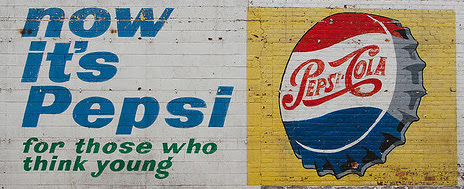
Of course, because Hollywood has a nasty habit of rehashing popular ideas, Arkoff's beach series gave other studios the cue to make their own entries into the genre, hoping to cash in on AIP's success. Just recently, I watched United Artists' attempt at making a "beach movie." The film — entitled For Those Who Think Young — is a mess. Just a mess.

Released in July 1964, between AIP's Muscle Beach Party and Bikini BeachFor Those Who Think Young wasn't really well thought out. Sure, it checks all the right boxes (Boys, girls, beach, music, Paul Lynde), but it lacks the endearing quality of the AIP films. Say what you will about the Frankie/Annette movies. They may be silly. They may have sub-par acting, but they do have plots. Paper-thin, yes, but plots, just the same. And they stick with those plots until the story is resolved. For a 90 minute feature, there is about 20 minutes worth of plot, allowing plenty of room for dancing on the beach, comical mugging from Buster Keaton and Mickey Rooney and a song or two from the two lead actors. But everything is neatly and satisfyingly summed up by the film's conclusion. And there's even enough time for another song and waving "bye-bye" to the viewing audience.

For Those Who Think Young
starts off with good intentions. Good-looking James Darren is chasing pretty Pamela Tiffin (obviously, Shelley Fabares wasn't available, so they got someone who looks like her), much to the dismay of her over-protective uncle. All that is laid out in the first five minutes. Then, somewhere along the way, the plot is abandoned. There is a disjointed subplot involving a romance between Bob Denver and Nancy Sinatra. Suddenly, a major shift is made that makes Tiffin's uncle, played by up-and-coming comedian Woody Woodbury, the lead character. James Darren and Pamela Tiffin disappear for long periods of time, taking their storyline with them. Meanwhile, Woodbury monopolizes the screen with a little help from Paul Lynde and a pre-Ginger Tina Louise as a stripper. As the film winds to a close, character actor Robert Middleton is revealed to be an underhanded villain of some sort. He is outed, disgraced and everybody sings... and drinks Pepsi. Yep, at the time, "For Those Who Think Young" was the current advertising slogan for the Number Two cola company. At times, the movie feels like an extended commercial for the soft drink, made apparent by the blatant product placement. See?.... a mess.

The actors are all fine. Bob Denver, just a few months prior to ingratiating himself as everyone's favorite hapless first mate, provides some comic moments as James Darren's valet. Nancy Sinatra, in a brunette wig, is a foil for Denver's antics, otherwise, she is essentially a prop. Claudia Martin (Dean's daughter) is included in the bevy of girls. I suppose when Dino heard that Ol' Blue Eyes' progeny was cast, well....you know. Paul Lynde is... well... Paul Lynde. He mugs for the camera, chews the scenery and delivers his dialogue like he's giving an audition for his role as Samantha Stephens' "Uncle Arthur." (Ironically, the AIP beach movies were predominantly directed by Bewitched showrunner William Asher.) Tina Louise acts as though she is giving a performance worthy of Academy Award consideration. Woody Woodbury, the true star of the movie, is a typical hack comedian. He made a handful of movies after FTWTY and, at 98 years old, still offers a stand-up act in a Florida comedy club.

I usually have a high tolerance for bad movies. I can sit through some real clunkers. Some of my favorites are some really bad movies that I can watch over and over again.

For Those Who Think Young will not be joining their ranks. I have already deleted it from my DVR queue.

Sunday, April 17, 2022

a matter of trust

If you are an avid and long-time reader of this blog (and why wouldn't you be?), you know that I am not particularly fond of the word "amazing." Well, to be more specific, the overuse of the word "amazing." It's a perfectly good word when used correctly, that is, to identify something that is truly — as the good folks at Merriam-Webster put it — "causing astonishment, great wonder, or surprise." In my opinion, that really applies to rare and impressive feats of science, like open heart surgery or building and later docking at the international Space Station. Unfortunately, the impact of describing something as "amazing" has been diluted once it had been attached to a really good plate of spaghetti or your kid bringing home an "A" on a book report.

Well, in the roster of "Things That Bug the Shit Out of Josh Pincus," please add the phrase "trust me." I hate — I mean positively hate — when I hear someone say "trust me."

Trust is a very strong, yet very fragile thing. It takes years to earn someone's trust. First, you have to get to know a person. Know their personality, their way of thinking, their beliefs, their morals, their behavior. You have to understand the way they handle certain situations and only then can you truly trust them. However, once that trust is broken, it will take a very, very long time to reinstate it — if it is able to be reinstated at all. If you trust someone and you catch them lying — even it is about something not remotely related to your trusting situation, their trust has gone right out the window. You think, "If they lied about this, then what else are they lying about...and can I ever trust them not to lie again?"

With that in mind, I cringe when I hear a perfect stranger or remote acquaintance say "trust me." Sometimes a little knowing wink is added to seal the asserted trust. Are you kidding me? Why on earth should I trust someone I just met, don't know and is trying to sell me something or influence my beliefs? "Trust me" implies some expertise - presented without any sort of qualification - on a particular topic or item. Some inside information that won't be shared. Just accept the "trust me" diclaimer as a guarantee that this researched knowledge exists. That will suffice. 

I see the phrase "trust me" appear a lot on many Facebook posts regarding movies, restaurants, vacation destinations or any number of things where an opinion is more suited that a statement of unwarranted trust. "We went to this restaurant and you do not want to get the pineapple upside-down cake — trust me!" Why? Why should I trust you, person on Facebook? Perhaps I would like the pineapple upside-down cake despite the fact that you didn't? Why should this be a trust issue? Am I not permitted to form my own opinion? Do you need to have everyone heed your pineapple upside-down cake decree?

When I was a teenager, I went to Walt Disney World with three of my friends. Actually, I went with two of my friends and a guy who was a friend-of-a-friend. It was the first visit to the famed theme park for everyone except the friend-of-a-friend. He had been before and fancied himself the expert. He took this opportunity to appoint himself "Official Tour Guide," pointing out things we should not miss and things we should skip. As we approached to queue line for the Enchanted Tiki Room, he waved his hand dismissively and loudly stated, "Oh, you don't want to go in there.... trust me." So, we trusted him and continued to walk past the entrance. A year later, we went to Disney World again, this time with a different fourth person. It took a year before we were able to experience the joyful attraction where "the birds sing words and the flowers croon" — thanks to someone I didn't really know telling me to "trust" them.

It is interesting to note that the people you should trust are the ones who don't tell you to trust them. They don't have to tell you to trust them. They don't have to tell you anything. Why should they? Trust is an unspoken bond between people. Once you are told by someone to "trust them," a question of their trust immediately registers. Why? Why are you reminding me to trust you? Is there an issue with your trustworthiness? 

Think about who tells you to trust them...
  • Politicians - There's not a trustworthy one that ever lived.
  • Salespeople (specifically those trying to sell you a car).
  • A guy on TV telling you the kitchen appliance he's offering will replace every other appliance in your kitchen.
  • Restaurant waitstaff - A confidentially-imparted note of trust on a particular menu item usually means the kitchen made to too much and the waitstaff were given instructions to push it on customers.
  • Facebook "friends" you have never actually met.... and in some cases, Facebook friends you have actually met. In this instance, the tried and true process of gaining trust should be employed.

But... for goodness sakes.... don't take my word for it.