Showing posts with label grave hunting. Show all posts

Sunday, January 4, 2026

many miles away

The internet is a funny thing. 

Thanks to the internet, I have discovered and interacted with dozens and dozens of people with whom I share a common interest. Some people share my love of old television shows and movies. Some, like me, have decided to make graphic design their chosen career. Others — and these are a decidedly eclectic group — have eschewed "normal" hobbies like stamp collecting, scrapbooking and crocheting in favor of seeking out the final resting places of celebrities. Yep... I number myself among those folks. And we are a surprisingly large contingent.

Through the magic of a network of interconnecting computers that stretches completely around the globe, I have "met" a number of folks who think it's totally normal to traipse through a cemetery on a sort-of scavenger hunt to locate the grave of a favorite actor that has passed... or perhaps an unsung hero to pay long overdue respect.

That's how I "met" Mark Masek. Mark Masek has written several books about cemeteries, chock full of tales of the famous, the not-so-famous and the notorious, for no other reason than keeping their memories alive. He also created the cleverly-named Hollywood Remains to Be Seen website, wherein he provides maps and directions for locating the graves of all levels of deceased celebrities across all of the major cemeteries in California and beyond. I used Mark's invaluable resources when I planned my first cemetery visit over a dozen years ago.

I don't remember when I first connected with Mark via the World Wide Web. It was either on Instagram or back when I was still a Twitter user. Then, when I joined Facebook, (reluctantly, I might add), Mark and I connected and engaged in "conversation" that reached beyond cemeteries. We discussed old movies and television programs from our youth. Then there was baseball. Mark was a fan of the beleaguered Chicago Cubs and we often exchanged friendly jabs when baseball season got heated as the coveted post-season approached. I would make rapid-fire posts about the soon to be beleaguered Philadelphia Phillies and Mark was right there to remind me what I had said about the Cubbies. In 2020, I began a series of artistic posts on my website that Mark really liked. I created movie posters, recasting current, popular titles with actors and actresses from Hollywood's Golden Age. I did my best to mimic the style, color, design and fonts for the era. I ended up doing 76 of them. Mark commented regularly, expressing his appreciation of the series and singling out some of his favorites. I was humbled by his compliments.

And then there was the calendar. Mark created the Deathiversaries calendar, a comprehensive chronicle of celebrity death anniversaries (a different one on each day of the year), accented by beautiful photographs of grave markers — one for each month. Mark did some extensive research and never duplicated anniversaries from year to year. Mark also took the pictures himself. Every year when I received my calendar, I'd post a little plug on my Facebook page, touting the possible appeal to my fellow taphophiles (yeah, we even have a collective name). Mark would always thank me for the post.

On December 15, in my own daily celebrity death anniversaries, I noted the 1675 passing of Dutch painter Johannes Vermeer. Mark commented that he'd never forget where he was when he heard the news.

On December 29, 2025, I had a brief online text conversation with Mark. A friend of mine posed an open inquiry for information about "print-on-demand" for calendars. I contacted Mark to ask about his experience with the company that prints his calendars. Once again (and certainly not unexpected), Mark quickly replied in great detail about his satisfaction with the process and the final product. He wished me and my family a "Happy New Year" and I returned the sentiment.

Another friend — also one I have never met, but who shares my love of cemeteries, television and all things pop culture — sent a message to me yesterday. She told me that Mark had passed away on New Year's Eve. 

I was devastated. It made no difference that Mark and I never met face to face. I had lost a friend. Condolences began to circulate among the tight, online group of cemetery enthusiasts to which I am connected — mostly from folks who, like me, had never met Mark. But, it was quite apparent that Mark was a good guy. Humble, knowledgeable, generous, funny, sweet, kind.

I'll never forget where I was when I heard the news. Rest in peace, Mark.

Sunday, July 16, 2023

and he keeps it out of sight

It is no secret that I love visiting cemeteries. Visiting cemeteries (without a funeral to attend) is something I have been doing for over twenty years. I been to many located all over the country, but, of course, I've been to the most in the Philadelphia area. My fellow cemetery enthusiasts (or taphophiles) have different reasons for cemetery visits. Curiously, none of them are specifically for funerals. Some like to see a particular style of grave marker, like those made of zinc (referred to as "zinkies") or cradle graves, used as planters or to designate the grave of a child. Others like to find unusual epitaphs. Still others seek porcelain portraits that adorn headstones, a practice that was popular in the 19th and early 20th century but has enjoyed a resurgence of late. My main goal on cemetery excursions is to locate and photograph the graves of famous people. "Famous" is a relative term. I've seen the  graves of actors and actresses, musicians and politicians, gangsters and sports figures and those of individuals who have made a notable contribution to society but whose name is unfamiliar. I am referring to people like Septimus Winner, who wrote a number of popular songs including Where Oh Where Has My Little Dog Gone? and Listen to The Mocking Bird or Cesare Cardini, who invented Caesar salad.

Visiting cemeteries or "grave hunting" as it known by those within the hobby, is fun (if you're into that sort of thing), but it is, by no means, easy. It takes a lot of preparation, a lot of walking, a full charge on your cellphone and a whole lot of patience. Before I go to a particular cemetery, I check with findagrave.com, an invaluable website with mostly detailed information about the famous, the unsung and regular folks like you and me... except they're dead. I look to see if the cemetery I have chosen to visit has a map that I can print. Then I check for plot locations of the graves I'd like to photograph and I mark them off on my printed map. More recently, grave listings have included GPS coordinates, making grave hunting somewhat easier. Because Find-A-Grave relies on user input, sometimes those GPS coordinates are wrong. Very wrong. That's when frustration starts to set in. I have often found myself walking around in circles, criss-crossing the same 20 square feet in a cemetery, expecting a long-buried corpse to pop up from under a headstone and scream "Hey! I'm over here" while he waves me in with his skeletal hands. So far, that has never happened. What has happened, though, is I have returned to a few cemeteries to try — over and over — to locate that one grave that has eluded me. I have succeeded a few times. 

Rosetta Tharpe — Sister Rosetta, if you will — is interred in a cemetery just a few blocks from my house. I tried for years to find her brown marble headstone to no avail. Until a fellow taphophile helped me out with some easy-to-follow directions. I offered my account of that incident HERE.

Owen Wister, the author who defined the Western novel, is buried in nearby Laurel Hill Cemetery. I have been to Laurel Hill many times, both for community events (like a concert or a flea market) or just to wander through the graves. On each visit, I have tried in vain to find Owen Wister's grave. I even asked a fellow who claimed he was a volunteer tour guide. His confusing directions nearly had me tumbling down the steep banks of the adjacent Schuylkill River. But, just last year, my quest ended when I breached a heretofore unnoticed hedge to find the entire Wister Family plot, with Owen's weather-worn marker as the centerpiece, staring back at me in unspoken defiance. If headstones could smirk... (That adventure in chronicled HERE.)

My third "white whale" is the grave of composer Marc Blitzstein. While his name is not as well-known as his contemporaries, you no doubt know his music. Marc wrote the English lyrics for Kurt Weill's and Bertolt Brecht's renowned Threepenny Opera - the German version of The Beggar's Opera featuring the malevolent, knife-wielding antagonist MacHeath. You know that version of Mack the Knife made famous by Bobby Darin in 1959? Well, he was singing Marc Blitzstein's lyrics to the tune Die Moritat von Mackie Messer, presented in its original German when Threepenny Opera premiered in 1928. Marc went on to compose the critically-acclaimed The Cradle Will Rock, a so-called "agitprop" musical directed by Orson Welles and produced by John Houseman. The show, an eventual hit, was shut down on its debut performance by federal authorities citing its antigovernmental overtones. In his career, Marc Blitzstein was very critical and dismissive of his contemporaries, although he mentored a young Leonard Bernstein and formed a lifelong friendship with the future conductor-composer. In 1964, while on vacation in Martinique, the openly gay Marc (unusual for the time) solicited sex from a trio of sailors in a bar. The sailors accepted Marc's offer, but once they reconvened outside in an alleyway, they brutally beat Marc and left him to die. His body was eventually identified and returned to his hometown of Philadelphia for burial. A small marker decorates his unassuming grave in Chelten Hills Cemetery... a marker I have looked for over and over and over again. (Marc's mother, sister and brother-in-law are also interred within the same plot. Each grave has its own marker.)

Last summer, when I was headed out to West Laurel Hill Cemetery for a return trip (a long overdue follow-up on a trip a decade earlier), I stopped at Chelten Hills. This time, I was armed with newly-posted GPS coordinates. I figured that I would spend fifteen minutes tops, now that an outer-space satellite would be guiding me right to Marc Blitzstein's grave. With a Google Earth map on my phone and an automated voice telling me where to walk, I was led to a spot near a large tree that did not — I repeat DID NOT! — contain the immortal remains of composer Marc Blitzstein. I was in the unfortunate situation I had been in many times before. Standing in the middle of a cemetery — fucked! — because some moron doesn't know how a GPS works. I traced and retraced my steps so many times, if someone was watching me, they would have assumed I was drunk and aimlessly staggering among the dead.

Here was the problem...
See that red pin? Well, according to a Find-A-Grave user, that's the location of Marc Blitzstein's grave. Now, do you see that yellow circle? That is the actual location of Marc Blitzstein's grave. While following the walking directions, that electronic voice announced that I had arrived at my destination, when, in fact, I had merely arrived at a bare patch of grass that had been hit by a lawn mower too many times. I slowly walked around that tree and a few others like it until I gave up, got back in my car and drove West Laurel Hill, where I had a very easy time finding each and every grave I sought. The GPS coordinates were accurate there in every case.

A few months ago, I sent an email to the Find-A-Grave user that had posted photos of Marc Blitzstein's grave. I asked if he could shine some light on the location of the plot. This past Friday, my email was answered... first with an apology regarding the lengthy response time. More importantly, the user supplied a photo, detailed directions and an accompanying map showing the precise location of the grave sought. One I could not pinpoint among the pathways that snake through Chelten Hills Cemetery.

This afternoon, instead of watching the Phillies drop a heartbreaker to the Miami Marlins, I drove out the Chelten Hills Cemetery to settle my score with Marc Blitzstein. Chelten Hills is just a short drive from my house. I pulled into the entrance and drove straight to the first bisecting path. I drove right past the spot where I had trounced the grass flat just a year earlier. I made the first left, drove to the end of Section C and parked. I took three steps out of my car and - goddamn! - if there wasn't the plaque identifying Marc Blitzstein's grave, just as "Mr. Sowerberry" (the helpful Find-A-Grave user) had promised.
I had written about Marc Blitzstein on my illustration blog, with hopes that particular post would end with a photo of Marc's grave, one taken by me nearly in my own backyard. But it was not to be. However, thanks to the assistance of someone else who thinks there are more interesting pastimes than collecting stamps, this tale has a happy and satisfying conclusion.

Would you like the see the other cemeteries I have visited? You can find them HERE.

Sunday, May 29, 2022

the search is over

When I'm not drawing or watching 40-year old shows on television or sassing someone on the internet, you can find me traipsing trough a cemetery, snapping pictures of grave markers. For over a decade, I have been visiting cemeteries all over the country — sometimes dragging my less-than-enthused family along with me. I sought out graves of famous people — mostly actors and those in the entertainment field. But I have also looked for other, lesser known folks who have made an unsung impact on humankind — if only celebrated for the proverbial "fifteen minutes of fame," only to be relegated to a small, sometimes forgotten, footnote in history as time passed. After my visits, I chronicle the experience with a (usually lengthy) blogpost, complete with photos, annotation and often snarky commentary à la the Josh Pincus you've come to know and love.... or at least know.

I rarely visit a particular cemetery more than once... for several reasons. First off, I'm lazy. Second, I feel once I've been there, wandered around, seen who I wanted to see, I'm done. I can check that one off my list (if I had an actual list). Plus, cemetery visits — especially the way I visit a cemetery — take a lot of planning. Famous people are not buried in their own special section. They are scattered all over the place because death is the great equalizer. No special treatment is given to those who commanded attention in life. Nope, they are just stuck in the ground, cemented into a crypt or incinerated to crispy remains just like everyone else. Sure, their final resting place may be decorated with elaborate sculptures, headstones and other accessories to make them stand out. But they are placed alongside simple folk with simple markers and they are just as simply dead.

Also, cemeteries are usually poorly marked for navigation. Few have posted section designations, Finding Grandma or Uncle Louie could prove difficult if you don't remember exactly where their plot is because you haven't been there since the funeral and the surrounding area is now overflowing with deceased neighbors. So prior to a planned visit, I track down an online map and meticulously plot a route with the invaluable help of findagrave.com or the tracking technology employed by various cemetery websites. More recently, my phone's GPS has been very helpful in pinpointing a particular grave lying silently in an obscured sightline.

Lucky for me, Philadelphia boasts a number of cemeteries that serve as the eternal home of some pretty famous people. One of the biggest and most beautiful is Laurel Hill Cemetery. Founded in 1836, Laurel Hill occupies 74 acres along a slender slice of land overlooking the Schuylkill River. It was conceived as a "rural cemetery," and welcomed the community as a gathering place for picnics and other social gatherings on its pastoral landscape, as well as a dignified place for burials. This was not an unusual concept. Laurel Hill, along with its predecessor Mount Auburn in Massachusetts, started a trend to take the "creepiness" out of cemeteries and make them accessible and friendly. This was very well-received, especially in municipalities that lacked the space for a public park. Those places combined the necessity of a cemetery with the necessity of a park to much success. I visited Laurel Hill for the first time in 2010 on a very cold December morning. Because the social aspect of Laurel Hill still exists (and is locally promoted), I have been back several times — once for a concert (that's right, a concert!) and two more times for "The Market of the Macabre," a craft fair geared towards the gruesome with its tongue planted firmly in its skeletal cheek. 
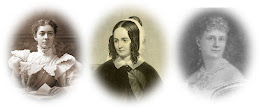
Mary, Sarah and Martha
Laurel Hill is home to a large number of those who served in the military during various conflicts, including the American Revolution, the War of 1812 and the two World Wars. There are the graves of many of Philadelphia's past mayors and other government officials. There are prominent (and not-so-prominent) figures from Philadelphia's history who were instrumental in shaping the nation in its infancy. Small markers have been installed to assist visitors (using a GPS-powered phone app) on a self-guided tour. One can be enlightened to the contributions of Martha Hunt Coston (who invented the signal flare), Sarah Hale (who campaigned diligently to make Thanksgiving an official holiday. Sarah also wrote "Mary Had a Little Lamb") and Mary Pennington (who invented the egg carton). To show that they don't take themselves too seriously, there are two headstones on display that were used as props when scenes from movies in the Rocky saga were filmed at Laurel Hill. 
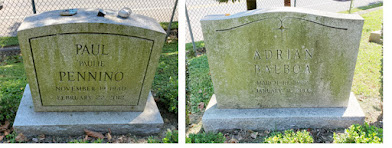
On my first trip, I took pictures of a small sampling of the famous people interred at Laurel Hill. I went equipped with a map and a list and my camera... and a heavy winter coat. It was freezing that day and I did my best to be efficient, minimizing the actual time I spent outside of my car exposed to the elements. After a few hours of taking pictures of the graves on my list, I noticed that there was one name that eluded me — Owen Wister. (He's the fellow pictured at the very top of this post.)

Owen Wister was born into an affluent Philadelphia family in 1860. He attended schools in Europe and eventually graduated from Harvard. At 22, he published a satire of the popular novel The Swiss Family Robinson. His humorous take was so well-received, it prompted noted author and humorist Mark Twain to write a letter of praise and congratulations to young Owen. The young writer spent many summers in Wyoming, mingling with real-life cowboys and ranch hands. He became intrigued and enamored with the lifestyle and was inspired to write several short stories based on extensive journals he had kept, chronicling his trips. Owen met famed Western artist Frederic Remington, who romanticized cowboys in his paintings, and the two remained life-long friends. Owen also was chums with rugged future president Theodore Roosevelt. With the success of his stories, Owen penned his opus "The Virginian," a sprawling, multi-leveled account of the American cowboy. This 1902 novel is recognized as the first in the Western genre we know today, spawning hundreds upon hundreds of novels, movies and television shows. Owen's novel itself was the basis for the popular 60s TV series of the same name.

Owen and his family are interred at Laurel Hill Cemetery under matching headstones, each one simply engraved with names, dates and a single cross.... and I'll be goddamned if I couldn't find any of 'em.

I returned to Laurel Hill four years later to see Philly punk rockers The Dead Milkmen in their highly-publicized concert among the crypts. By the time we arrived for the show, it was getting too dark to search for the Wister family plot. My quest would have to be put on hold for another time. I enjoyed the concert and tried not to think about Owen Wister and how the location of his grave mocked me in the darkness.

Just after Labor Day in 2021, Mrs. Pincus and I went to the annual "The Market of the Macabre," where we perused the wares of various vendors, all looking like they were in a dress rehearsal for Halloween. After a once-through of the small market area, I ventured out into the cemetery proper, once again in hot pursuit of my "white whale." I had even talked with one vendor who identified himself as a part-time tour guide at the facility. I asked the guy if he knew the location of Owen Wister's grave off the top of his head. The man rolled his eyes in thought for a second before sputtering out some nonsensical directions while pointing and gesturing to a distant, non-existent, location. In an effort to clarify, I asked where it was in refence to the grave of William Warner. (Though not famous himself, Warner's grave is. His remains are housed in a striking sarcophagus, designed and created by sculptor Alexander Milne Calder, famous for his statues that adorn Philadelphia's City Hall.) The alleged tour guide pointed some more and made even less sense despite being supplied with additional information. I wandered aimlessly around Section J (as denoted on a map of the grounds) to no avail. I passed the same headstones and plots over and over. None of them read "WISTER" and none looked like the photo I had seen of Owen Wister's grave marker online. Dejected (again), we left.

Yesterday was another gathering of the goth-leaning community at Laurel Hill. Yes sir! Another "The Market of the Macabre" was upon us. In addition to seeing what curiosities were available for purchase, I was determined — determined! — to make this my final attempt at finding Owen Wister's burial plot. We arrived 90 minutes before the official opening of the craft fair, but since Laruen Hill is a public cemetery, we were welcomed to stroll the grounds. I made a beeline to Section J. At the near corner of the section, I found two young volunteers (so identified by their neon yellow vests emblazoned with VOLUNTEER on the back) fiddling with their cell phones. "Hi," I said as I approached them, "Is this Section J?" and I pointed just past where they were posted. One of them — the young lady — confirmed my inquiry and returned her attention to her phone. To her chagrin, I continued my questioning. "Do you know where Owen Wister's grave is?," I asked. On her phone, she guided me to a small section of the cemetery's website, unknown to me prior to our conversation. Here, she explained, is a GPS-driven database. Just enter the name of the person you are seeking and a directional map pops up to show you the way. (I used a similar feature at Mountain Grove Cemetery in Bridgeport, Connecticut, while trying to find the grave of Marion Slaughter, the real name of country singer Vernon Dahlert.) I typed "Owen Wister" in the correct fields and, sure enough, a map with a route traced in blue and a dotted path leading to a pinpoint showed up on my phone's screen. I followed the computer-voiced directions happily... until I was informed that I had "reached my destination." The trouble was, I was still in the middle of the path that skirted the south edge of Section J... just a few feet from where I received the coordinates. I was right back where I started. But I was determined. I retraced the random path I walked through Section J back in September. I saw the Warner grave. I saw the other graves I had seen before. I did not, however, see any graves of the Wister variety. I exited Section J and stood on the paved path, turning around and around, trying to spot a place that I had not searched before.

Victory!
I spotted a small path, obscured by bushes, about 50 feet ahead and not looking at all like it was part of Section J.  I slipped past the bushes and was treated to a spectacular view of the Schuylkill River far below where I was standing. I was also treated to a spectacular view of Owen Wister's grave! I thought I heard a chorus of angelic voices offer a heraldic cry of victory. I swore the clouds above me parted and a single beam of golden light engulfed both me and the ancient marble headstone that stands to designate where Owen Wister's remains lie in eternal repose. I stood silently for a few minutes and took in the moment. I was Captain Ahab with a cellphone camera in my hand in place of a sharpened harpoon. Owen Wister's grave lay before me like the great Moby Dick, about to be photographed instead of pierced. I snapped a few pictures from a few different angles. I was soon joined by my son, who directed me to a spot behind the headstone, so he could compose and capture the moment as though I was a big-game hunter posing triumphantly with his long-sought prey.

I raised my arms and let out a loud "WOO-HOO!"

We bought tickets for the day's "Market of the Macabre," but I could have just as easily left right then and there..... satisfied.

Sunday, July 28, 2019

there ain't no grave can hold my body down

For many years now, I have been traipsing through cemeteries on a self-imposed scavenger hunt for graves of the famous, the not-so-famous and the nearly forgotten. On several occasions, I have dragged my family along, hoping they would share my interest in seeking out the final resting places of celebrities and those deemed "celebrities" by my own definition. More recently, I have found myself wandering alone among the headstones like a mouse hunting down the fermented dairy reward at the end of a laboratory maze.

Now, "grave hunting," as it is known among those within the hobby, is no easy task. It requires a lot of preparation including maps, route plotting, weather conditions, familiarizing yourself with landmarks. I have visited over two dozen cemeteries in various areas of the country, with different levels of success. In some of the largest cemeteries, I have come up empty-handed and just a bit frustrated. It has been my experience that most cemeteries are poorly marked and not accommodating for the living. But, armed with a map and a general knowledge of the headstone I am looking for, I have managed to find nearly all of the graves I have sought.

Except one.

I regularly scan findagrave.com, the indispensable resource for grave hunters worldwide. When planning a vacation, I always check to see if we will be within proximity of a cemetery where some famous folks are buried. In between trips to out-of-town graveyards, I check local cemeteries to see if there are any famous graves I can find without traveling too far. Curiously, I have only made return visits to two cemeteries - both within a few miles from my house in suburban Philadelphia. One is Ivy Hill Cemetery on Easton Road. The first time I was at Ivy Hill was in winter of 2011, just a few days after the funeral of boxing legend Joe Frazier. Ivy Hill is one of those unnavigable cemeteries and I had difficulty finding the former heavyweight champ's grave, as it was not yet marked by a permanent headstone. I revisited Ivy Hill a few weeks ago and happily encountered Smokin' Joe's beautiful black marble etched grave marker and I snapped a few pictures of the striking monument.

Northwood Cemetery, a mere mile-and-a-half from my house, has been my "white whale" for years. Relatively small and haphazardly arranged, Northwood boasts a few forgotten players from the early days of professional baseball, Eddie Griffin, the young NBA forward whose internal demons ended his life in a violent (and most likely deliberate) collision with a freight train and a Civil War Congressional Medal of Honor Recipient. It is also the eternal home of the inventor of rock and roll.

"What?" you're probably saying to yourself. "Wait just a second! Little Richard isn't dead!"  [This story was written prior to Little Richard's passing on May 9, 2020.] Or maybe you're saying "Elvis Presley is buried behind Graceland in Memphis!" Or perhaps you know that Chuck Berry is interred in a stately mausoleum in St. Louis, Missouri. (Maybe you're saying nothing and just wishing I would get on with this story already!) All of these responses are fine, but none of those performers invented rock and roll. I'm taking about Sister Rosetta Tharpe. She is the true creator of the musical genre that we now call "rock and roll." How come you've never heard of Sister Rosetta, as she was affectionately called? Well, because she was a woman, she was black and she was a lesbian — so, as expected, she was unfairly crushed by history and misinformation.

Sister Rosetta
Sister Rosetta began playing guitar as a child, accompanying her mother musically and vocally on the gospel tunes she learned in church. She began to experiment and started infusing Delta blues and New Orleans jazz into the traditional spirituals. She introduced a unique distorted sound on  her guitar,. Although a female guitarist was a rarity at the time, Rosetta was favorably received by audiences and began recording in 1938. 1938!!! Her first record, "Rock Me," was a sly reference to the term "rock & roll," which was a euphemism among the African-American community for sexual intercourse. She released three more "rock & roll" selections and joined up with the Cotton Club Revue, teaming with Duke Ellington, The Dixie Hummingbirds and, later, the all-white Jordannaires, presenting a mixed-race performance that was unheard of at the time. In her technique, you can hear the obvious influence from which both Jimi Hendrix and Prince drew. Rosetta remained popular for years until the fickle public (just as fickle as today's public) moved on to the next sound. But, Sister  Rosetta's spirit weaved its way through rock and roll right up to the present. She was acknowledged as a favorite singer of Johnny Cash and Aretha Franklin. The great Chuck Berry once confessed that his entire career was one long Sister Rosetta Tharpe impersonation.

I knew that Sister Rosetta was buried in Northwood Cemetery, after her untimely passing following a stroke on the eve of a recording session in Philadelphia in 1973. Her grave stood unmarked for decades until a fan-based fundraiser purchased and installed a headstone in 2008. 

A headstone that eluded me for over a year.

I drove through the narrow, winding paths at Northwood last March. I slowly passed the vast plots of graves, unrealistically expecting that elusive rose-colored granite marker to be enveloped in ethereal light, guiding me like the Star of Bethlehem. Of course, nothing close to that occurred. Instead, I circled that place a dozen times, reading the same names from the same path-side headstones on each subsequent lap. I finally gave up... only to return a few months later and re-enact the exact same procedure. I left that time feeling just as defeated. However, this week, while scrolling through Twitter, I came across a post — a retweet, if you will — from someone I do not follow. This person, @jeopardista, showed a picture of Sister Rosetta Tharpe's grave marker along with a sentiment from British singer-songwriter Frank Turner. The photo seemed to taunt me and I swear I heard it say "You can't find me!" in a high-pitched, sing-song voice. I immediately typed out a reply to @jeopardista, asking for some direction or at least an identifying landmark to help bring my quest for the grave of Sister Rosetta Tharpe to a successful close. My new Twitter acquaintance replied within a few minutes, directing me to the proper cemetery entrance, which way to turn and the approximate location of the rose-hued monument near the wrought-iron fence that skirts nearby 70th Avenue.

I hopped in my car and quickly drove over to Northwood. Following @jeopardista's instructions, I made the first left inside the 15th Street entrance. I traversed the rolling expanse of grassy areas until I spotted some familiar trees and then I saw the sign identifying 70th Avenue peeking though the posts of rust-speckled iron. I parked my car and walked with a determined gait towards the edge of the cemetery ground, the gleam of rose-colored granite just ahead. Excitedly, I approached the front of the headstone and, as I readied my cellphone's camera to capture photographic provenance, I read the sand-blasted inscription. It said something other than "Rosetta Tharpe." I frowned. I looked around. To my left. To my right. Behind me, two or three rows away, I noticed the back of another, similar-looking stone. I headed in that direction. This time, the block letters — Rosetta Atkins Tharpe Morrison — proclaimed this to be the correct grave. The end of my pursuit. My mission accomplished. I snapped four, almost identical photos, changing my angle ever-so slightly with each ensuing shot. But I did stand and look at the grave and marker for a good long time before heading back to my car.

I posted one of the photos to Instagram, along with a fairly lengthy explanation as to Sister Rosetta's significance. Over the course of the day, the photo attracted 29 "likes" including several members of the Philadelphia (and beyond) music community. That made me happy.

Plus, @jeopardista started following me.

(Here are some of my other cemetery adventures.)

www.joshpincusiscrying.com