Sunday, February 27, 2022

after last night

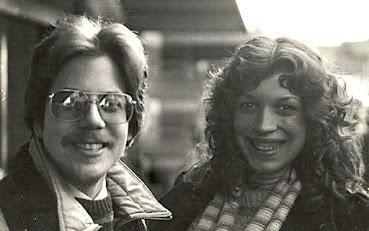
My wife and I are often asked: "How did you two meet?" It's a story that we have told many, many times over the years — both separately and together. In a group situation, the story usually unfolds as though it's been rehearsed over and over again. We take turns interjecting a crucial piece of the tale, like we are reciting lines from a script that we have been performing on a nationwide tour. Well, this year — this month, as a matter of fact — marks the 40th anniversary since the night we met. So, if you've heard this story before or if you haven't, here it is in all its quirky, typical Pincus glory...

I was a student at a respected Philadelphia art school in 1982. Prior to enrollment, I was informed by my parents — the world's worst handlers of money — that if I chose to continue my education past the tuition-free arrangement of public school, I was on my own. So, just out of high school, I wandered — alone — into a bank and with no prior experience aside from a little savings account (complete with a bank book) I had in third grade, I dove headfirst into the uncharted world of student loans. After a lengthy explanation of terms, I signed a bunch of papers and, a few weeks later, I received a check for tuition made out jointly to me and the school. I would have to begin repaying this loan (and subsequent loans I would contract over the next three years) six months after graduation. I had a job as a cashier at at discount department store near my Northeast Philadelphia home, but I needed to find something a little closer to the Center City location of my new school. Well, I did — at my cousin's health food restaurant. While his establishment did a brisk lunchtime business, he was looking to open a few nights a week for dinner. With my beard, ponytail and bohemian "art school" attitude, I would fit right in — despite the fact that I ate cheesesteaks and meat-filled hoagies. Not exactly the expected diet of someone who would be serving tofu and various vegetable-based entrees to a bunch of hippie holdovers that comprised the restaurant's clientele. (This, of course, was years before I latched on to the vegetarian lifestyle I currently practice.)

Three days a week — Wednesday, Thursday and Friday — I would leave school a few minutes early and rush across downtown Philadelphia to my cousin's restaurant. When I arrived, I'd stash my bag of art supplies, don a green apron and dish out salads and brown rice and tempeh and any number of foods that, if I wasn't getting paid to handle, I wouldn't touch with a ten-foot celery stalk. The restaurant was cafeteria-style and from 3 pm to 9 pm, I'd force a smile on my face and dispense plates of meatless food for an assortment of patrons that ran the gamut from hardcore vegans (before the concept was popular) to the "what's this all about" crowd. At 9 on the dot, I'd lock the door and begin the clean up process. I'd wipe down countertops and tables and mop the floor, while my co-worker would wash the pots, pans and serving utensils in the upstairs kitchen. We had the process timed down to approximately 50 minutes, if we weren't distracted. And by "distracted," I mean cordially, but firmly, guiding any straggling diners out the door before the clock struck 9. 

On February 26, 1982, I was distracted... and my life changed forever.

It was a Friday and I was ready to go home. Around 8 pm, I attempted to get a jump on my regular closing time ritual by covering some of the food that had gone untouched with plastic wrap. The restaurant had been pretty slow since the "dinner hour" ended around 7. Suddenly, the front door swung open and three — ugh! — customers walked in. A tall, dark haired guy in a preppy sweater and two pretty young ladies. I was just a few months shy of my twenty-first birthday, and — truth be told — every girl was pretty, in my opinion. I had a lot of "one dates" with a lot of different girls. Admittedly, I was always on the prowl — as they said in the promiscuous 80s. Tonight, however, I was in no mood to flirt. I wanted to get home and three customers were now standing in my way.

One of the girls approached the serving counter and perused the array of offerings in the salad section and the adjacent steam table where the evening's hot entrees were displayed. She pointed to a container of shredded cheese sandwiched between a container of sliced bell peppers and one of julienned carrots. She smiled and asked, "Does the cheese have rennet?"

I looked at her. She was pretty, but — like I said — I wasn't looking to hit on a girl right now. I was anxious to lock up, mop up and hit the road. I wrinkled my face at her question and replied with five words that — I assume — charmed her like a Shakespearean sonnet.

"What the hell is rennet?"

She explained that she observed the ancient laws of kashrut — "keeping kosher" to you and me. If the restaurant was truly vegetarian, then the cheese would contain a vegetable-derived rennet, instead of the commonly-used meat-based rennet employed by most commercial dairies in the manufacturing of cheese. "Kosher?," I exclaimed, "I don't know anyone under the age of 80 that 'keeps Kosher!' My grandmother keeps Kosher, for chrissakes!" Slowly but surely, I was winning this young lady over.

Soon, she was joined by the man and the other young lady. The trio asked some more questions and eventually made their dinner selections. They explained that they were headed to a movie and didn't want to be late. Once they chose a table in the otherwise empty seating area, I made sure that they didn't stay one second longer than they had to. Uninvited, I took a seat at a nearby table and struck up a conversation. I started with the obligatory "How is everything?" before moving on to questions about the movie that was in their plans. Then, assuming that the "rennet" girl was a few years too old for me, I relaxed my "let's hurry this along" strategy and asked the other girl for her phone number... just like that. She frowned and refused. The "rennet" girl, however, asked if I had an older and taller brother. "Hmm....," I thought, "she's not with this guy after all." (In reality, she had grown up with the male member of their party and always figured she would marry him one day. However, until that time came, she was open to other possibilities....) Coincidentally, I do have an older — and yes, taller — brother. I happily accepted her hastily scribbled phone number to deliver to my brother.

I made a few additional smart-ass comments to the group as they finished up their dinner. Actually, my intention was that my commentary would help in hurrying them along. A little before 9, they gathered their coats and belongings and headed for the door. But not before the "rennet" girl told me that I was the most obnoxious person she had ever met. She wasn't the first person to tell me that. She wasn't even the first person that day.

Early Saturday morning, I called my brother to tell him I got the phone number of a girl for him. My brother was in a long-term relationship with the woman who is currently my sister-in-law. But the Pincus brothers were the Pincus brothers and — prior to the meaningful and solemn commitment of marriage — anything was fair game. He did ask a favor of me, though. He requested that I call this prospective girl first and explain that he was going to call. He hated to go through the awkward formality of jogging someone's memory. What if they couldn't remember giving out their number or even the entire encounter at all. He wanted that all out of the way, leaving plenty of time to ply the patented Pincus charm that won over so many defenseless members of the fairer sex.

So, I called her. She answered the phone and I launched right into identifying myself. "You know, the obnoxious guy from the restaurant." She laughed... and that began a lovely, natural and engaging conversation that lasted three hours. Three hours! Finally, I told the "rennet" girl — Susan — that I would not be turning her phone number over to my brother. I would like to ask her out myself. She accepted and a date was planned for the following Saturday. By December of that year, we were engaged to be married.

... and it all started when Susan walked though the front door of that restaurant. 


Footnote: One of our early dates was to my brother's 25th birthday party. This was the first time Susan met my brother and other members of my extended family. Later in the evening, Susan confided to me that if the original plan of events had transpired and she, indeed, went out with my brother, that would have been the last time any member of my family ever saw her. Oh, Susan and my brother get along just fine... just not in that way.

And the two other people mentioned in this story? Well, the have both been written about elsewhere on this blog.


Sunday, February 20, 2022

everybody loves somebody sometime

This is a stupid story. I know, I know. I should probably preface every story I tell on this blog in that manner. Okay....I mean this is another stupid story. 

I have been very active on social media for well over a decade. My activity waxes and wanes between platforms. Sometimes I'll go for long stretches posting fervently on Twitter. Then, for no discernable reason, I'll lay off of Twitter in favor of Facebook or Instagram... only to return to Twitter. And then the cycle starts again or sometimes rearranges itself. It is not planned. It just happens. More recently, I post simultaneously on all three major platforms. (No, I have no plans to joins the ranks of Tik Tok. You're welcome.)

If you have been a follower of mine for any length of time (and why wouldn't you be?), you know that I post celebrity death anniversaries on a daily basis. Each day, just after I finish up a bowl of Honey Nut Cheerios, I search the internet and post four or five photos of particular celebrities who passed away in a past year on that particular corresponding date. I get some "likes" each day... and that's pretty much it until the next day, when it starts all over again. I have been doing this for years, adding to the commemoration as more celebrities pass away. Often, my "Instagram Memories" remind me that I have used the same photo of a particular celebrity on more than one occasion. 

For the record, my criteria for "celebrity" may differ from yours. I like to seek out forgotten names that may not have the wide-spread recognition. I like actors who are known for one obscure role (like Dwight Frye or Kasey Rogers... Google 'em) or a sports figure who holds a unique, but insignificant, record or distinction (like Red Sox third baseman Ted Cox, the only player in Major League Baseball history whose first name and last name rhyme with the team he played for.) I find these folks more interesting than the typical US President, Academy Award-winning actor or Hall of Fame ball player.

On September 27, 2013, actress Phyllis Davis passed away. She was an actress with a respectable, but admittedly unremarkable, career. She appeared in a couple of grindhouse-caliber "women in chains" films, as well as a few more mainstream, yet equally forgettable, pictures. On television, she guest starred on Magnum PI, The Love Boat and Fantasy Island. She is best remembered for playing Robert Urich's "Gal Friday" on the crime drama Vega$. She was the one who wasn't Judy Landers.

Every September 27, I post a photo of Ms. Davis along with a reminder of the year she died. She joins Metallica original bassist Cliff Burton, author William Safire and publisher Hugh Hefner, who all died on September 27 — though all in various years. As we know, everything on the internet, stays on the internet forever. So every so often, one of my posts gets a "like" months or even years after its original upload. My annual posts commemorating the "deathaversary" of Phyllis Davis garners a barrage of "likes" on a regular basis years after the fact and — time-wise — no where near September 27.

It's weird.

Every so often, for several days in a row, a years-old post of Phyllis Davis will get a dozen different likes from a dozen different accounts. If I click on one of these accounts, they either have no posts of their own or their account is designated as "private." 

What is it about Phyllis Davis? Was she a good actress? Eh... she was okay, but nothing special. Was she attractive? I suppose. But she seems to have this rabid cult following that unearths itself like seventeen-year cicadas, but on a more frequent cycle and with an affinity for 80s TV supporting actresses.

I watch a lot of "classic" TV — mostly shows that originally aired between the 1960s and the 1980s. I have spotted Phyllis Davis in many episodes of these shows — from her brief appearance as a harried neighbor (in a brunette wig) in an episode of Adam-12 to her roles in four different episodes of The Love Boat. When I see Phyllis Davis, I wonder if her loyal legion of "Davis Heads" relish her screen time, bowing with a reverence and admiration usually reserved for the likes of a Sarah Bernhardt or John Barrymore.

Or maybe all those "likes" are just from a bunch of bots.

Who knows?

Sunday, February 13, 2022

you ain't no friend of mine

Boy, I sure had this uncanny knack for choosing jerks to be my friend. Not all of them, of course. I had some pretty good friends when I was a kid. But there were certainly some people I numbered among my friends that — today — makes me question my choices.

Just after I finished elementary school, there was a shuffle among the next stop in the path of higher learning. The high school had eliminated seventh grade in an effort to alleviate the problem of overcrowding. My brother — four years my senior — had gone right from elementary school to high school when his time came. Me? Well, the School District of Philadelphia had to scramble to find a place to put my entire graduating class, as well as our counterparts from at least three more elementary schools. The School District was in the process of building something called "a middle school," that would offer Grades 6 through 8. But, construction was slow and the building wasn't ready for the new school year. So, for seventh grade, my classmates and I were sent to a new school for one year, where we were mixed with other students who would be experiencing the same School Board miscalculation. We were sent to a school well out of our comfort zone that may have been in another country, as far as we were concerned. (In reality, it was just twenty minutes from our elementary school.) 

At the completion of seventh grade, the new school opened its doors and I was thrust into a classroom with another new bunch of kids from other schools. These strangers would be my eighth grade classmates, whether I liked it or not. One of the students was Aaron Goldman. Aaron was a jerk. I still — to this day — can't figure out why I hung out with him. We had relatively nothing in common. He lived far from my house. My other, long-time friends didn't like him. He seemed to go out of his way to toy with trouble. He smoked in eighth grade, purely to appear "cool." (It didn't work.) He always had some kind of "school contraband" hidden in the deep pockets of his faded US Army jacket (Something else he sported in an effort to appear "cool." That, too, failed.) One day, he'd produce a switchblade from his jacket pocket. Another day, it would be firecrackers. Always something he knew he shouldn't have... but, of course, that's why he had it. 

In April 1975, shock-rocker Alice Cooper was bringing his Welcome to My Nightmare Tour to the Philadelphia Spectrum to promote his current namesake album. I loved Alice Cooper and I owned a few of his albums including the malevolent concept story of "Steven," the main character in the songs on Welcome to My Nightmare. A few of my friends had already attended concerts. My brother, at 18, was a veteran of many Spectrum shows. I asked my mom if I could go to see Alice Cooper. My mom — a cool mom before such a thing was acknowledged — agreed, on the condition that I could purchase my ticket with my own money. It took some scraping, as $6.50 wasn't easy to come by for a 14 year-old. My mom was gracious enough to provide a ride to the South Philadelphia venue on the night of the show. She would even give dinner to my fellow concert-going friends.

I went to see Alice Cooper with three companions, one of whom was Aaron Goldman. On the night of the show, parents dropped their sons at my house a little before dinner time. My fellow 14 year-olds filed in and took a place at the Pincus kitchen table. My mom doled out huge helpings of spaghetti, generously covered in her homemade spaghetti sauce. My mom loved to make her own spaghetti sauce and it was one of my families favorite dishes. For my brother's Bar Mitzvah, my mom asked her brother to address the invitations, as he had beautiful, swirly, calligraphic handwriting. Her brother agreed, and requested a meal featuring my mom's spaghetti sauce as fair compensation.

My friends dug right in. My mom supplemented the meal with a big loaf of crusty Italian bread from a local bakery. Midway through the course of dinner, my mom asked each of my guests how everything was.

"Great, Mrs. Pincus" was the reply from my first two friends. I, of course reiterated the sentiment, as I had dome many times before when my mom served her "famous" spaghetti sauce. When it came to Aaron's turn, my mom repeated the question: "How is everything?," she asked.

Silence.
Aaron didn't even look up from his plate, He continued to shovel gobs of spaghetti into his sauce-stained maw. "Eh... I've tasted better.," he said. He actually said that — out loud — to my mom. My other two friends — my actual friends — froze. The room was silent. My mom frowned at me and said nothing. As a matter of fact, nothing was said from that point on. We got into the car in silence. We drove to the Spectrum in silence, When we arrived at the Spectrum, my mom briefly instructed us where to meet at the show's conclusion. 

And my mom drove away.

After eighth grade, I sort of lost touch with Aaron in high school. I saw him in the crowded hallways, but he had a new set of friends — ones that smoked and wore Army jackets and carried concealed switchblades and tried to be cool.

Years later, when my wife and I needed some small home repairs, someone recommended Aaron. He was now in the handyman business. Our phone number was forwarded to him and he called. He left a voicemail outlining his services, but explaining that he really wanted to do home inspections. (We didn't need a home inspection.) He ended his recorded message by saying: "I bet your daughter is growing up real fast. Hope to hear from you soon."

I have a son and Aaron didn't hear from me... soon or otherwise.

Sunday, February 6, 2022

you wanna be starting something

For years, my father kept his family entertained with stories from his youth. Well, maybe not my mom so much. After all, she had heard all of them long before my brother and I came along. Well, maybe not my brother so much, as he really had little time for my father and his brand of semi-believable mishagas. So, in reality, my father kept me entertained with stories from his youth.

I have often mentioned my father's propensity to "stretch the truth" in nearly everything he said. He told great stories, but later in life, I came to discover that a good 95 to 99 percent of what he said was total fabrication. So the real difference between my dad and someone like Stephen King — besides the money and fame — is everyone knows the stuff Stephen King writes about is made up and he makes no effort to say otherwise. Well, that and the fact that Stephen King is a published author, many times over, as a matter of fact. Well, back in the early 70s, my father had hoped to change that.

selections from the
Dad Pincus collection
My father was a voracious reader, although his choice of reading material was questionable. He would go back and forth between nationwide best-sellers, usually purchased in paperback form from a bookseller in a nearby discount market who sold books months after their initial release at a huge reduction in price. I would sometimes get outdated comic books and Mad magazines there, while my dad stocked up on an assortment of books that he would no doubt breeze through in the coming weeks. My dad read The Godfather and a number of Ian Fleming books about super-spy James Bond. In between, he'd sneak in several thin tomes with lurid covers featuring scantily-clad, voluptuous femme fatales pawing subserviently at the feet of some muscular, T-shirted hulk. They had slightly suggestive titles like I'm for Hire and Sinful Sisters and my dad tried to hide them from his impressionable sons — unsuccessfully, I might add. 

Inspiration
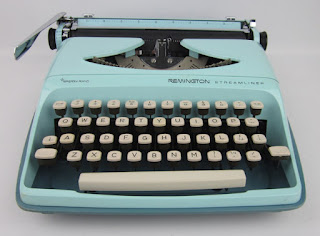
One of his favorite mainstream authors was the prolific Philip Roth. Roth was a best-selling author who wrote a book in 1971 called Our Gang. Although Roth reminisced about his childhood in other novels, I don't believe that was the topic of Our Gang. Nevertheless, I do think that it was my father's inspiration. My brother had just received a manual typewriter as a gift. He hoped it would serve to help his schoolwork appear more impressive, but actually, my brother was a budding writer, and he eventually made it his chosen career. (A career, incidentally, from which he recently retired.) One day, my father announced that he was going to write a book. Now, my father often made "announcements" and rarely followed through. He would announce "This weekend, we will paint your bedroom!" and, come Saturday, we'd go out to a local hardware store to purchase a few gallons of neutral-colored paint (we had no input into the color selection). So far, Dad looked as though he was "gung ho" on this project. When we got home, Dad would put on his "painting costume," which consisted of a paint-splattered shirt and pants (I have no clue where these came from and how they became paint-splattered) and a canvas painter's cap that he picked off the counter of the hardware store as we left. He'd parade around in his duds, announcing his plans on how to tackle this venture. Then, he'd grab a paintbrush, swipe a few haphazard brushstrokes in the middle of a wall.... and leave to go smoke a few dozen cigarettes. And read. He'd go read. My mom, my brother and I were left to cover his half-assed efforts and finish the room ourselves. So when Dad Pincus "announced" that he was going to write a book, we had heard it all before and were less than enthused. But, true to his word, he sat down at my brother's typewriter and, with no previous writing or practical typing experience, he began to bang on those keys, single finger style.

Among the tales my father liked to spin, were stories about growing up in West Philadelphia — decades before Will Smith's behavior sent him for a rehabilitative stretch under Uncle Phil's watchful eye in Bel Air. At the time, West Philadelphia was a working-class, predominantly Jewish neighborhood and the majority of my dad's pals fit into that category. He knew guys whose family ran the local candy store or car repair. My dad's father drove a trolley. But, despite their blue-collar lifestyle, they had their share of interesting adventures... according to my dad. There were scraps at school and antics on the playgrounds and trips to the nearby Jersey Shore. The stories would sometimes change details, depending on how my father felt during a particular retelling. Each one of his friends had a colorful nickname. There was "Sarge," so named because he dressed as a soldier for Halloween one year. There was "Hook," who had a rather prominent nose. My dad was given the nickname "Pinky," an obvious play on his surname. Sometimes it was lengthened to "Pinky McGee" for no apparent reason. I loved hearing about my dad's friends and the origins of their various monikers. And secretly, I was hoping to — one day — read my dad's completed book.

Inspiration
My dad selected the perfect title for his memoir-in-progress. It was to be called "No Sand Tomorrow." This was a reference to an oft-told story about a group of my dad's friends spending a weekend in Atlantic City. While cavorting on the beach, one guy — who they called "Dopey," stemming from his reputation for being not-too-bright — pointed to a posted sign and questioned its wording. "Does the beach get regular deliveries of sand?" he asked aloud. His friends appeared puzzled and they asked their pal to elaborate. He pointed to the sign and read what he interpreted as its message. "It says 'No Sand Tomorrow'," he stated. His colleagues approached the sign-in-question from the back. When they all silently read the sign, they simultaneously burst out laughing. The sign said "No Sand Throwing" and it confirmed tagging their friend as "Dopey" was right on the money.

A good portion of the day was spent typing and retyping this story. When my dad decided that he was able to properly convey this tale from his youth in a way that achieved both sentimentality and humor, he yanked the page from between the typewriter's rollers and read it to his family... over and over and over again... each time as though was reading it for the first time. Then, he retired to his bedroom to smoke and read.

Another
inspiration
Don't bother checking Amazon or Barnes and Noble or your favorite local used book reseller. You won't find a copy of No Sand Tomorrow anywhere. It never made it to publication. Actually, it never made it past that single paragraph. The rest of my dad's book was puffed away in the smoke of countless Viceroys and forgotten in the jumble of the many chapters of some pen-named hack churning out erotic sagas in a dimly-lit room.

My dad was just a guy who liked to announce things he never intended on finishing.

Sunday, January 30, 2022

I've got gadgets and gizmos a-plenty

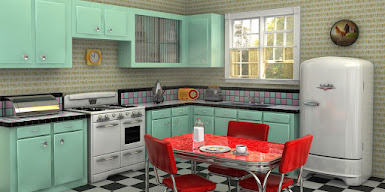
Kitschy appliances were all the rage in the 60s and 70s. And my mom had her fair share of them. Sure, she used her trusty electric skillet most often. She'd make her own spaghetti sauce and would brown a pound or so of ground meat in her electric skillet before adding it to the sauce. She used her electric skillet to make hamburgers, fry chicken and, at Passover, she'd use it to make matzo brie (fried matzo), one of the few things I like about the springtime Jewish holiday. The electric skillet was always out, always on display on the counter of our avocado-colored kitchen, because it saw so much regular cooking action.

My mom had a pressure cooker, too, and that also got plenty of use in the Pincus kitchen. At least once a week, my mom would stuff that pressure cooker with little cubes of beef, cut-up vegetables and homemade dumplings. Then, she'd clamp the lid down tight and, several hours later, she would extract the most delicious beef stew you or I ever tasted (of course, this is a biased opinion).

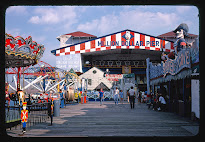
But, aside from those two cooking aids, our kitchen boasted a number of appliances that got very infrequent employ, some just a single use. A lot of these appliances were obtained at our favorite appliance outlet — Million Dollar Pier on the famous Atlantic City Boardwalk. For those of you familiar with Atlantic City in its 1960s heyday, you are probably wracking your brain to try to remember an appliance store among the rides, food stands and sideshow performances. Well, there wasn't one, so you can stop. I am, of course, referring to the various Wheels of Chance that encircled the perimeter of the amusement pier, as well as those that dotted the actual Boardwalk. These games involved a giant wheel with at least a zillion individual spots delineated by metal pegs. After placing a nickel (later a dime, and then even later, a quarter) on a corresponding spot on the counter of the stall, the game operator would give the oversized arrow in the middle of the wheel a big spin. The excitement would build as the blurred arrow whizzed around and around until it slowed and eventually stopped — where its rubber pointer would indicate the winner for that round. I was always given the opportunity to choose which lucky spot would hold our coin for a particular round of the game. Would I choose a color or a number or one of the  many choices of three letter names like "ART" or "BOB" or "MOM?" Aside from the excitement the wheel generated, the stand itself was a spectacle. The rear shelved section of each of these booths was jam-packed with brand-new, in-the-box, brand name appliances punctuated with large, brightly-colored signs that read: "EASY TO WIN!" and "YOUR CHOICE!" In reality, it wasn't easy to win and my parents would often spend too much time and too much money trying to win an unnecessary appliance that would end up costing three times the price they would pay if they just went to our local discount department store. But where was the thrill in that? However, no trip to Atlantic City was complete without an extended encounter at one of the wheels. 

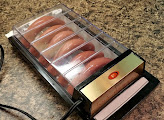
My mom won a Presto Hot Dogger one summer. TV chef Alton Brown cautions viewers to avoid "unitaskers" in the kitchen, referring to novelty cookware that serves just a single purpose. He says that every item in your kitchen should be able to perform a multitude of tasks — save for a fire extinguisher, the only "unitasker" he says is permissible. Well, the Presto Hot Dogger is the unitasker to top all unitaskers. This little device accommodated a half dozen standard size hot dogs and, once there were curved and placed in position, made the cumbersome, strenuous, time-consuming chore of cooking hot dogs a thing of the past. The hot dogs, held in place by impaling their little tips on two dangerously pointed (and wired-for-electricity) spikes, tasted like you'd imagine licking a newly-unplugged electric plug would taste. But, they were cooked in a fraction of the time — if you call that "cooking." No amount of ketchup, mustard, relish, onions or even sauerkraut could mask the unmistakable flavor of 110 volts of household current. But we ate them, because it was the 70s and that's how Madison Avenue told us we should be cooking hot dogs in the "modern age." After a few uses, the Presto Hot Dogger was relegated to the hall closet and my mom went back to filling a big pot with water and boiling hot dogs when they were requested for dinner.

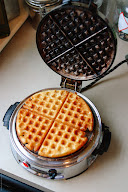
Another acquisition from the shelves at Million Dollar Pier was a waffle iron. My dad was most excited about this... probably because he didn't have to actually prepare the waffles. That was left to my mom. Every so often, my mom would surprise the family on a Sunday morning by making pancakes in her reliable ol' electric skillet. She could churn out those little golden beauties at an alarming rate, keeping my dad, my brother and me satisfied with an always-tall stack of hot cakes before each of us, often replenished before being asked. When we each had our fill, we'd vacate the kitchen table, leaving my mom to clean up and enjoy the last few pancakes by herself. But waffles.... that was a different story. That required an extra step, one my mom wasn't exactly thrilled with. She didn't mind making pancakes, but waffles... well, those were just square pancakes. The process of filling each little square reservoir with batter, closing the lid, watching a timer, gingerly removing the finish waffle without tearing... well, that was just... just.... stupid. Soon, my mom placed the waffle iron next to the hot dogger and the Pincuses went back to eating pancakes.

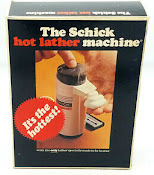
Useless appliances weren't just specific to the kitchen... or to my mom's exclusive usage. Nope! One day, my dad won a Schick Hot Lather Machine at Million Dollar Pier. That thing sat in a place of honor on the bathroom counter, next to a couple of bottle of my dad's after-shave and my mom's prized atomizer of Giorgio. The Schick Hot Lather Machine was loaded with a standard size can of ordinary shaving cream, but after plugging it in, it released a wad of slightly warmed cream, just like you'd get at your local barber shop.... as though my father ever let his barber shave his face. The Schick Hot Lather Machine lasted, in regular usage, for as long as it took to use up one single can of shaving cream. After that, my dad went back to shaving with cream straight from the can... and the Schick Hot Lather Machine joined its kitchen pals in the hall closet.

When my parents passed away in the early 1990s, cleaning out their house was quite an undertaking. Apparently, my parents never threw anything away. When the hall closet was opened, it was as though we were hovering behind Howard Carter as he entered King Tut's tomb. Fittingly, that closet looked like its contents had been touched since 1922. There was a long-forgotten collection of one-time used appliances that hadn't seen the light of day since the Nixon Administration.

A fire destroyed the then-closed Million Dollar Pier in 1981. So much for making a return.

Sunday, January 23, 2022

I would've liked to know you, but I was just a kid

I was driving home from work yesterday. I was listening to my favorite radio station, as I do most every evening on my commute home. It is a commercial-free public radio station that plays an eclectic mix of new and old, popular and obscure and features music from all sorts of genres. A little before 5 PM, the drive-time DJ played "Right On Time," a 2021 release from Grammy Award-winning singer-songwriter Brandi Carlile. When the song ended, I heard the opening notes to a song I had not heard in years, perhaps decades. It was one of those moments where I knew I knew the song and quickly tried to rush ahead — in my mind — to a chorus or familiar part of the song to identify it. As the singer sang, the lyrics came to me as though I had just heard the song a minute earlier. Suddenly, it hit me and I instantly smiled like I had bumped into an old friend. (To be honest, bumping into an old friend wouldn't always evoke a smile from me.) The song was "Holiday Inn," a not-played-so-much album track from Elton John's 1971 release Madman Across the Water

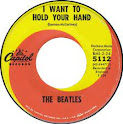
I was immediately transported back to the tenth year of my life. Even at a young age, I was an avid music fan. When I was six or seven, my Uncle Sidney gave me a stack of 45s that he pulled from one of the many jukeboxes that he serviced. (I think that was his job, but, as much as I love my Uncle Sidney, what he did for a living was decidedly sketchy.) Among the records — its grooves well-worn from countless plays in some unknown bar or diner — were many Beatles songs, all sporting the familiar yellow and orange swirl label from Capitol Records. Despite the pops and scratches, I played those records over and over, first on my little Close-N-Play phonograph, the worst possible invention geared towards music aficionados and vinylphiles. Later, my parents broke down and purchased a real stereo for our family room, featuring an AM-FM radio and a built-in 8-track player. Soon, I was buying 45s on my own, with The Archies' "Sugar Sugar" and the Fifth Dimension's take on "Aquarius" as the first entries in a years-long collection of recorded music.

At the beginning of 1971, I purchased my first album. It was Tapestry by Carole King, a stellar collection of songs that deservedly swept the Grammys that year. I was still buying 45s, though, as album prices at the time, were still pretty steep for the income of a ten year-old. I bought two 45s one day after saving up enough money and "Tiny Dancer" and "Levon" by this new singer named Elton John were now part of my blossoming collection. I had heard those songs on the radio and I was hooked. They stood out from the other offerings on the AM airwaves. That is something that I have always looked for in music, songs that don't sound like everything else. Among the girl group holdovers and Motown smoothness, Elton John's plaintive voice was fresh and new and unfamiliar. Sure, in 1971, there were songs by the Rolling Stones and The Doors and Sly and the Family Stone... but I was TEN! I was still mesmerized by The Funky Phantom, reeling from the cancelation of The Banana Splits and unaware that The Jackson Five were real people and not just cartoons. So, listening to Elton John was a revelation for little Josh.

In November 1971, my brother — four years my senior — came home with a copy of Madman Across the Water, the actual album that, not only contained the non-radio edited versions of "Tiny Dancer" and "Levon", but a slew of other songs by the fledgling Mr. John... including the epic title song clocking in at nearly six minutes! Twice the length of the poppy little ditties blasting out of my transistor radio. That album got a ton of play in the Pincus household, even by my mom — a proud rock and roller who, at sixty years old, attended a Culture Club concert with a bunch of eighteen year-olds, co-workers at the clothing store where she was employed. The songs — just nine of them — were all wonderfully crafted pieces of music. They ran the gamut from angry rockers like "Rotten Peaches" to illustrative (though historically inaccurate) stories like "Indian Sunset." And, of course, "Holiday Inn," a Bernie Taupin-penned ode to the lonely life of a rock star on the road. Madman Across the Water was the beginning of my love and admiration of Elton John.

Over the next few years, Elton John was pumping out albums like a man possessed. Between 1971 and 1976, Elton John released eight albums, including two double albums. Some years saw the release of two albums. And these were all chock full of hits and album cuts that should have been hits. This was Elton John at his most prolific and most successful. In addition to chart-topping album sales (six consecutive Number One albums), Elton toured extensively, selling out venues worldwide. As funds were short for me, I relied on my brother to keep our house stocked with the latest Elton John releases. I remember having to scrape together nine bucks to purchase a ticket to see Elton John on an upcoming Philadelphia stop on his current tour. On July 6, 1976, I got to see the spectacular Mr. John at the Philadelphia Spectrum, as he toured in support of what would become my favorite of his albums -  Rock of the Westies. (Yeah? Fight me!) He was terrific and even warranted the higher-than-usual ticket price.
 
Later that very same year, my love of Elton John came crashing down hard. I purchased my first Elton John album on my own. It was the overly-ambitious — and rightly panned — Blue Moves, a two-record set that would forever be compared to Goodbye Yellow Brick Road. Rolling Stone magazine, a publication I find both self-righteous and irrelevant, described the 1976 effort as "[containing] nowhere near enough good songs to justify the extended length." For once, I agreed with something I read in Rolling Stone. Oh, I didn't just give up on Blue Moves. Not by any stretch. I listened to it... again and again. I gave it every chance. I wanted to like it. I desperately wanted to like. But, in my opinion as a loyal and devout Elton John fan, it stunk! The lead single "Sorry Seems to Be the Hardest Word" sounded like a cheap attempt at recreating "Don't Let the Sun Go Down on Me" and "Someone Saved My Life Tonight." It seemed very formulaic and rushed. And... honestly... I can't remember any other song from the album. I was done. I washed my hands of Elton John. Luckily, I had discovered Queen a few years earlier and they would only disappoint me when Freddie Mercury died and Brian May wouldn't shut his goddamn mouth. Elton John released 20 more albums after Blue Moves. I can't name one.

But hearing "Holiday Inn" coming from my car speakers was like entering a time machine. And those four minutes and seventeen seconds were nice. Really, really nice.

Sunday, January 16, 2022

the impression that I get

I have told this story many times, so I'll tell it here...

Many years ago (probably in the middle 1980s), My wife and I were in Atlantic City with our friend Randi. (You remember Randi...) We were at Caesars Casino on the famous Atlantic City Boardwalk. Atlantic City, New Jersey is a little over an hour away from Philadelphia, so it was not unusual to drive to the famed shore resort for a day trip. We would often go for dinner, a stroll on "the boards" and then into one of the casinos to try our luck at instant riches. That third one never quite came out the way we had hoped, despite our most courageous efforts.

As the evening progressed and we felt it was time to start heading home, Mrs. P and Randi needed to make a quick stop at the closest ladies' room before we left on a lengthy car ride. The parking lot at Caesars was accessed via a long narrow hallway from the casino. It had an unusually low ceiling and the width of the corridor barely accommodated four people across. (Over the years, several building renovations have changed this.) Mrs. Pincus and Randi located the rest room and I stood alongside the doorway to wait for them. To entertain myself, I watched the interesting faces in the crowd as they passed by in relatively close proximity. There were old people, young people, short people and tall people. There were men in three-piece suits accompanied by women in sparkly gowns. These couples were followed closely by disheveled-looking fellows who looked as though the last place they should be was a casino. 

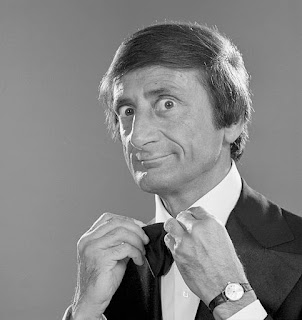
I smiled to myself as this cross-section of society paraded by me. Then, in the crowd, I spotted a familiar face, one I had seen on television numerous times. It was comedian Charlie Callas. He was a staple performer on television in the 60s, 70s and early 80s. He made 50 appearances on The Tonight Show with Johnny Carson, as well as The Ed Sullivan Show, Merv Griffin's show and the full roster of variety shows that were so popular on the 1970s. Charlie was a regular on the Dean Martin Celebrity Roasts, often showing up in military garb and doing as dead-on impression of show biz patriarch George Jessel. Charlie was known for his rubber-faced mug and the barrage of strange noises that he would inject into his stand-up routines. Folks like Jerry Lewis and Mel Brooks loved his act so much, he was cast in films like The Big Mouth and High Anxiety just to play upon the recognizability of his stage act. On television, he was seen in The Monkees, The Flip Wilson Show and singer Bobby Vinton's short-lived series, in addition to a Carpenters special. He even popped up on an episode of The Love Boat and also provided the voice for the animated Elliot the Dragon in the Walt Disney film Pete's Dragon. If you are of my generation, you knew who Charlie Callas was. 

Well, I certainly knew who Charlie Callas was. And there he was, walking past me wearing dark glasses and a terrycloth bucket hat pulled down to his brow. Evidently, he was trying to conceal his identity, but there was no mistaking that it was indeed Charlie Callas. Curiously, not a single person pointed or whispered or acknowledged him in any way. No one but me. I smiled to myself a little wider.

Soon, Mrs. Pincus and Randi emerged from the ladies room. As we continued to walk to the parking lot, I mentioned that I had just seen Charlie Callas walk past me in the crowd. They both stopped, and with jaws agape, simultaneously exclaimed, "NO, YOU DID NOT!," as though they had rehearsed it. Now, I stopped... and scratched my head. 

"Why would I make that up?," I asked. "Do you think I'm trying to impress you? It's not like I said 'Hey, I just saw Frank Sinatra!' It was Charlie fucking Callas! The guy who sticks out his tongue and makes funny noises. That's not impressing anyone."

They both kind of sheepishly smiled. We found ourselves at the building's exit. I opened the tinted glass doors and we stepped outside. At a taxi stand, about ten feet away from us, wait for a cab, was Charlie Callas. I pointed at him. "See?," I said to my companions. Again, we were the only ones looking in his direction.

We didn't say "Hello" to him or ask for a picture (actually, in the days before cellphones, who carried a camera?) or even request an autograph. We just looked at him. And he was still Charlie Callas.

And then we went to find our car.